Things to do in Yuanshi
Explore top experiences
Top 10 attractions in Yuanshi


Temple of Heaven
The Temple of Heaven is a unique altar for emperors of the Ming and Qing dynasties. Here, people worship the heavens, ask for rain, and pray for a better harvest. It is a famous ancient building in China. The Temple of Heaven is divided into two parts: the Inner Altar and the Outer Altar. Well-known structures such as the Hall of Prayer for Good Harvest and the Echo Wall are located in the Inner Altar. While visiting the Temple of Heaven, tourists get to experience the grand praying ceremony of ancient emperors and observe the ingenious designs such as the Echo Wall and the Triple Sound Stones. The wisdom of the ancient craftsmen will not fail to impress you.China · Beijing

Baotu Spring
Baotu Spring is located in the bustling downtown area of Jinan, bordered by Qianfo Mountain to the south, Daming Lake attraction to the north, and connected to Quancheng Square to the east. This spring-themed garden is renowned as the "No. 1 spring under heaven" and ranks first among Jinan's "72 famous springs," with a history spanning over 2,000 years. It has also frequently appeared in literary works, most notably in Lao She's "Baotu Spring." Visitors come here to witness the spectacular sight of the three gushing springs. The main spring serves as the park's centerpiece, with its crystal-clear water gushing in three separate jets day and night, reaching several feet high during peak flow. The spring is surrounded by large stone masonry and guardrails, allowing visitors to overlook the spectacular sight of the three jets from the railings. A dark green stone tablet inscribed with "No. 1 spring" stands nearby, bearing the calligraphy of Licheng's Wang Zhonglin from the Tongzhi era of the Qing Dynasty. In the vicinity, over thirty other famous springs are scattered, including Jinxian Spring, Shuyu Spring, Xibo Spring, Liuxu Spring, Huanghua Spring, Dukang Spring, and Bailong Spring. July and August, when local rainfall is abundant, make for the best season to observe these springs. In the height of summer, visitors can get up close with the springs in the park. Some springs have no railings around them, with stone paths in the pools where water flows over. Visitors can step into the pools to interact with the water, walking on the stone paths where their feet will get wet from the cool spring water. Besides water interaction, there are free drinking springs available for visitors by the pools. On the east side of the springs stands the Wangheting teahouse, specially catering to visitors.This springFragrant tea brewed with water at a moderate price. In addition to the springs, another highlight of the park is its magnificent south gate, adorned with grandeur and elegance. The horizontal plaque above the gate, inscribed with "Baotu Spring" in golden characters on a blue background, bears the imperial handwriting of Emperor Qianlong from the Qing Dynasty. It is acclaimed as the "first gate" of Chinese classical gardens. In previous years, seasonal water stoppages frequently occurred here, but through recent conservation efforts, normal water levels have been largely restored. Additionally, the attraction regularly hosts various cultural events. Every year on the first day of the lunar new year, a lantern festival is held for 20 days. In late September, there's a spring water culture festival lasting about 10 days, featuring folk activities, calligraphy and painting exhibitions, and traditional opera performances for visitors to enjoy. From late October to late November, a chrysanthemum exhibition takes place where the golden fall scenery of gushing springs and blooming chrysanthemums creates a spectacular sight well worth seeing. In addition, the attraction has launched a cruise route. After visiting the attraction, interested visitors can board the cruise at the dock, passing through the west gate bridge in Jinan's old town, the east gate of Wulongtan Park, and entering Wulongtan Lock, Jinan's first passenger ship lock in history, where they can experience a drop of over 2 m. Sitting on the east side of the boat, visitors can also see the relief of "Jinan's eight scenic views". The riverbanks along the route are lined with aquatic plants, and the water is crystal clear. The cruise finally passes through Yanbo Bridge and enters the Daming Lake attraction.China · Jinan

Pingyao Ancient City
Pingyao Ancient City is approx. 85 km from Taiyuan. The streets, shops, and residences within the ancient city still maintain their traditional layout and appearance, making it one of the best-preserved ancient cities in China. It is also the only ancient county town in China that has successfully been listed as a UNESCO World Heritage Site as an entire city. Pingyao was once the financial center of China during the late Qing Dynasty. Walking through this once-prosperous ancient city, you can feel the essence of Shanxi merchant culture everywhere. The ancient city has six gates in total, with the north gate near Pingyao bus station and the west gate nearPingyao train stationThe south gate and west gate are places with many travelers. Entering the ancient town does not require an admission ticket, but if you want to climb the city wall or visit attractions like the ticket number, you need to purchase a pass for the ancient town. The ancient town is not very large, and walking is enough to explore it all. If you prefer not to walk, you can also take electric bikes. The streets of the entire ancient city are laid out in the shape of the Chinese character "土" (earth). When visiting, you usually enter the city from the West Gate and walk along West Street to Rishengchang Draft Bank, known as the "ancestor of modern Chinese banking". Here you can not only learn about the development history of ancient banking, but also have the old manager in a long robe and mandarin jacket write a draft for you using the early draft method, which is particularly historical. Moving forward is the north-south spanningSouth street, it is the central axis of the ancient city. During the Ming and Qing dynasties,South streetControlling over half of the nation's financial institutions, it was hailed as the "Wall Street of China" in its heyday. Today, it remains a bustling area of the ancient city, known as the Ming-Qing Ancient Street. Most attractions in Pingyao Ancient City are concentrated here, centered around the landmark structure, the Ancient City Tower. Surrounding it are attractions like Xie Tong Qing ticket number (China Banking Museum) and Wei Tai Hou (Ticket number museumAttractions such as Baichuantong, China Escort Museum, Tongxinggong Escort, Weishengchang, China Rare Newspaper Exhibition Hall, and Tianjixiang are available, along with restaurants, musical instrument stores, cafes, and bars. After strolling along the street, you can dine here, buy some souvenirs, and then continue south for more sightseeing. At the Pingyao Ancient City's county government office on the south side of the ancient city, you can see a large number of ancient documents and torture instruments, with daily performances of court sessions; near the Shangdong Gate are the Pingyao Ancient City's Chenghuang Temple andConfucian templeIt is quite grand and meticulously built, with thriving incense offerings where you can burn joss sticks. The Pingyao Ancient City wall is also one of the highlights of the ancient city, being not only majestic but also remarkably well-preserved. Climbing the wall offers a panoramic view of the entire ancient city. Among the gates, the tower of the south gate (Yingxun Gate of Pingyao Ancient City wall) is exquisitely crafted, and this area is close to residential buildings, allowing visitors to observe the daily life of the locals. If time permits, you can walk around the ancient city along the wall to fully appreciate its charm, which takes about an hour. Watching the sunset from the wall in the evening presents a beautiful scene. Besides the ancient town itself, Pingyao has two other major attractions: Zhenguo Temple and Shuanglin Temple. Zhenguo Temple was built without a single nail, with all structures joined by interlocking wooden components. Shuanglin Temple houses over 10 halls containing exquisitely crafted painted sculptures dating from the Yuan to Ming dynasties. It is highly recommended to stay overnight in the ancient town to enjoy its night view. You can also rent a bicycle to explore the small alleys and experience the authentic Pingyao, where the local culture and customs or photography make excellent subjects. Especially during the Chinese New Year, Pingyao is full of festive atmosphere. The town features old courtyards converted into inns, which are usually affordable, with clean and tidy accommodations available for just a few dozen yuan. Additionally, Pingyao is renowned for its beef. In the late Qing Dynasty, Empress Dowager Cixi passed through Pingyao and was so fond of the local beef after tasting it that she designated it as a royal tribute. Shops bearing the name "Guanyun beef" can be seen everywhere in the ancient town, making it hard to distinguish authenticity, and prices are generally high. You may consider buying some outside the town to try or give as gifts to friends and relatives.China · Pingyao County

Xuankong Temple
Xuankong Temple is located between the cliffs of Cuiping Peak in Jinlong Gorge, Hengshan. It was built in the Northern Wei Dynasty and has a history stretching longer than 1,500 years. It is a well-preserved high-altitude wooden cliff building in China. At the foot of Hengshan, from a distance, you can see the Hanging Temple suspended over the mountainside. The entire temple is hung on the steep cliff, skillfully utilizing and building into the concave and convex portions of the cliff, making it exceptionally staggered and yet rhythmic. Visitors walk along the wooden plank road suspended within the temple to feel the magical architectural charm of the Hanging Temple.China · Hunyuan

Summer Palace
Situated in the Haidian District northwest of Beijing, the Summer Palace is a Unesco World Heritage site that used to be the palace and garden of the emperors of the Qing Dynasty. It is the largest and most well preserved royal park in China. Construction of the palace began in 1750 and it served as a residential and entertainment area for the royal members. The palace underwent two major reconstructions after suffering damages during invasions by the Anglo-French Allied Forces and the Eight-Power Allied Forces during the late 19th and early 20th centuries. The Summer Palace can be divided into three sectors: a political activity area centered at the Hall of Benevolence and Longevity; an empress living area concentrated around the Hall of Jade Billows and Hall of Joy and Longevity; and a tour route concentrated along the long corridor, rear hill, and the west sector.China · Beijing

Huayan Temple
Huayan Temple is located in the center of Datong. This temple was built in the 8th year of Liao Qingning Period (AD 1062). In the Daxiong Hall of Huayan Temple, you can see the groundworks of Liao Dynasty and the buildings of Jin Dynasty, as well as the statues of Ming Dynasty and the murals of Qing Dynasty. The Hall of BojiaJiaocang in the temple is the only Liao Dynasty building here. The statues from Liao Dynasty in the Hall are extremely precious. There is a double-storey pavilion-style cabinet behind the Hall of Bojiajiaocang, the upper level is for Buddha statues and Buddhist altars, and the lower layer stores for books.China · Datong

Bailin Temple
It is a famous Buddhist temple in China, an important town of northern Buddhism, and the seat of Zhaozhou Ancestral Court. It houses Hebei Buddhist Academy and Hebei Zen Research Institute. The current abbot is Zen Master Minghai, and there are more than 160 resident monks. It is located in the southeast corner of Zhaoxian County, Hebei Province (called Zhaozhou in ancient times), facing the first bridge in the world - Zhaozhou Bridge. The main hall of the whole temple, Puguang Hall, covers an area of 435 square meters. Inside the hall is a 3-meter-high, 10-ton, seated statue of Sakyamuni and other statues of gods and Buddhas carved out of marble. Puguang Temple is connected to the mountain gate by a stone road about 7 meters wide and 100 meters long. There are six pairs of imitation Tang stone lamp buildings on both sides of the road, with nearly 10,000 square meters of lawn, more than 300 newly planted cypress trees and more than a dozen trees. The thousand-year-old ancient cypresses that have experienced the vicissitudes of life complement each other. As soon as you enter the mountain gate, you step into the pure Buddha land, which is in sharp contrast with the mundane world outside the mountain gate.Zhao County · 22.8km from Yuanshi

Daming Lake Scenic Area
Daming Lake Scenic Area is located in the northeast of downtown Jinan, the northern part of the Old Town. It is a park that integrates bodies of water, garden landscape, and ancient architecture. Daming Lake is in the center of the park. Or one could say that the park is built along the lake. Daming Lake is a natural lake. The water source comes from many springs in the city. It has a long history, dating back to the Northern Wei Dynasty. In the park, you can visit the Lao She Memorial. In summer, you can enjoy the lotus blossoms in the garden.China · Jinan

Shanxi Museum
"Five thousand years of history can be seen in Shanxi." Located on Binhe West Road in Taiyuan, the Shanxi Museum showcases the essence of Shanxi's cultural relics. The museum consists of a main building and four corner annexes, with the main building resembling both a dipper and a ding vessel, serving as the primary venue for travelers to view the collection. The main building has four floors. The first-floor lobby features a general service desk, while the second and third floors host thematic exhibitions on history and culture. The fourth floor showcases art-themed exhibitions, which together form the permanent displays of the Shanxi Museum. After entering the first-floor lobby, proceed to the second floor via the stairs to begin the historical journey themed "Soul of Jin." The cultural and historical thematic exhibition showcases the highlights of Shanxi's five-thousand-year civilization through numerous precious artifacts, ranging from ancient human relics to the rise and fall of Shanxi merchants during the Ming and Qing dynasties over five centuries. During your visit, several exquisite artifacts are not to be missed. The bird zun, a bronze ritual vessel from the Western Zhou period, was used in the ancestral temple sacrifices of the Jin marquis. The bird zun features an exquisitely crafted design with a phoenix as its main form. On the phoenix's back rests a small bird, serving as the handle for the vessel's lid. At the tail of the phoenix, an elephant is depicted, with its long trunk perfectly balancing the phoenix's two legs to form a stable tripod base. This artifact is a representative piece among the bronze collections in the museum. In addition, you can also admire: the Houma covenant texts, which are oath documents from the Spring and Autumn period used by the ministers of the Jin state; the lacquered wooden panel paintings, a painted screen from the Northern Wei dynasty depicting colorful stories from the "Biographies of Exemplary Women"; the white marble sarcophagus, a relic from the Sui dynasty, belonging to a tomb occupant who was a member of the Central Asian Yu people, with intricate carvings both inside and outside the sarcophagus, featuring figures with deep-set eyes, high noses, and black hair, characteristic of the Mediterranean Caucasian race. In the cultural thematic exhibition, you can also learn about the origins and development of Buddhism and traditional opera in Shanxi. The fourth floor of the main hall features an art thematic exhibition area. Among them, the "Timber and earth splendor" - ancient architectural art thematic exhibition showcases Shanxi's status as a province rich in cultural relics and ancient structures. "For above-ground relics, look to Shanxi" - Shanxi is renowned as the "treasure trove of ancient Chinese architecture," boasting over half of China's above-ground ancient structures with comprehensive categories, especially in the quantity of religious buildings. If you're a fan of ancient architecture, this is a must-visit. The Shanxi Museum also hosts temporary exhibitions periodically. At the first-floor lobby service desk, services such as hiring on-site guides (Chinese and English) and renting audio guides are available. The main building also houses a restaurant and a tea house for visitors.China · Taiyuan

Baodu Scenic Spot
Baozhai is not a village but a mountain. (Zhai means village in Chinese) Baozhai is located to the west of Shijiazhuang City. Mountain slopes are very steep, so the ancients built military villages there. This is a nice destination for hiking and visiting cultural and historical sites.Shijiazhuang · 42.1km from Yuanshi
Experiences you can't miss in Yuanshi
Featured Day tours in Yuanshi
View all Day tours
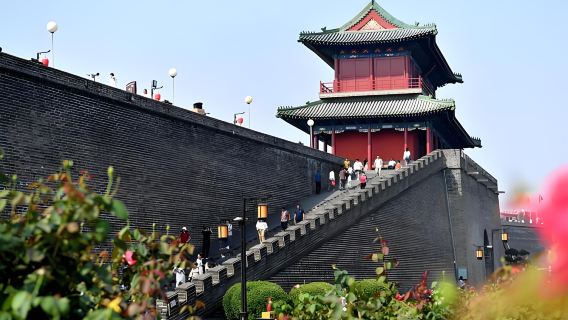
Free cancellation
Instant confirmation
Book now for tomorrow
From€34.67

From€80.45
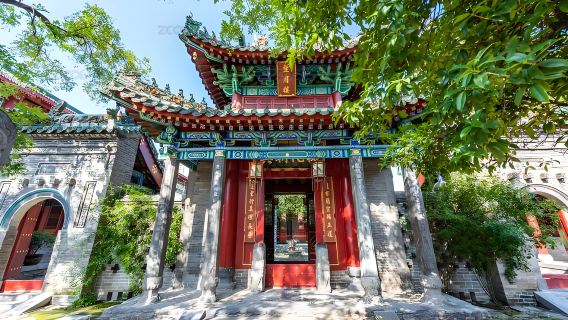
Free cancellation
Instant confirmation
Book now for tomorrow
From€64.10

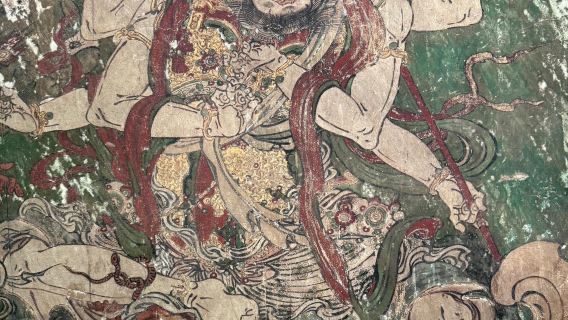
Free things to do in Yuanshi


What travellers say about Yuanshi

SEILA 9898927 October 2026
4.0
Good experiences with temple of heaven - good environment along with old tree over 200 years
Temple of Heaven

WasabiR24 October 2026
4.0
Baotu Spring is definitely worth a visit. The park is beautiful, and aside from being very crowded, it has no other drawbacks. The three springs are quite large, though the spray isn't very high. Each pool is different, and it's quite interesting to observe closely. Some pools constantly emit small bubbles, and many pools are teeming with koi. However, due to the large number of people feeding them, the fish have become very picky eaters.
Baotu Spring

无锡易纯净化魏宏春27 October 2026
5.0
Visiting Pingyao Ancient City has always been a dream of mine, because it is the best-preserved ancient city in China and also the most distinctive. Tens of thousands of residents still live in the city today. The hard-working spirit of the people of Shanxi and their banks, which spread throughout the country, are a microcosm of the economy of Qing Dynasty China.
Pingyao Ancient City

Anonymous user27 October 2026
5.0
Looking at the Hanging Temple from afar, one is truly amazed by the wisdom and ability of the ancient Chinese. The choice of location and construction of the temple in such a place is remarkable and worth recommending to everyone to visit.
Xuankong Temple

M22***4327 October 2026
5.0
The Summer Palace is a 5A-level imperial garden. Our tour guide, whom everyone calls "Da Mei," is very conscientious, responsible, and patient. She takes care of every aspect of the group members' needs and provides very detailed and engaging explanations.
Summer Palace
Anonymous user27 October 2026
5.0
The glazed tile roof ornaments in the main hall are magnificent. Although the lighting inside the hall is dim, the murals are full of detail when you look closely. Climbing the Huayan Pagoda and overlooking the ancient city offers a very pleasant view. The entire temple has a very quiet atmosphere, and a peaceful walk around it brings a sense of tranquility. There were many tourists taking photos inside the temple, but the order was well maintained.
Huayan Temple

吹你一脸灰10 October 2025
4.0
Berlin Zen Temple is located at No. 23, Shita East Road, Zhaozhou Town, Zhao County, Shijiazhuang City, Hebei Province. It was first built during the Jian'an period of the Eastern Han Dynasty (196-220 AD). It was called "Guanyin Temple" in ancient times, "Yong'an Temple" in the Southern Song Dynasty, "Berlin Zen Temple" in the Jin Dynasty, and "Berlin Zen Temple" since the Yuan Dynasty. The existing temple buildings (except the Berlin Temple Pagoda) were built in 1992, covering an area of more than 90 acres. It is an important ancestral temple in the history of Chinese Zen Buddhism [2].
Bailin Temple

E32***4525 October 2026
5.0
The hotel is very close to Baotu Spring Scenic Area, just 200 meters from the south gate, which is very convenient. Guests can also enjoy Baotu Spring water while staying at the hotel. It's also not too far to get to Daming Lake Scenic Area. The hotel service is excellent, very 👍.
Daming Lake Scenic Area

M34***4926 October 2026
5.0
This was my first visit to the Shanxi Museum, and I was incredibly lucky to have this elderly male guide! His voice was deep and pleasant, and his storytelling was engaging and never boring. I especially loved his method: he first laid out the historical context, then guided us through the artifacts in detail, a gradual and immersive approach that made it easy to connect with the exhibits. He meticulously explained several of the museum's most prized possessions, bringing the history of Shanxi, a land of mountains and rivers, to life. I thoroughly enjoyed the entire visit. It wasn't just rote memorization of facts; the experience was fantastic. I highly recommend having such a wonderful guide when visiting a museum!
Shanxi Museum

_WB***5911 August 2026
5.0
The cable car ride up and down was quite easy; walking around the top wasn't tiring at all. From the cable car station, I noticed the stairs looked incredibly long if you wanted to climb up yourself. Also, the middle station (the entrance to the slide) and the end station are on two different mountain peaks, requiring you to go up and down the stairs. The scenery at the summit was fantastic, with cliffs and precipices typical of the Taihang Mountains.
To get to Wanfo Cave, you need to climb a short, rather steep staircase. The descent isn't far, but the drop is significant; some steps are as high as my calf. Wanfo Cave was cool and shrouded in mist.
There are some shops on and at the foot of the mountain; bottled water is 2 yuan, very affordable. However, the KFC at the foot of the mountain wasn't open.
Baodu Scenic Spot


