Tumed Left Banner

Things to do in Tumed Left Banner

Search attractions or local attractions & tours
Search

Explore top experiences

Top 10 attractions in Tumed Left Banner
View all Attractions
Yanmenguan
No. 9 of Fall Viewing Attractions in Shanxi

Yanmenguan

8.1
4.7/5
8.2k reviews

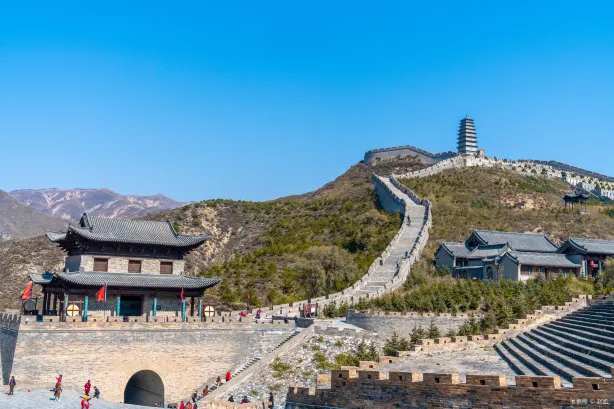
Yanmenguan, located approx. 30 km northwest of Dai County in Xinzhou, is a pass on the inner Great Wall of the Ming Dynasty, andNingwu Pass, together with Pianguan, they are known as the "three outer passes". There is no public transportation from Dai County town to the attraction, so you can only get there by private charter. Inside the attraction, you have to rely entirely on walking.YanmenguanSince ancient times, it has been a crucial pass for the Central Plains dynasties to defend against invasions from northern nomadic tribes. Its earliest history can be traced back to the Warring States period when King Wuling of Zhao fought against the Xiongnu here. Han Dynasty generals Li Guang, Wei Qing, and Huo Qubing once led troops to battle the Xiongnu in this area. During the Northern Song Dynasty,YanmenguanIt became the main battlefield between the Song and Liao dynasties, and the prototype of the well-known story of the Yang family generals took place here. A statue of Yang Liulang stands in the attraction. ExistingYanmenguanIt was built in the seventh year of the Hongwu era of the Ming Dynasty (1374) (with multiple reconstructions in recent years). Currently, there are three gates (east gate, west gate, and small north gate). A wild goose tower stands atop the east gate, and the lintel of the small north gate (i.e., the barbican gate) is inscribed with "Yanmenguan"Three large characters flanked by brick-carved couplets: 'Foremost strategic pass in three frontiers, most revered fortress among nine passes,' both inscribed by the great calligrapher Fu Shan of the late Ming and early Qing dynasties. You can visit the ruins of Ming and Qing military barracks on the hill north of the fortress. To the right outside the west gate areGuan Yu templeOutside the east gate stands the Jingbian Temple, dedicated to Li Mu, a renowned general of the Zhao state during the Warring States period. If you are a fan of the Great Wall, when you visit Yanmenguan, you can walk along the ancient pass trail here. The ancient pass trail in the attraction is built along the local mountain terrain, winding through the peaks. Climbing this section of the trail may be slightly tiring for those who usually work in offices, but when you ascend a peak along the ancient path and gaze at the vast expanse of withered grass outside the pass, quietly feeling the weight of history, you'll find the physical effort well worth it. There are some farmhouse inns near Yanmenguan that can provide food and stay, but most visitors return to Dai County or go to other counties or cities for accommodation. Walking the ancient pass consumes a lot of energy, so you can bring some dry food and drinking water.

China · Dai County
38% offFrom VND 211,539
Datong Ancient City
No. 2 of Night Attractions in Shanxi

Datong Ancient City

8
4.7/5
512 reviews

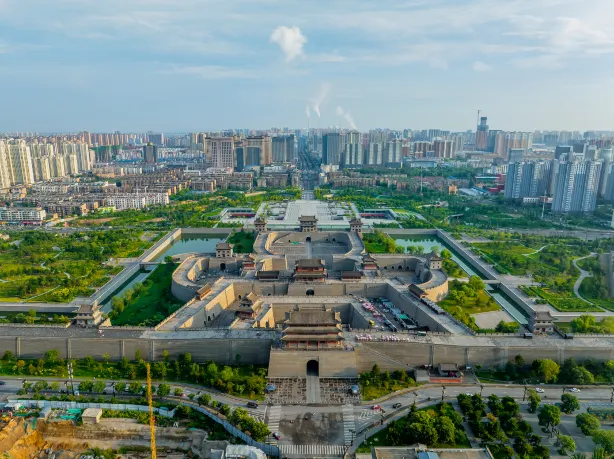
Datong Ancient City is the historic core of Datong, Shanxi. It served as the capital Pingcheng during the Northern Wei dynasty, the western auxiliary capital during the Liao and Jin dynasties, and a strategic frontier stronghold in the Ming dynasty, earning it the enduring title "northern key." Over its 2,000-year history spanning dynastic changes, the city's location remained largely unchanged, preserving its chessboard-style street grid centered on Sipailou to this day. The 2008 conservation and restoration project reunited the city walls, reconnected the moat, and gradually revived ancient architecture and old streets, layering the grandeur of an ancient capital with modern life within the same walled city. The ancient town offers an exceptionally dense concentration of noteworthy sights: in Huayan Temple's Liao- and Jin-dynasty halls, the graceful "clasped-hands, smiling" Liao-dynasty bodhisattva statue in the Scripture Depository Hall has long been hailed as the "Oriental Venus"; Shanhua Temple preserves a complete complex of Liao- and Jin-era wooden architecture. The Nine-dragon Wall, originally a glazed screen wall before the Ming-dynasty Dai Prince's residence (destroyed in war), survives with its nine coiling dragons still radiant—older and larger than its counterparts in Beijing's Forbidden City and Beihai Park. Climbing the reconstructed Ming-style city walls reveals a bird's-eye view of the square town's crisscrossing four main streets and orderly rooftops. An evening wait for sunset on the ramparts, followed by the illuminated outlines of walls and watchtowers after dark, makes for one of the town's most enchanting moments. Walking is recommended for touring: the attractions inside the city walls are spaced closely, allowing Huayan Temple, Shanhua Temple, the Nine-dragon Wall, and the drum tower to form a connected route. When tired, you may turn into the area around East Drum Tower Street, where time-honored shops and snack stores are concentrated, making it ideal for resting and replenishing. The ancient town covers a considerable area, so allocate at least half a day and wear comfortable shoes to leisurely appreciate the layered historical depth of this ancient capital.

China · Datong
Free attraction
Wu Tai Shan
No. 3 of Fall Viewing Attractions in Shanxi

Wu Tai Shan

7.8
4.6/5
8.7k reviews

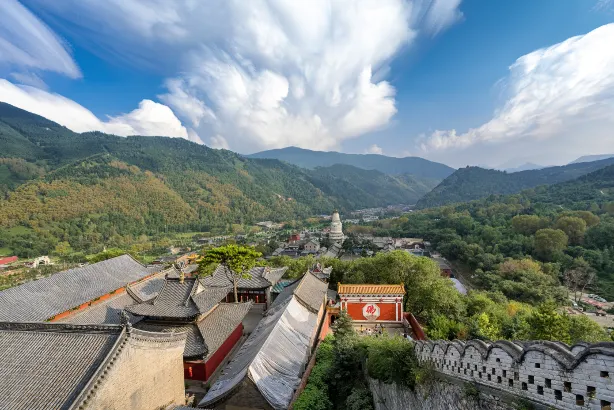
Wu Tai Shan is located in Wutai County, Xinzhou City. It is named for its five peaks, whose summits are flat like platforms and cluster together. As the sacred site of Bodhisattva Manjushri, it is dotted with numerous temples and is one of China's Four Sacred Buddhist Mountains. It is also a well-known summer resort, with a cool and pleasant climate in summer. What makes it unique is the coexistence of Yellow Temples (Tibetan Buddhism) and Blue Temples (Han Buddhism); visitors can see both Han Buddhist monks and Tibetan lamas, and this pattern of Han and Tibetan Buddhism coexisting is quite rare among China's sacred Buddhist mountains. If the five fingers are likened to the towering "Five Terraces," the palm is Taihuai Town—the geographic center of the attraction, where most temples are concentrated and which serves as the main base for visitors. To the northwest of the town lies a cluster of essential temples, which can be explored on foot or by the attraction's eco-friendly shuttle bus. The Great White Stupa of Tayuan Temple is the landmark structure of the attraction; in front of the gate of Luohou Temple stand a pair of ancient stone lions; Xiantong Temple is the largest Qingmiao (Chinese Buddhist) temple on the mountain; and Pusading is a highly representative Yellow Hat (Tibetan Buddhist) monastery. From Taihuai Town, crossing the Qingshui River to the north, you reach Dailuoding. Ascending the Dazhi Road with over a thousand stone steps, you can pay homage to the Five Directional Manjushri statues, known as the "Little Pilgrimage," or take a round-trip cable car. Heading south along the road, Bishan Temple is a Ten Directions Zen Monastery, housing a Burmese jade Buddha and a statue of the future Buddha Maitreya; Shuxiang Temple contains a tall painted clay statue of Manjushri; Nanshan Temple is renowned for its dazzling array of stone carvings and offers distant views of the South, North, and Central Terraces. Zhenhai Temple is serene and secluded, preserving painted murals within, and local folklore tells of legends related to Emperor Shunzhi's renunciation. In addition to the main temples above, there are also Nanchan Temple, Longquan Temple, Baiyun Temple, and others on the mountain, each with its own distinctive features. If you wish to reach the summit of the five terraces—known as the "Great Pilgrimage to the Terraces"—the East Terrace, Wanghai Peak, is a great place to watch the sunrise, with spectacular views of the sea of clouds and the rising sun; the South Terrace is covered with wildflowers in summer; on the West Terrace on an autumn night, the moon hangs like a mirror above the peak; the North Terrace is a high peak in North China and an excellent spot for enjoying snowy scenery, offering panoramic views of the surrounding mountains after snowfall.

China · Wutai County
From VND 265,385
Wulanhada Volcano Geopark

Wulanhada Volcano Geopark

7.8
4.3/5
1.6k reviews

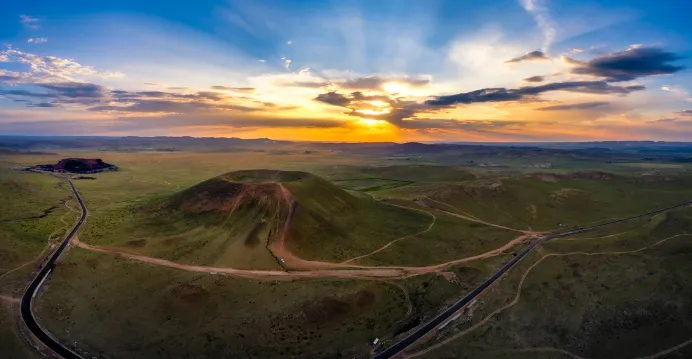
Wulanhada Volcano Geopark is hidden deep in the grasslands of Ulanqab. It is an exceptionally young volcanic chain, with geological surveys indicating eruption records within the last approx. 10,000 years. The park features a complete array of landscapes, including volcanic cones, lava flows, and barrier lakes, and is hailed as a natural "volcano museum," having even graced the cover of Chinese National Geography magazine. The volcanic cones are spread across the grassland like beads on a string, and local herdsmen have named them based on their shapes and colors: Red Mountain, Fire-Burning Mountain, North Alchemy Furnace, Black Brain Bag, Middle Alchemy Furnace, South Alchemy Furnace, North Sharp Mountain, and South Sharp Mountain. Half the fun of exploring this place lies in "finding the mountains by number." Popularity is concentrated on several "alchemy furnaces": Volcano no. 3 (North alchemy furnace) has a wooden boardwalk, allowing easy access to the summit for panoramic views of the entire volcanic chain and grasslands, with particularly photogenic light at sunset; Volcano no. 5 (Central alchemy furnace) features a well-preserved, rounded cone without boardwalks—hiking up the scree slope is more strenuous but rewards visitors with rare tranquility; Volcano no. 6 (South alchemy furnace), whose body was split open by early quarrying, exposes layers of reddish-brown and gray-black volcanic rocks, earning it the nickname "naked volcano." Combined with scattered volcanic debris, its desolate landscape resembles the surface of Mars. Renting a spacesuit to take "Mars landing" photos here is the park's highly popular signature activity. Further south, Volcano no. 7 and no. 8 are also called North and South pointy mountains. The base of Volcano no. 8 was once famous for its abundant agate deposits. The grassland is open and unobstructed, with strong winds, intense sunlight, and significant temperature differences between day and night. Windproof jackets and sun protection items are worth packing. On clear nights, there is little light pollution, and you can often see the Milky Way when looking up. The park and its surroundings have stargazing cabins and RV campsites, making it suitable to leave the itinerary for the night. The entire volcanic cluster is a protected geological heritage. Agates and volcanic rocks should only be admired, as digging them would damage the grassland. Vehicles should also stick to existing roads and avoid driving into the pastures.

China · Qahar Right Rear Banner
20% offFrom VND 611,539
Five Pagoda Temple
No. 3 of Fall Viewing Attractions in Hohhot

Five Pagoda Temple

5.8
4.7/5
354 reviews

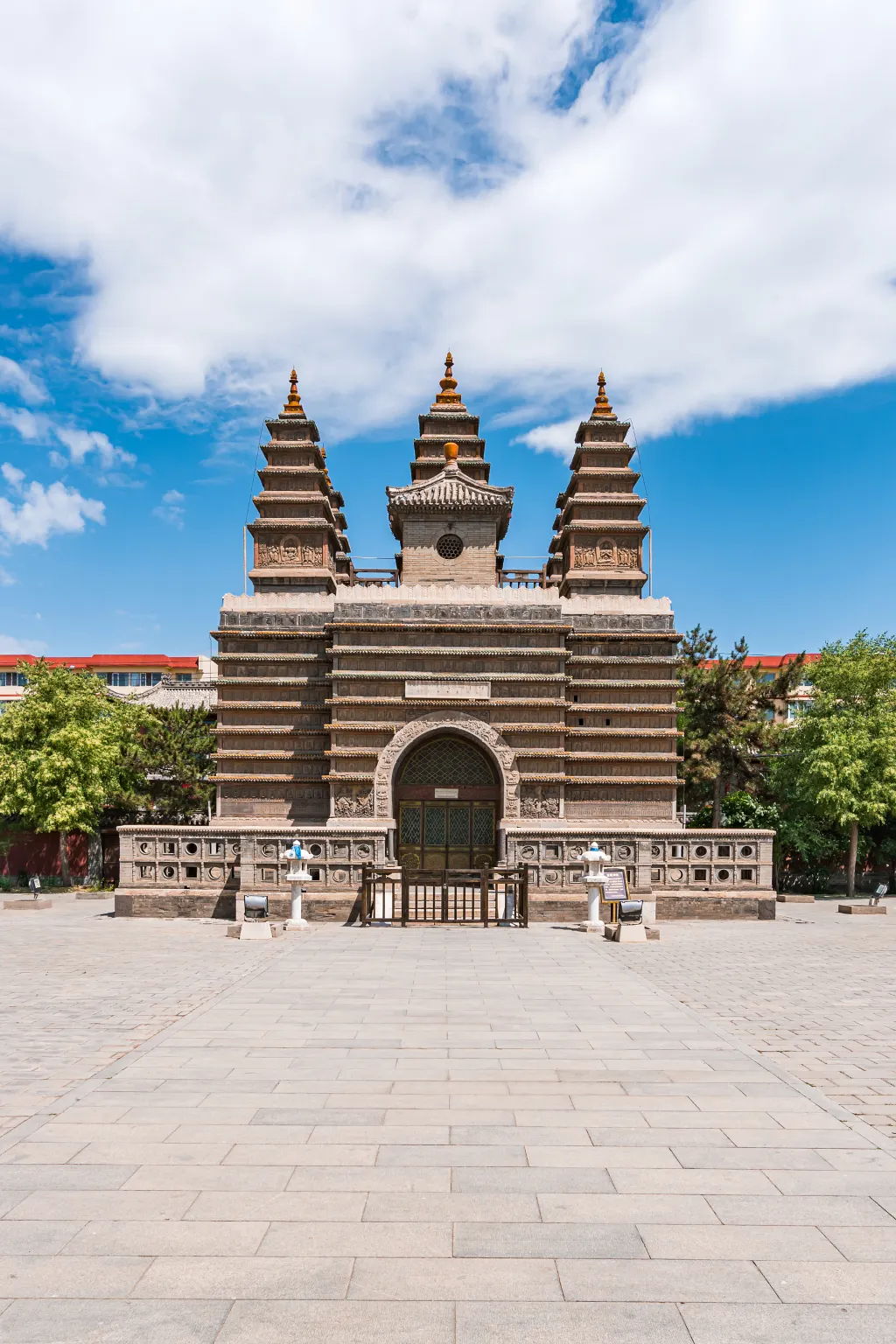
Wuta Temple, formerly known as Cideng Temple, is located in the southeast of the old city of Hohhot. Once all the temple buildings collapsed, only this pagoda was left, so later generations learned that there was a temple here, and it was named Wuta Temple when it was rebuilt. Wuta Temple is a Tibetan Buddhist monastery and the birthplace of Tibetan Buddhism in Mongolia. The south of Wuta Temple faces Wuta Temple Square, and the entrance is also here. The layout of Wuta Temple is typical of the central axis of the Han nationality. The central axis runs from north to south, and the two sides are strictly symmetrical. The temple is divided into three courtyards, namely the Sanshi Buddha Temple in the south, the Cultural Exhibition Court in the middle and the Cideng Temple in the north. The area of Wuta Temple is not large, with a depth of only about 150 meters. Entering the temple from the south gate of Wuta Temple, there are small white pagodas on both sides in the south of the park, which has the characteristics of Tibetan Buddhism. Directly opposite is the Sanshi Buddha Hall. The architecture of the Sanshi Buddha Hall not only has the characteristics of Han palaces, but also the style of ethnic minorities and Tibetans. This is also the general style of the entire temple building. After passing through the Sanshi Buddha Hall, you arrive at the courtyard in the middle. The building opposite is clearly written with "Hushizhao Temple Cultural Exhibition". Inside the building of the temple culture exhibition, there are historical portraits of Tsongkhapa and other figures on the left wall, and on the right side are the pictures of the existing Vajra seat relic pagoda in my country, reflecting the long history of the temple culture in Hohhot. Then came to the courtyard in the north, in the middle of the courtyard is the main hall of Cideng Temple, behind the main hall is the relic pagoda. This stupa was built in the Yongzheng period of the Qing Dynasty and is about 16 meters high. When visiting the Wuta Temple, you can not only watch it from the outside, but also go up to the top of the pagoda, overlooking the whole temple, with a good view. There is a Mongolian astronomical map stone carving on the north wall behind the stupa. The diameter of the astronomical map is 144.5 cm.

Hohhot · 46km from Tumed Left Banner
Free attraction
Shanhua Temple
Selected for Best Things to Do in Shanxi

Shanhua Temple

7.5
4.8/5
2.5k reviews

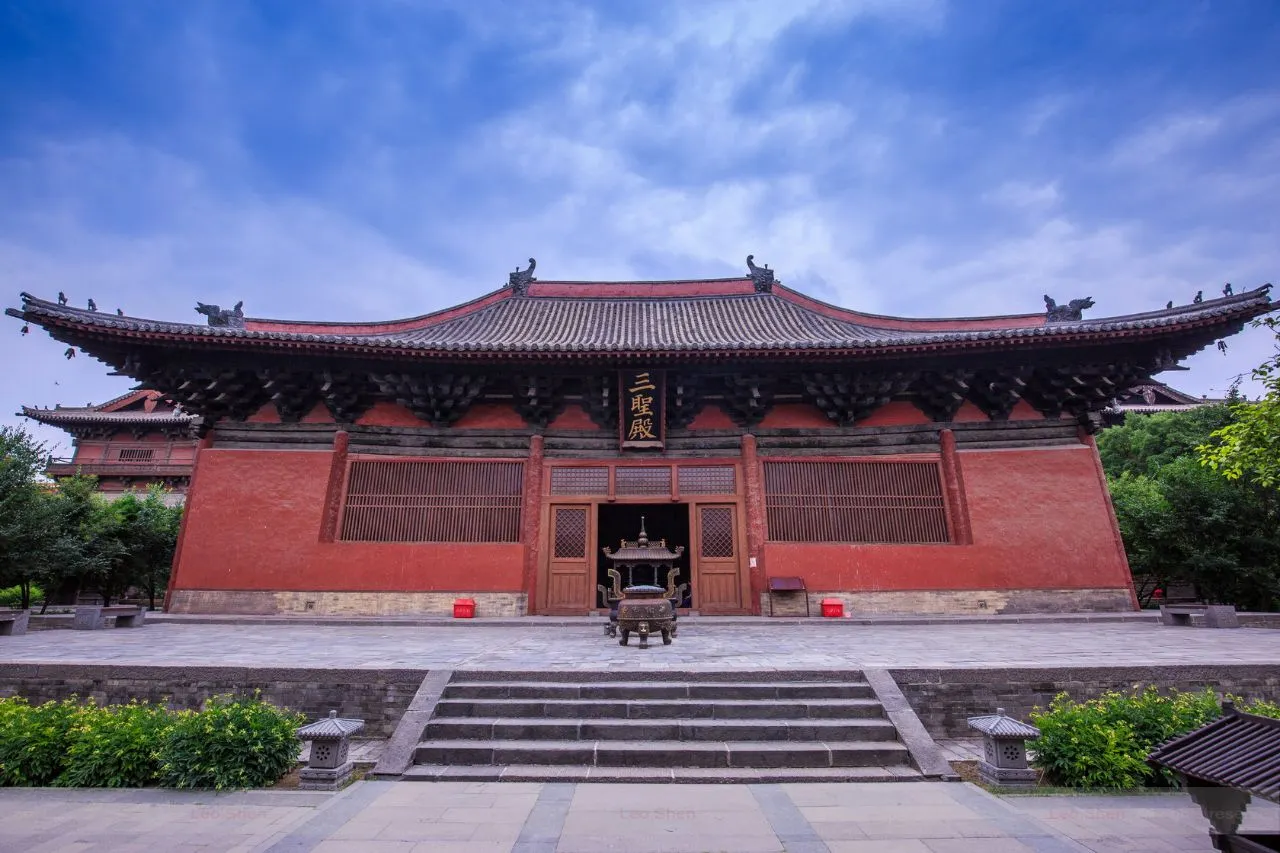
Shanhua Temple, commonly known as the "southern temple," is located in the southern corner of the ancient city of Datong. The temple was first built during the Kaiyuan era of the Tang Dynasty and was initially named Kaiyuan Temple. It was renamed Dapu'en Temple during the Later Jin Dynasty but was destroyed in the war at the end of the Liao Dynasty. It was rebuilt on the original site during the Jin Dynasty and was officially named Shanhua Temple in the Ming Dynasty, a name that has been used ever since. The temple's mountain gate, Three Saints Hall, Mahavira Hall, and Puxian Pavilion are all original structures from the Liao and Jin periods, making it one of the relatively well-preserved temple architectural complexes from that era in China. The halls are gradually elevated along the central axis from south to north, with the layout of the Tang Dynasty temple still faintly discernible. Unlike most temples, the mountain gate here combines with the heavenly king hall into one structure: the five-bay Jin dynasty gate houses Ming dynasty statues of the four heavenly kings, immediately visible upon entry with imposing majesty. The central three saints hall, also a Jin dynasty construction, features strikingly large and ornate bracket sets under its eaves that project in layers resembling blooming flowers—a distinctive hallmark of this hall. It enshrines the original Jin dynasty "Flower Adornment three saints": Vairocana Buddha at the center flanked by Manjusri and Samantabhadra bodhisattvas, their forms full and expressions serene. The main hall of the great hero on the northern high platform is the temple's principal hall, built during the Liao Dynasty and renovated in the Jin Dynasty. The altar enshrines the five wisdom buddhas arranged from east to west: Aksobhya in the east, Ratnasambhava in the south, Vairocana at the center, Amitabha in the west, and Amoghasiddhi in the north—all surviving Liao sculptures with Jin-era repainting. Twenty-four deva polychrome sculptures stand on brick platforms along the eastern and western walls, twelve on each side, representing masterpieces of Jin Dynasty sculpture. Some appear armored and weapon-wielding with fierce expressions, while others wear official robes with flowing sashes. Among them, the benevolent and graceful Sridevi particularly captivates viewers. The hall's western and southern walls preserve Buddhist narrative murals painted during the Kangxi era of the Qing Dynasty. Before entering the temple, consider viewing the glazed five-dragon wall in front of the mountain gate. This Ming dynasty Wanli-era relic was originally the screen wall of Xingguo Temple in the southern city, relocated here in the 1980s. Five coiling dragons surge amid turbulent clouds and waves on the wall, with the central "main dragon" holding a fire pearl and facing directly forward toward the ancient temple's gate. During your visit, pay special attention to the hall of three saints' diagonal arches and the Liao- and Jin-dynasty polychrome sculptures in the main hall. The dim lighting in these ancient halls invites slower observation of the statues' expressions and drapery details, allowing deeper appreciation of these Liao-Jin treasures.

China · Datong

Experiences you can't miss in Tumed Left Banner

Featured Day tours in Tumed Left Banner

View all Day tours


Mini Group (2–8 Guests) or private tour optional | Kubuqi desert+Hasuhai Lake 1-day tour/door-to-door pick-up/Entrance tickets included
󱌍
4.3/5
· 10 reviews· 75 booked
Duration: 10.5 hrs
English
Instant confirmation
Book now for tomorrow
FromVND 1,369,231
Round-trip from Hohhot: Kubuqi desert | Desert heartbeat journey
󱌍
FromVND 9,416,446
Mini Group (2–8 Guests) Optional | Hohhot Xilamuren Grassland all-inclusive day trip | Multiple tour options with guaranteed departures
󱌍
4.5/5
· 2 reviews· 33 booked
Duration: 11 hrs
English
Free cancellation
Instant confirmation
Book now for tomorrow
FromVND 642,308
Departure from Hohhot: Red Stone Cliff
󱌍
Duration: 12 hrs
English
Free cancellation
Instant confirmation
FromVND 1,768,347
Round-trip from Hohhot: Xilamuren prairie | Be a Mongolian for a day
󱌍
FromVND 8,620,690
Xilamuren Grassland Private Day Tour From Hohot: a Peaceful Escape into Nature
󱌍
Duration: 5.5 hrs
English
Free cancellation
Instant confirmation
Book now for tomorrow
FromVND 6,396,994
Tumed Left Banner Today's weatherClear -4-5℃
Tumed Left Banner weather for the next 2 days11/30: -7-6℃, 12/1: -4-7℃

Free things to do in Tumed Left Banner
What travellers say about Tumed Left Banner

user-avatar
Anonymous user22 November 2026
4.0
Take the bus from the square at the North Gate of Xinzhou Ancient City. It takes about an hour and a half to reach Yanmen Pass Scenic Area. There aren't many people during the off-season, so you can finish your visit around 1:00 PM. Then, return to the North Gate of Xinzhou Ancient City stop and get off.

Yanmenguan

user-avatar
离隹馬蚤氵旁氵它13 November 2026
5.0
The night view is great, and the performances are fantastic, especially the fire show at 8:30 pm, which is definitely worth seeing and lasts for 15 minutes. Try to get a seat near the center of the barrier around the performance area.

Datong Ancient City

user-avatar
_TI***h43 January 2026
5.0
I really enjoyed going with my kids. It was nice to see that they had a pet-friendly environment. The staff were very friendly.

Daqingshan Wildlife Park

user-avatar
SNSD- Sone11 November 2026
5.0
Overall, the Wutai Mountain scenic area was quite nice! There are many temples, and the routes are relatively simple; you can easily see everything by following the signs! The shuttle bus service was less frequent due to the off-season, but it didn't take too long! The fewer crowds made for a more comfortable experience, which was great!

Wu Tai Shan

user-avatar
蓝蓝姐姐16 October 2026
4.0
The volcanoes were spectacular, especially number six. I didn't get a direct view of the others, only from a distance, so they weren't that impressive. The sunset was truly beautiful, definitely worth seeing. However, the signage inside was somewhat inadequate; there weren't enough, and sometimes it was easy to get lost. Also, the gravel road for parking wasn't ideal for low-chassis minivans, and the section from the ticket gate to the park was riddled with potholes.

Wulanhada Volcano Geopark

user-avatar
张大仁21 November 2026
5.0
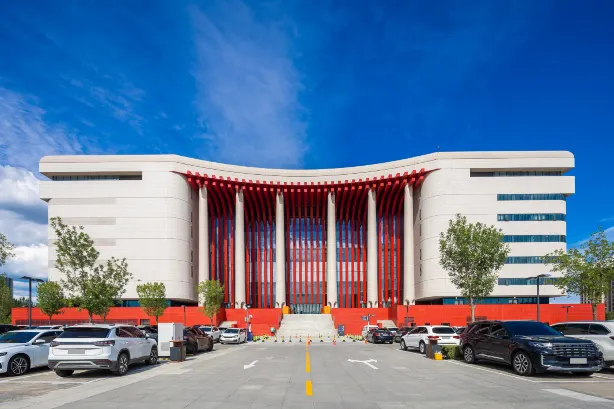
It's huge, incredibly huge!!! The Inner Mongolia Museum is characterized by its sheer size!!! The exhibits are abundant and diverse; it's best to have a small electric scooter to explore it! Reservations can be made a week in advance, or you can buy special exhibition tickets! Visiting the Inner Mongolia Museum was an unforgettable cultural and natural journey. It not only gave me a more comprehensive and in-depth understanding of Inner Mongolia's history and culture but also ignited my love and respect for this magical land. Every time I gazed at those precious artifacts, every time I listened to those distant stories, it was a spiritual cleansing, making me cherish and pass on this invaluable cultural heritage even more.

Inner Mongolia Museum (New Building)

user-avatar
行走毛毛20 October 2026
5.0
Many friends who come to Hohhot visit some popular tourist attractions, but I recommend visiting some less-traveled ones, such as the Five Pagoda Temple. There aren't many tourists inside, and you can fully experience the culture of ethnic minorities and the atmosphere of ancient architecture.

Five Pagoda Temple

user-avatar
Anonymous user26 November 2026
5.0
There aren't as many tourists here. The famous Shanhua Temple, which boasts one Liao and three Jin dynasty sites, is now quite popular online. For example, there are the Four Heavenly Kings, the famous Hariti (disc mother) story, and the most beautiful and compassionate Holy Mother...

Shanhua Temple

Trip Moments in Tumed Left Banner

Popular cities near Tumed Left Banner

Frequently asked questions

When choosing a tour, start with how much time you have and the kind of experience you're looking for. Trending options right now include Mini Group (2–8 Guests) or private tour optional | Kubuqi desert+Hasuhai Lake 1-day tour/door-to-door pick-up/Entrance tickets included, Round-trip from Hohhot: Kubuqi desert | Desert heartbeat journey, and Mini Group (2–8 Guests) Optional | Hohhot Xilamuren Grassland all-inclusive day trip | Multiple tour options with guaranteed departures. Check the real-time availability and itinerary before you book.

As of 29 November 2026, the reference price for day tours and activities in Tumed Left Banner is around VND 642,308 – VND 9,923,077. Rates vary by duration, group size, transport, tickets, meals, and any special admission requirements. Before you book, please confirm the billing currency and whether the price is quoted per person or per group.

Get help anytime, anywhere within 30 secondsContact customer support

Change and cancellation policies vary by attractions and tours. Please check the product details page for more information.

Ticket prices may vary between weekdays and weekends, as well as during peak and off-peak seasons. When booking with Trip.com, you can also use Trip Coins to get extra savings. For more tips on booking discounted tickets, please visit Trip.com for the latest information.