
Things to do in Shuozhou
Explore top experiences
Top 10 attractions in Shuozhou


Yingxian Wooden Pagoda
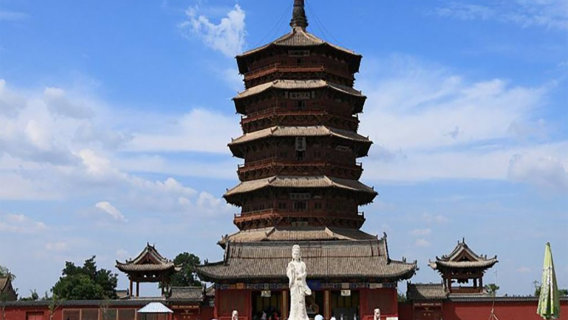
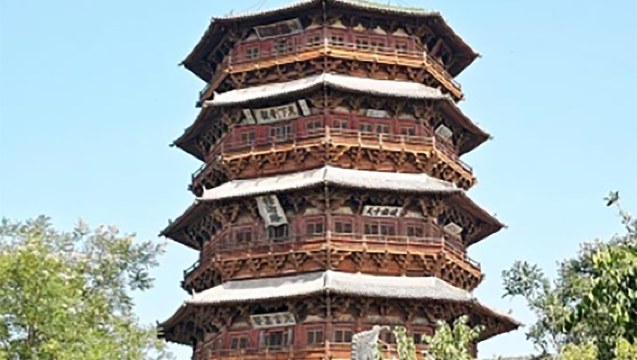
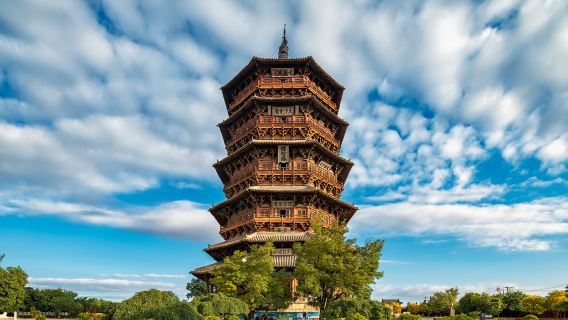
The full name of Yingxian Wooden Tower is Sakyamuni Pagoda of Fogong Temple. It is in the Fogong Temple in the northwest of Yingxian County. The octagonal wooden pagoda has five stories. Except for the high-end stone foundation of the first floor, the rest of the pagoda is made of wood using the traditional craftsmanship of Sunmao. Each layer of the wooden tower is equipped with wind chimes for a pleasant sound when the wind blows.Ying County · 1.7km from downtown

Shuozhou Old Town
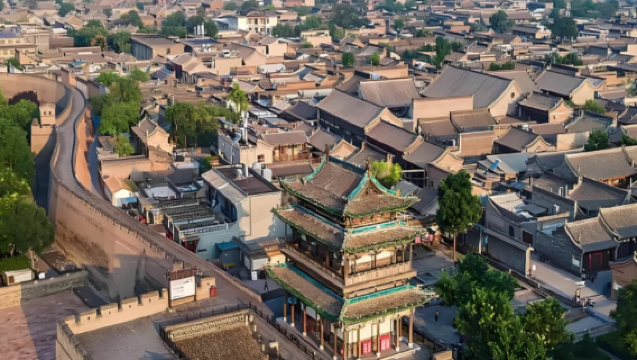
Located in Shuozhou City, Shanxi Province, Shuozhou Old Town is an ancient city full of history and cultural heritage. As the historical core area of Shuozhou City, the Old Town attracts many tourists and history lovers with its well-preserved ancient buildings and profound cultural heritage. There are many buildings and relics of historical value in the Old Town, including ancient city walls, traditional courtyards and temples. These buildings not only demonstrate the exquisite craftsmanship of ancient Chinese architecture, but also reflect the important position of Shuozhou in history. Walking through the streets of the Old Town, visitors can feel the strong historical atmosphere, as if traveling back in time. In addition, Shuozhou Old Town is also famous for its rich folk culture. Local traditional festivals, handicrafts and local cuisine provide tourists with a diverse cultural experience. Especially during festivals, the Old Town will hold various folk performances and market activities to showcase the unique cultural charm of Shuozhou.Shuozhou · 2km from downtown

Guangwu Great Wall
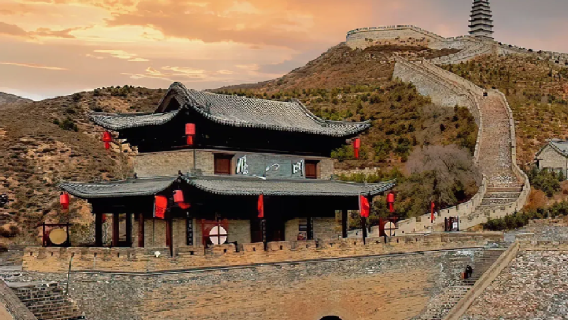
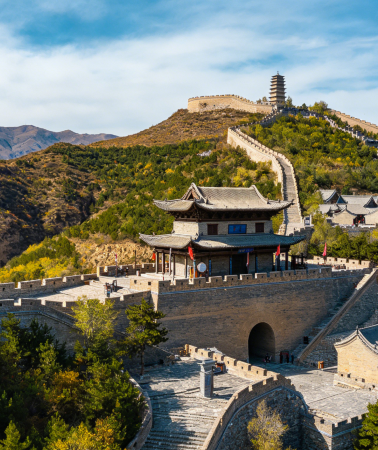
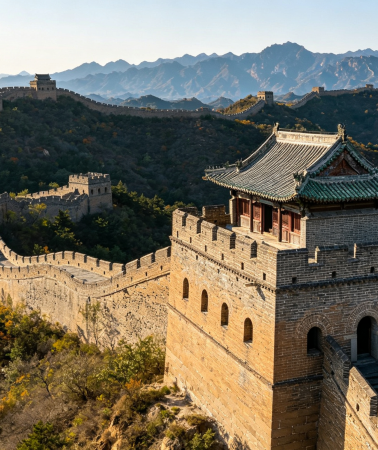
The Guangwu Great Wall starts from the east of Baicaokou River in Daixian County, Xinzhou City in the west, and ends at Xinguangwu Village in Shanyin County, Shuozhou City in the east, with a total length of 10 kilometers. This section of the Great Wall was built by Li Jingyuan, the governor of the capital, in the thirty-third year of the Wanli reign of the Ming Dynasty (1605). This line is also a mature donkey line, which is very famous among donkey friends. According to historical records, this section of the Great Wall is made of bricks and stone, with stone tombs at the bottom, bricks above, and soil construction inside, 6-10 meters high, 4 meters wide at the top, and 5 meters wide at the bottom. The towers, the enemy towers, the fortresses are disposed of in the narrow, and the secret doors are set up, and the east-west extension is connected to the outer Great Wall. Today, many of these brick walls have been demolished by locals to build houses, leaving only some remnants of the city walls and wall stacks. There are also many castles scattered inside and outside the Great Wall. Xinguangwu City is one of them. This kind of castle on the edge of the Ming Dynasty is usually planted, and it is used for expeditions during wartime. This is also the second line of defense to defend the Central Plains when the Great Wall defense line of the Datong Line is broken through. You can charter a car from Shanyin or Daixian to the scenic spot.Shanyin · 36.5km from downtown

Fogong Monastery
The core of Yingxian Wooden Pagoda Scenic Area - Fogong Temple, carries thousands of years of history and culture, and shines brightly in the long river of time. Fogong Temple was first built in the second year of Qingning in the Liao Dynasty (1056 AD). At that time, Emperor Xingzong of Liao agreed to build it under the advocacy of Empress Xiao. Monk Tian was ordered to build it, and it was later completed in the sixth year of Jin Mingchang (1195 AD). The temple is arranged along the central axis, with buildings such as the mountain gate, wooden tower, and brick gatehouse distributed in sequence. In front of the mountain gate, the bell and drum towers on the east and west sides echo each other; when you step into it, the east and west side halls have their own characteristics. The east hall enshrines the guardian deity of the temple, while the west hall has a statue of Bodhidharma. The most eye-catching thing in the temple is the Sakya Pagoda of Fogong Temple, which is also known as the Yingxian Wooden Pagoda. It is the only existing pure wooden pavilion-style ancient tower in China. It looks like a five-story, six-eave tower, but it actually has nine floors, with five visible floors and four hidden floors. The tower houses 34 colorful statues and about 304.65 square meters of murals. It also excavated and restored 160 Liao Dynasty cultural relics, including two particularly precious Buddha tooth relics.Ying County · 1.3km from downtown

Shahu Pass Scenic Area
Shahu Pass Scenic Area is located at the junction of Shanxi Province and Inner Mongolia Autonomous Region in Youyu County, Shuozhou City, Shanxi Province, with theAncient Great Wallto the north and theCangtou Riverto the west. During the Ming Dynasty, troops were frequently dispatched from this pass to defend against the southward invasions of the Oirat Mongols, hence it was named "Shahu Pass" (literally "Kill the Hu Pass"). In 1925, the National Army led by Feng Yuxiang was stationed here, and the garrison commander Han Duofeng renamed it "Shahu Pass" (using the character for "tiger" instead of "Hu") to ease tensions. The terrain here is strategically perilous, with a 3,300m long, narrow corridor formed between the eastern and western mountains, creating a natural pass. It was also an important tax checkpoint in history. During the Ming and Qing dynasties, it became the birthplace and main thoroughfare for Shanxi merchants. The birthplace of the once-thriving "Dashengkui" trading firm is located here. Additionally, the "West Pass" mentioned in the "Zou Xikou" (Journey to the West) refers toShahu Pass. Here you can find the majesticAncient Great Wall, the well-preserved Shahu Fortress, rows of beacon towers, the desolate and primitive ancient battlefield, the Changlu Slope ancient road which is rare in the province, and the exquisitely crafted ancient music pavilion.Youyu County · 30.9km from downtown

Old Guangwu Ancient City
The old Guangwu City is located at the Baicaokou under Yanmen Pass, to the south of the Guangwu Tomb Group. According to the records of "Liao History", the old Guangwu City was built in Liao and Jin as a defensive stronghold in front of Yanmen Pass. The ancient city walls built in the Ming and Qing Dynasties are still preserved in the city. The city wall is 7.35 meters high, 5 meters wide at the bottom, and 3.4 meters wide at the top. Set up crenels, look holes and perforations along the lower wall. City gates are set on the east, south and west sides of the city wall, but the north gate is not. Climbing the tower, you can see the ancient Great Wall of Guangwu on the distant mountain. Some streets in the city still have dents left by the passing carriages. There are two tall and luxuriant ancient cypress trees standing in the city. According to research, the ancient cypress trees have a history of more than 800 years. Two cedars, one female and one male, are 4 meters apart, which is also rare in China.Shanyin · 35km from downtown

Beigushan Scenic Area
Shuozhou · 52.8km from downtown

Yingxian Wooden Pagoda Scenic Area - Ksitigarbha Hall
Ying County · 1.4km from downtown

Xinzhou Ancient City
Xinzhou was called Xiurong in ancient times. It is located between Taiyuan and Mount Wutai. It is the seat of Xinzhou Administrative Office and Prefectural Committee. In the Spring and Autumn Period, Xinzhou belonged to Jin State. In the Warring States Period, it belonged to Zhao State. In the Qin and Han Dynasties, it belonged to Taiyuan County, Yanmen County, and Taiping County. In the Sui Dynasty, it was Xinxingdu and Yanmen. During the Tang, Five Dynasties and Song dynasties, it was called Dingxiang Prefecture of Xinzhou. During the Jin, Yuan, Ming and Qing dynasties, it was called Xinzhou, Daizhou and Baodezhou. During the Anti-Japanese War and the War of Liberation, most of the area belonged to Jinchaji, and the area to the west belonged to Jinsui. In 1949, Xinzhou Prefecture was established. The cultural relics and historical sites in Xinzhou City include: Xinzhou North Gate Tower. Located in Xinzhou City, on the Gongchen Gate of the old north city wall. The North Gate Tower was built in the 24th year of Wanli in the Ming Dynasty. The tower is located on the 12-meter-high city wall, which makes it more majestic and magnificent. The city wall stands tall and is painted red on the outside. There is a Voucher doorway below, with a very high top and a bottom width of more than 3 meters.China · Xinzhou

Shanxi Museum
"Five thousand years of history can be seen in Shanxi." Located on Binhe West Road in Taiyuan, the Shanxi Museum showcases the essence of Shanxi's cultural relics. The museum consists of a main building and four corner annexes, with the main building resembling both a dipper and a ding vessel, serving as the primary venue for travelers to view the collection. The main building has four floors. The first-floor lobby features a general service desk, while the second and third floors host thematic exhibitions on history and culture. The fourth floor showcases art-themed exhibitions, which together form the permanent displays of the Shanxi Museum. After entering the first-floor lobby, proceed to the second floor via the stairs to begin the historical journey themed "Soul of Jin." The cultural and historical thematic exhibition showcases the highlights of Shanxi's five-thousand-year civilization through numerous precious artifacts, ranging from ancient human relics to the rise and fall of Shanxi merchants during the Ming and Qing dynasties over five centuries. During your visit, several exquisite artifacts are not to be missed. The bird zun, a bronze ritual vessel from the Western Zhou period, was used in the ancestral temple sacrifices of the Jin marquis. The bird zun features an exquisitely crafted design with a phoenix as its main form. On the phoenix's back rests a small bird, serving as the handle for the vessel's lid. At the tail of the phoenix, an elephant is depicted, with its long trunk perfectly balancing the phoenix's two legs to form a stable tripod base. This artifact is a representative piece among the bronze collections in the museum. In addition, you can also admire: the Houma covenant texts, which are oath documents from the Spring and Autumn period used by the ministers of the Jin state; the lacquered wooden panel paintings, a painted screen from the Northern Wei dynasty depicting colorful stories from the "Biographies of Exemplary Women"; the white marble sarcophagus, a relic from the Sui dynasty, belonging to a tomb occupant who was a member of the Central Asian Yu people, with intricate carvings both inside and outside the sarcophagus, featuring figures with deep-set eyes, high noses, and black hair, characteristic of the Mediterranean Caucasian race. In the cultural thematic exhibition, you can also learn about the origins and development of Buddhism and traditional opera in Shanxi. The fourth floor of the main hall features an art thematic exhibition area. Among them, the "Timber and earth splendor" - ancient architectural art thematic exhibition showcases Shanxi's status as a province rich in cultural relics and ancient structures. "For above-ground relics, look to Shanxi" - Shanxi is renowned as the "treasure trove of ancient Chinese architecture," boasting over half of China's above-ground ancient structures with comprehensive categories, especially in the quantity of religious buildings. If you're a fan of ancient architecture, this is a must-visit. The Shanxi Museum also hosts temporary exhibitions periodically. At the first-floor lobby service desk, services such as hiring on-site guides (Chinese and English) and renting audio guides are available. The main building also houses a restaurant and a tea house for visitors.China · Taiyuan
Experiences you can't miss in Shuozhou
Featured Day tours in Shuozhou
View all Day tours
4.9/5
· 30 reviews· 111 bookedFree cancellation
Instant confirmation
Book now for tomorrow
FromSEK 573.00
4.9/5
· 48 reviews· 203 bookedFree cancellation
Instant confirmation
Book now for tomorrow
48 consecutive positive reviews
5% off
Limited-time sale
FromSEK 544.00SEK 573

5.0/5
· 11 reviews· 50 bookedFree cancellation
Instant confirmation
FromSEK 308.00
5.0/5
· 4 reviews· 29 bookedInstant confirmation
Book now for tomorrow
FromSEK 684.00
![※Datong Xuankong Temple + Ying County Wooden Pagoda Private Charter 1-Day Tour [Flexible Departure Time | Train Station Pickup]](https://ak-d.tripcdn.com/images//0581j12000ne8yzqg9E18_C_568_320.jpg?_fr=wc)
5.0/5
· 6 reviews· 38 bookedInstant confirmation
Book now for tomorrow
FromSEK 581.00
5.0/5
· 4 reviewsFree cancellation
Instant confirmation
FromSEK 513.00
5.0/5
· 1 reviewInstant confirmation
Book now for tomorrow
FromSEK 615.00

5.0/5
· 2 reviewsFree cancellation
Instant confirmation
FromSEK 820.00
Featured Cultural experiences in Shuozhou
View all Cultural experiences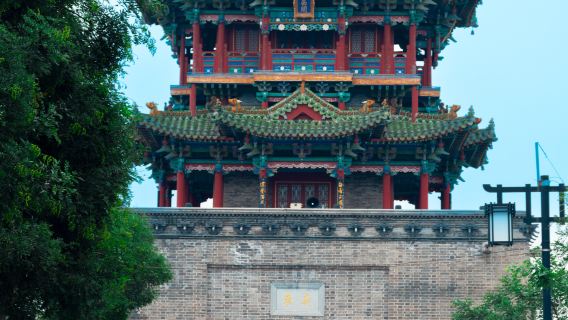
5% off
Limited-time sale
FromSEK 1,947.00SEK 2,050
![[Pingyao, Shanxi] Guided Tours and Translation Services in Chinese/English/French/Russian/Korean/German and Other Languages|Business/Exhibition Translation • City Walk • Attraction Tours • In-Park Commentary](https://ak-d.tripcdn.com/images/0354612000r4doognE81E_C_568_320.png?_fr=wc)
![[Yuncheng, Shanxi] Guides/Translators/Local Companions for City Walks, Sightseeing, Exhibition Translation, Hiking, and Travel Escorts in Chinese/English/French/Russian and Other Languages](https://ak-d.tripcdn.com/images//0583q12000o3apkv3E7F1_C_568_320.jpg?_fr=wc)


FromSEK 2,597.00
Featured Travel photography in Shuozhou
View all Travel photography![Shuozhou Trip Moments[Couple Wedding Photography/Personal Portraits/Family Group Photos/Commercial Photography & Videography/Aerial & Street Photography]](https://ak-d.tripcdn.com/images/0351e12000j0boxzl6BED_C_568_320.jpg?_fr=wc)
FromSEK 168.00
![Shuozhou Travel Photography[Wedding photo micro-movie aerial photography/wedding follow-up photography/makeup and clothing/charter tour guide customization]](https://ak-d.tripcdn.com/images/0353n12000ijypwdrC863_C_568_320.jpg?_fr=wc)
FromSEK 335.00
![Huairen trip moments[Photography services including photo shoots, short videos, promotional videos, graduation photos, family-friendly portraits, wedding photos with all raw images provided/translation]](https://ak-d.tripcdn.com/images/0352r12000ry4964tCBCE_C_568_320.jpg?_fr=wc)
FromSEK 2,005.00
![Youyu County Trip Moments[Youyu County Historical Language/Street Photography, Candid Shots, Aerial Photography, Photo Sessions, Wedding Photography, Videography/Multilingual Translation]](https://ak-d.tripcdn.com/images/0352d12000r1kcr2n4D67_C_568_320.jpg?_fr=wc)
FromSEK 1,003.00
![Trip Moments in Ying County[Microfilm promotional videos/documentaries/commercial photography & videography/wedding portrait photography/multilingual translation]](https://ak-d.tripcdn.com/images/0354712000r5qdcji8B7A_C_568_320.jpg?_fr=wc)
FromSEK 1,671.00
![Qingshuihe trip moments[Photography and videography services including family-friendly, individual and couple photos, short videos, promotional videos, portraits, wedding photos with all raw images provided]](https://ak-d.tripcdn.com/images/0354r12000s8fpdhh8C7C_C_568_320.jpg?_fr=wc)
FromSEK 2,005.00
![Wuzhai Trip Moments[Wedding Photography Microfilm with Aerial Shots/Wedding Day Coverage/Engagement Photography/Promotional Video]](https://ak-d.tripcdn.com/images/0356v12000rca8v9z4DA6_C_568_320.jpg?_fr=wc)
Instant confirmation
Book now for today
FromSEK 3,341.00
![Fanshi Trip Moments[Wedding Photography, Portrait Photography, Micro Films, Promotional Videos, Videography, Street Photography, Aerial Photography/Translation]](https://ak-d.tripcdn.com/images/0354212000o98552g570A_C_568_320.jpg?_fr=wc)
FromSEK 1,671.00
Free things to do in Shuozhou
Yingxian Wooden Pagoda
Ying County · 1.7km from downtownBook now for tomorrow, Cancel anytimeShuozhou Old Town
Shuozhou · 2km from downtownGuangwu Great Wall
Shanyin · 36.5km from downtownFogong Monastery
Ying County · 1.3km from downtownShahu Pass Scenic Area
Youyu County · 30.9km from downtownOld Guangwu Ancient City
Shanyin · 35km from downtownBeigushan Scenic Area
Shuozhou · 52.8km from downtownYingxian Wooden Pagoda Scenic Area - Ksitigarbha Hall
Ying County · 1.4km from downtownXinzhou Ancient City
China · XinzhouShanxi Museum
China · Taiyuan
More ways to travel from Shuozhou
Private Tours in Shuozhou
View More Private Tours in Shuozhou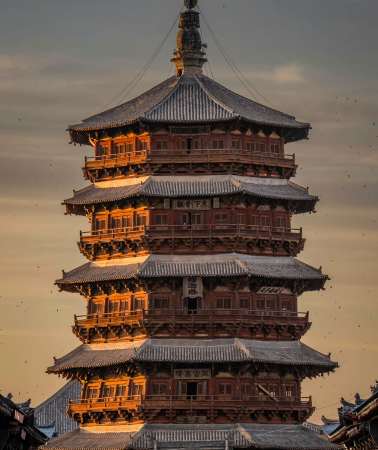



Group Tours in Shuozhou
View More Group Tours in Shuozhou


What travellers say about Shuozhou

M31***8614 October 2026
4.0
Having been there and seen it, the obsession has been let go. I always wanted to see it again. I was afraid it would disappear one day. Looking up, I marveled at the wisdom of the ancients. Those who appreciate architecture will certainly not be disappointed.
Yingxian Wooden Pagoda

胜心十足11 September 2026
4.0
The streets were clean and tidy, with few tourists and many shops closed.
Shuozhou Old Town

忙忙忙忙里偷闲逛逛19 May 2026
5.0
The Guangwu section of the Ming Great Wall is absolutely worth a visit! It's authentic and far superior to any newly built section. Seeing the Great Wall winding along the mountain ridge amidst the undulating mountains evokes a sense of vastness and grandeur. The 600-year-old Great Wall and the modern wind turbines echo each other, reminding us that our efforts for a better life have never ceased. Standing atop the watchtower, one can imagine the clash of swords and the mournful sounds of war drums, and the red flags fluttering in the west wind – today we hold the long spear in our hands, when will we bind the dragon?
A visit here can be short or long. It takes about half an hour to walk from the parking lot to the Moon Gate. If time permits, you can continue walking to see several well-preserved watchtowers. Be sure to wear sunscreen as the UV radiation is strong.
Guangwu Great Wall

_We***421 June 2026
5.0
The Yingxian Wooden Pagoda, an ancient building bearing a thousand-year history, stands silently on the land of Shanxi. Its unique structure and exquisite craftsmanship showcase the wisdom and ingenuity of ancient artisans. Through the passage of time, it remains steadfast, seemingly recounting its past glories and vicissitudes. Every brick and tile bears the marks of time, every beam and pillar a testament to historical changes. Standing before it, one can almost hear the whispers of the wind through the pagoda and feel a profound sense of awe that transcends time.
Fogong Monastery

非你不渴25 February 2021
5.0
The majestic pass of Shaohukou allows you to feel the momentum of going out of the pass to kill the enemy in ancient times. This fortress at the junction of Shanxi and Inner Mongolia has had a great influence on the inland Central Plains since the Ming Dynasty.
Shahu Pass Scenic Area

D06***8118 January 2020
4.0
The Old Guangwu City is the most complete ancient city in Shanxi. It is located at the pass, overlooking the Inner Great Wall to the south, the New Guangwu City to the east, the Hanyin Wan Ancient City to the north, and the Yanmen Pass to the west. It is an important area of war between the Han people and the northern ethnic minorities. The opposing enemy towers and beacon towers formed a complete defense system, which still retains the fighting momentum of the ancient battlefield.
Old Guangwu Ancient City

铃儿叮铃16 March 2023
4.0
One of the three mountains in Zhenjiang, I visited here after the epidemic because I wanted to see Ganlu Temple, where the "Ganlu Temple Liu Bei's marriage proposal" took place during the Three Kingdoms period. Beigu Mountain was dubbed "Temple Crown Mountain" because of the existence of Ganlu Temple. There is also "Weigong Tower", one of our six well-preserved iron towers. The tower was built in the Tang Dynasty. It was originally a stone tower. After it was destroyed by fire, it was rebuilt into iron in the Song Dynasty. It was rebuilt in the Ming and Qing Dynasties, and was destroyed by lightning, etc., and became a residual tower. The iron tower now has four levels, about eight meters high, and is composed of ancient towers from past dynasties.
Tourists coming to Zhenjiang visit the three mountains, walk Beigu, and taste the Three Kingdoms👍
Beigushan Scenic Area

开心天涯客1 March 2022
4.0
This is a Buddhist temple rebuilt in the Qing Dynasty. It is located next to the Main Hall of Fogong Temple in Ying County. It is not large in scale and houses a seated statue of Ksitigarbha Bodhisattva. There are also many painted clay sculptures and murals around it. It is open to the public free of charge.
Yingxian Wooden Pagoda Scenic Area - Ksitigarbha Hall

Anonymous user17 September 2026
5.0
This is the most spectacular iron flower display I've ever seen! The program was diverse and engaging, the host was witty, the audience interaction was lively, the iron flower workers were incredibly skilled, and the iron flowers were dazzling and colorful – the effect was absolutely stunning! Thumbs up! 👍👍👍
Xinzhou Ancient City
Anonymous user7 October 2026
5.0
The tour guide was attentive and incredibly friendly, covering everything he needed to, and explaining things in considerable detail. With so many people during the National Day holiday, his experience helped us squeeze in every possible moment, and surprisingly, the trip wasn't crowded at all. The Yungang Buddha and the VR tour of Wutai Mountain were definitely worthwhile, and the Yanmen Pass Great Wall and Wang Family Courtyard were also very enjoyable. The driver was fantastic, incredibly experienced, and knew many shortcuts to Xiaoxitian, taking us directly to the scenic area entrance and saving us a lot of walking. The small group size meant it wasn't crowded, and the hotel arrangements were quite reasonable. The Yingxian Wooden Pagoda, the Yanmen Sunset, and the Wang Family Brick Carvings were all breathtakingly beautiful. The local tour guide was completely transparent and honest. I highly recommend this Shanxi tour; if you want to see ancient architecture but are afraid of doing research, book this tour without hesitation.
Shanxi Museum


