Liuba

Things to do in Liuba

Search attractions or local attractions & tours
Search

Explore top experiences

Top 10 attractions in Liuba

View all Attractions
Emperor Qinshihuang's Mausoleum Site Museum
2026 Global 100 - Best Things to Do

Emperor Qinshihuang's Mausoleum Site Museum

10
4.7/5
150.1k reviews
Emperor Qinshihuang's Mausoleum Site Museum (Terracotta Army), also known asEmperor Qinshihuang's Mausoleum Site Museum, Terracotta Army. It isMausoleum of the First Qin Emperor's burial pit, andMausoleum of the First Qin EmperorTogether they form:Emperor Qinshihuang's Mausoleum Site Museum. Emperor Qinshihuang's Mausoleum Site MuseumIt has long been known as the Eighth Wonder of the World. The more than one thousand pottery soldiers and horses unearthed here are all different in appearance and vivid in expression. They are a shining pearl in the history of ancient Chinese sculpture art and have been hailed as "one of the great discoveries in the archaeology of the twentieth century." Historical background Qin Shi Huang began constructing the mausoleum as soon as he ascended the throne at the age of 13. Nearly 720,000 laborers were employed over a period of 38 years, making it a massive undertaking. The mausoleum was still unfinished when Qin Shi Huang died, and it took more than a year of continued construction under Qin Er Shi, Hu Hai, before it was finally completed. Legend has it that Emperor Qinshihuang spent countless manpower, material resources, and financial resources to build an underground palace for himself, and the Emperor Qinshihuang's Mausoleum Site Museum serves as its guardians. The Terracotta Army of Emperor Qinshihuang's Mausoleum Site Museum can be regarded as a typical example of replacing human sacrifice with figurines. The reason why the terracotta warriors reached such a high level in scale and realism is inseparable not only from the wisdom of the craftsmen but also from the will of this emperor. In March 1974, farmers from Xiyang Village in Lintong District, Shaanxi Province, accidentally discovered some fragments of pottery figurines while digging a well. After more than a year of exploration and trial excavation by archaeologists, it was confirmed to be a large-scale pit of figurines — the world-renowned Pit 1 of the Emperor Qinshihuang's Mausoleum Site Museum. In April and May 1976, Pits 2 and 3 of the Emperor Qinshihuang's Mausoleum Site Museum were discovered on either side of Pit 1, each differing in size, shape, and unearthed artifacts. Some scholars believe that Pit 3 served as the command center directing Pits 1 and 2, known in ancient times as a "military tent." Emperor Qinshihuang's Mausoleum Site Museum, built on the site of the Terracotta Army pits, officially opened in 1979. The main attractions include Terracotta Army Pits 1, 2, and 3, the bronze chariots and horses exhibition hall, and related temporary exhibitions. Emperor Qinshihuang's Mausoleum Site Museum offers visits to three Terracotta Army pits, including Pit 1, as well as the unearthed artifacts exhibition hall, the bronze chariots and horses exhibition hall,Mausoleum of the First Qin Emperor. The Emperor Qinshihuang's Mausoleum Site Museum excavated here can be divided into general figures, warrior figures, charioteer figures, and others according to differences in costume, expression, and hairstyle. Each figure has a different face shape, hairstyle, posture, and expression. The figures and horses were originally painted, but due to subsequent burning and soaking, most of the paint has peeled off and discolored. Pit 1 Pit 1 in the attraction was among the earlier ones to be excavated. The pit measures approximately 230 m from east to west and 62 m from north to south. Based on the arrangement density of the pottery figurines and horses unearthed during trial excavation, it is estimated that approximately 6,000 pottery figurines and horses are buried in Pit 1 of the Emperor Qinshihuang's Mausoleum Site Museum, along with a large number of bronze weapons. Pit No. 1 is also one of the most impressive exhibition halls that have been pieced together so far. You can see a massive army of terracotta soldiers standing in the pit in various poses, and it is said that there are more than thirty styles of beards alone. If you look closely, every soldier is lifelike, and everything from the armor to the facial expressions, from the weapons to the lines on the palms, is astonishing. Pit 2 and Pit 3 Pit 2 and Pit 3 are located on either side of Pit 1. Like Pit 1, they contain nearly 2,000 life-sized pottery figurines and horses. There are different troop types such as charioteers, cavalry, and infantry, arranged in neat and orderly formations. Although they are less awe-inspiring than Pit 1, each pit has a different troop arrangement and function, so they are equally worth seeing. Emperor Qinshihuang's Mausoleum Site MuseumThe shaping is based on real life, with delicate artistic techniques. The terracotta warriors have different costumes and expressions, showing distinct personalities and strong characteristics of the era. The bronze weapons unearthed in the pits include swords, pi, spears, ge, ji, shu, crossbow mechanisms, and a large number of arrowheads. Most of the weapons remain sharp after more than two thousand years, indicating that a high level of metallurgical technology had already been achieved at that time.China · Xi'an
Shaanxi History Museum
2026 Asia 100 - Family-friendly Attractions

Shaanxi History Museum

9.5
4.8/5
35.2k reviews
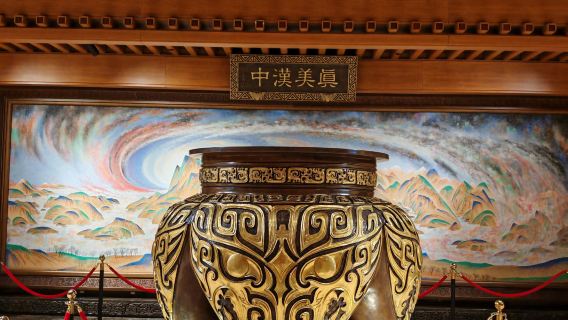
Shaanxi History Museum is a large modern museum built after China's reform and opening up and officially opened in 1991. The building was designed by architect Zhang Jinqiu and adopts a Tang-style architectural layout of "central hall and four corner towers," with a symmetrical central axis and a clear hierarchy of primary and secondary structures; in 2016 it was included in the first batch of the "Chinese Architectural Heritage of the 20th Century" list. Shaanxi was once the political center of dynasties such as the Zhou, Qin, Han, and Tang, and the museum's collection spans a million years of history, covering categories such as Shang and Zhou bronzes, pottery figurines of successive dynasties, Han and Tang gold and silver wares, and Tang tomb murals, with a total of over one million items. The permanent exhibition "Ancient Civilization of Shaanxi" follows a chronological main line and presents the historical process from prehistoric Lantian Man to the eve of the Opium War across three galleries, with the Zhou, Qin, Han, and Tang periods as the focus. The east and west sides of the central hall each host a thematic exhibition: on the west side, "Treasures of the Great Tang: Hejiacun Hoard Unearthed Artifacts Exhibition" concentrates on fine gold and silver wares of the High Tang, while on the east side, the "Tang Dynasty Mural Treasures Gallery" displays authentic murals removed from Tang tombs, with subjects covering figures, architecture, ceremonial guards, and more, making it a uniquely distinctive category of the museum's collection. Among the many artifacts in the museum, several are particularly notable. The agate cup with gold-inlaid beast head, from the Hejiacun hoard, is carved from a single piece of banded agate into the form of a curved-horn beast head, resembling Central Asian rhyton cups, and is one of the first batch of cultural relics prohibited from being exhibited abroad. The tri-color glazed camel carrying musicians figurine vividly recreates the lively scene of musicians playing and singers performing on a camel's back, with bright glaze colors and figures with distinct expressions. The Empress's Seal is made of Western Han Hetian mutton-fat jade and carved with a chi-tiger knob, and is the only known actual jade seal of a Han dynasty empress discovered to date. In addition, the gilt silver flask with a dancing horse holding a cup design, the celadon ewer with an overhead handle and bottom-filling design, and the black-glazed oil-spot bowl each have their own distinctive features. The gold and silver wares unearthed from the Hejiacun hoard are concentrated in the thematic gallery and are a highlight of any visit; visitors are advised to allow time to examine them closely.China · Xi'an

Experiences you can't miss in Liuba

Liuba Today's weatherClear 2-17℃
Liuba weather for the next 2 days11/5: 3-17℃, 11/6: 6-17℃

Free things to do in Liuba

What travellers say about Liuba

user-avatar
小岛32317 October 2026
4.0
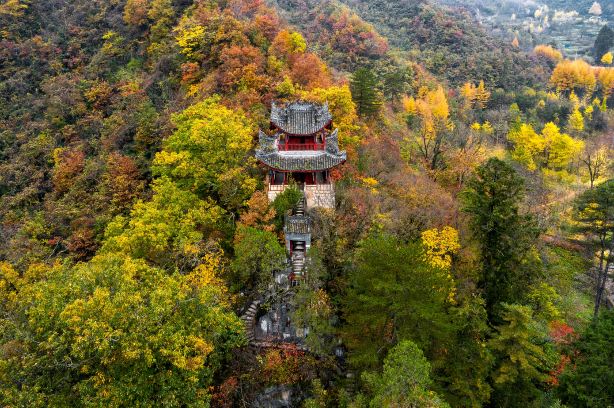
⛺️Seasonal Activities: The weather wasn't great this time, it was raining, but the autumn scenery was still quite beautiful. Hiking, working up a sweat, occasionally stopping to admire the scenery, and enjoying some local food are all good options. 📍Route: The cable car isn't open yet, so everyone is walking. It's mostly steps, not too difficult. Between the Fire Dragon Gate and Chicken Crest Cliff routes, I recommend the Fire Dragon Gate route, as it's relatively easier. 📷Photography: The entrance and the summit are great spots for taking pictures. Remember to bring a power bank, haha!

Zibai Mountain National Forest Park

user-avatar
M23***7426 October 2026
4.0
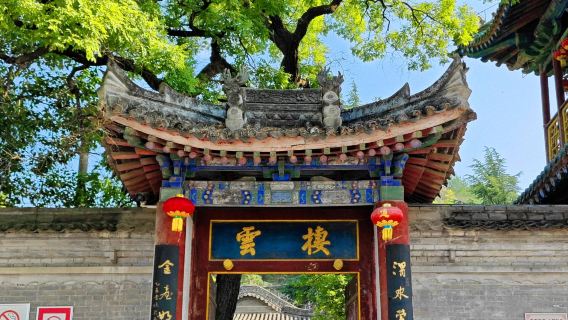
The overall environment of Zhang Liang Temple is quite nice. The scenic area isn't large; you can walk around it in a little over an hour. Before going, be sure to learn about Zhang Liang's life to make it more interesting, or hire a guide. Since it's Sunday, parking is relatively easy; you can park on the street, but private parking costs 10 yuan. The ticket price is 50 yuan, which feels a bit high.

Zhang Liang Temple

user-avatar
是郭某某呀12 March 2025
4.0
🌿离西安不是很远,自驾去比较方便。🌿狮子沟这两年还是挺火爆的,去的人挺多的。🌿九十月份去肯定体验感不错,🌿我是七月份去的,太晒了。🌿风景还可以,可以骑🐎,喂🐏。🌿就是免费景区吧,卫生一般。

Shizigou Ranch

user-avatar
M37***4520 March 2026
4.0
Hidden deep in the Qinling Mountains, this secluded paradise still offers a sense of tranquility even during the off-season, perfect for a peaceful stroll through the old town on a hot summer day. A must-visit for summer escape!

Liuba Old Street

user-avatar
清风若溪19 August 2023
3.0
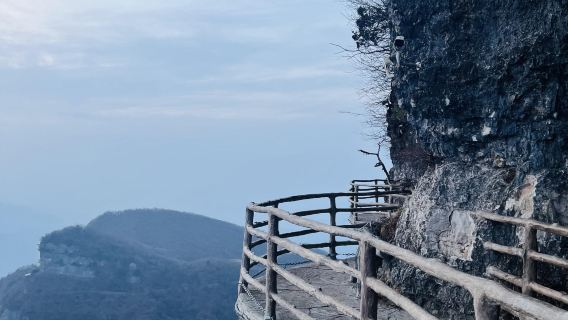
Liuba Lover's Valley: A small free scenic spot, located beside Liuzhang Road, Liuhou Town, Liuba County, Hanzhong City, Shaanxi Province. You can visit this scenic spot on the way from Liuba County to Zibai Mountain. The scenic spot is not big, and there is not much romance for couples, but the plank road in the forest suspended between the pine forests is a bit unique and is a highlight of the scenic spot.

Lovers Valley

user-avatar
Anonymous user3 November 2026
5.0
日本人は、ほとんど見ない。地下鉄でも行けるが、中心部から出てるバスを利用したほうがいい。地下鉄とローカルバスで行ったが、時間が掛かる。ローカルバス探したり、待ったり と、時間がもったいない。

Emperor Qinshihuang's Mausoleum Site Museum

user-avatar
Lilyholly3 November 2026
5.0
November in Jiuzhaigou marks the transition between autumn and winter. The mountainsides are ablaze with colorful forests, a tapestry of red and gold, while the crystal-clear lakes reflect the surrounding landscape. Occasionally, a first snowfall graces the scene, leaving white snow on the vibrant branches, the blue waters adorned with silver frost – a tranquil and healing spectacle. Without the peak season crowds, you can stroll leisurely along the boardwalks, listen to the gentle murmur of the flowing water, and watch the thin mist slowly dissipate across the lakes.

Jiuzhaigou National Park

user-avatar
吃菠萝的人儿12 November 2026
5.0
The Shaanxi History Museum is absolutely worth a special trip! The ticket for the Treasure Gallery included a guided tour, and I also visited the Basic Gallery, making for a very fulfilling experience. The Treasure Gallery's exhibits are of extremely high quality, ranging from Shang and Zhou bronzes to Tang Dynasty gold and silver artifacts—each piece is a national treasure. The He Zun bronze vessel, the gilded silver ewer with a dancing horse holding a cup, the gold-inlaid agate cup with an animal head… even through the glass, you can feel the exquisite craftsmanship and majesty that transcends a thousand years. The Tang Dynasty artifacts, in particular, are breathtakingly magnificent. The Basic Gallery is arranged chronologically, from the Lantian Man to the Sui and Tang Dynasties, systematically tracing the development of Shaanxi and even the entire Chinese civilization. After seeing it, I truly understood the significance of Shaanxi as the "Capital of Thirteen Dynasties." The guided tour was a huge bonus. The guide didn't just read from a textbook; instead, they brought out the historical stories and craftsmanship details behind the artifacts in a lively and engaging way. Many details that I would have missed on my own were highlighted, making the experience far exceed my expectations. It's recommended to make reservations in advance via their official WeChat account. Tickets for the Treasure Gallery are in high demand, so it's best to book early. If you can only visit two museums in Xi'an, the Shaanxi History Museum is a must-see!

Shaanxi History Museum

Trip Moments in Liuba

Popular cities near Liuba

Frequently asked questions

What are the recommended tours and excursions in Liuba?

When choosing a tour, start with how much time you have and the kind of experience you're looking for. Trending options right now include 1-Day Tour to Zhang Liang Temple Museum + Zibai Mountain + Shimen Plank Road in Hanzhong, Shaanxi (Bilingual Service in Chinese and English), The Mount Taibai National Forest Park Group Day Tour: Summit the Pinnacle of China and Explore the Glacial Wonderland, and Hanzhong Longtou Mountain + Ancient Hantai + Xinghan Scenic Spot Day Tour with Bilingual Service. Check the real-time availability and itinerary before you book.

As of 4 November 2026, the reference price for day tours and activities in Liuba is around PKR 14,781.21 – PKR 65,903.45. Rates vary by duration, group size, transport, tickets, meals, and any special admission requirements. Before you book, please confirm the billing currency and whether the price is quoted per person or per group.

Get help anytime, anywhere within 30 secondsContact customer support

Change and cancellation policies vary by attractions and tours. Please check the product details page for more information.

Ticket prices may vary between weekdays and weekends, as well as during peak and off-peak seasons. When booking with Trip.com, you can also use Trip Coins to get extra savings. For more tips on booking discounted tickets, please visit Trip.com for the latest information.