
Things to do in Jiuquan
Explore top experiences
Top 10 attractions in Jiuquan


Dunhuang Bookstore
Dunhuang Bookstore covers a total area of 806 square meters, with its exterior and interior designs inspired by Dunhuang murals. The collection is categorized into sections such as Dunhuang introduction, Dunhuang history, and Dunhuang murals, displaying over 2,100 categories and more than 25,000 books on Dunhuang themes. The scripture hall houses over 1,200 volumes of Dunhuang manuscripts, making it the most comprehensive offline public space in China for reproduced editions of these manuscripts. Dunhuang Bookstore also integrates Dunhuang calligraphy and paintings, 12 self-developed series totaling 50 themes and 5,000+ SKUs of Dunhuang cultural creative products, the brand coffee Dunhuang 1900, and Dunhuang cultural activities. It regularly hosts over 100 cultural activities such as research studies, elegant gatherings, forums, and book-sharing events, welcoming more than 200,000 visitors. The bookstore has been visited and studied by hundreds of institutions, including the Central Propaganda Department, the Economic Daily of the Propaganda Department, CCTV Video, and cultural tourism enterprises from various regions. It has also garnered continuous coverage from top-tier media outlets like CCTV News, Xinwen Lianbo, and The Paper, solidifying its status as a new landmark in Chinese cultural spaces.Dunhuang · 485m from downtown

Dunhuang Museum
The Dunhuang Museum is located in the south of Dunhuang city. It is a museum mainly displaying historical artifacts of Dunhuang, a hub on the Silk Road, as well as precious relics from the Mogao Caves. The new museum opened in 2012. While not particularly large among national museums, its focus on showcasing Silk Road and Mogao Caves culture makes it an excellent place to learn about Dunhuang's history and Mogao art. Museum enthusiasts should not miss it. The museum's current exterior is quite distinctive, resembling the walls and beacon towers of the Han dynasty Great Wall. Stepping inside feels like entering a cave temple complex, with walls and corridors designed in the style of ancient grotto passages—a highly characteristic feature. The museum houses six exhibition halls, with its main display being the thematic exhibition "A city where Chinese and foreign cultures converge." A full tour takes approximately 1-2 hours. The exhibition "A city at the crossroads of Chinese and foreign cultures" runs through the entire museum building. It is divided into individual units by historical periods, allowing visitors to explore them floor by floor in chronological order. The exhibition covers Dunhuang's ancient history and its inhabitants, the significant development during the Han dynasty, continued growth in the Wei, Jin, and Southern and Northern dynasties, prosperity in the Sui, Tang, and Five Dynasties period, the rule of Dunhuang by the Shazhou Uighurs and Western Xia, Dunhuang during the Yuan and Ming dynasties, Qing dynasty development of Dunhuang, the discovery of the Library Cave, the anti-tax movement in the Qing dynasty, and ancient Silk Road coins. These units are primarily arranged chronologically, guiding visitors along corridor-like passages to experience Dunhuang's millennia of historical vicissitudes from ancient times to the present. The museum's exhibits are mainly divided into two categories. One focuses on the cave art of Mogao Grottoes, including a replica of the undeveloped Cave 45 from Mogao Grottoes, where visitors can see the legendary cave style reflecting musical themes. There are also some Dunhuang manuscripts, known as the famous "Dunhuang manuscripts," which are extremely precious. The other category features exhibitions centered on Silk Road culture, with elegant artifacts like the Northern Liang stone pagoda and pictorial bricks. Among them, the qilin brick is exceptionally rare nationwide and can be considered the museum's treasure—definitely not to be missed.Dunhuang · 1.4km from downtown

Dunhuang Night Market
Dunhuang Night Market is located on Yangguan East Road and is one of the most popular night markets in Dunhuang. It is not only a gathering place for Silk Road delicacies but also a showcase for Silk Road handicrafts. With its distinctive local characteristics and rich folk customs, Dunhuang Night Market is hailed as the "nightscape painting" and "cultural portrait" of Dunhuang. Dunhuang Night Market attracts travelers from all directions with its rich variety of delicacies and unique cultural experiences. In addition to food, Dunhuang Night Market also offers a dazzling array of handicrafts and souvenirs. Travelers can purchase locally distinctive crafts here, such as exquisite Dunhuang mural replicas, gorgeous silk products and unique sand paintings, as precious mementos of their trip. The stalls at Dunhuang Night Market are arranged in a compact yet orderly manner, with dazzling lights creating a lively and vibrant atmosphere. Strolling through, travelers can not only savor delicious food and purchase souvenirs, but also experience the unique cultural charm of Dunhuang and the joy of interacting with locals.Dunhuang · 527m from downtown

Son of the Earth
Son of the Earth is located on the Gobi Desert in Hongshanpo, Guazhou County. It is a large-scale outdoor themed sculpture made primarily of red sandstone, created using 3D scanning for model data and 3D carving, measuring approx. 15m long, approx. 4.3m high, and approx. 9m wide. Although Son of the Earth is a sculpture, it is not rigid. It looks like a real infant: with an adorable expression, eyes closed tight, and lying quietly, it sleeps as peacefully as a child nestled in its mother's arms. We humans are like children of Mother Earth, and we can only be this peaceful in her embrace. Therefore, the designer of this sculpture hopes to raise awareness about protecting the Earth through this artistic creation.Guazhou · 16.3km from downtown

Dunhuang Press
Dunhuang Seal Bureau, located on the east bank of the Danghe River in Dunhuang City, has a construction area of about 2,000 square meters. As another new space in the Dunhuang cultural seal world, it is committed to creating a dual space for cultural tourism check-in and Study Tour. It has carefully launched a series of research and study products with seals as the theme, ingeniously integrating cultural creation with experience, and presenting the unique charm of Dunhuang culture in a life-like manner. Here, Dunhuang Printing Bureau, Dunhuang 1900 Art Museum, Dunhuang Bookstore Research Institute and Dunhuang 1900 Coffee, with an attitude of openness, tolerance and interconnection, jointly usher in a new life without boundaries for Dunhuang aesthetics. At the Dunhuang Seal Bureau, a mysterious underground world awaits your exploration. Hundreds of seals containing Dunhuang cultural elements are available for you to experience, including printmaking, relief printing, digital printing, overprinting, rubbing, regional printing and many other types of seals. This is an immersive seal world, allowing you to spend an unforgettable time in pleasure and gain. Here, you collect not only seals, but also the Dunhuang dream you long for in your heart. Dunhuang 1900 Coffee has been fully upgraded here, and the brand's charm has become stronger. Carefully prepared by professional baristas, the patterns of the caisson and the Nine-Colored Deer from the Mogao Grottoes in Dunhuang are perfectly integrated with coffee to create a unique memory of Dunhuang. Dunhuang Bookstore was born in 2022, and now Dunhuang Bookstore Research Institute is waiting for your arrival with a fuller figure. Wood-frame clay sculptures, clay prints, calligraphy, paper-cuts... everywhere convey the mystery and beauty of Dunhuang. In the process of tying the skeleton, beating the clay, outlining, coloring... create your own Dunhuang cultural works and leave unforgettable memories. In the Dunhuang 1900 Art Museum, cultural and artistic masterpieces that have been lost overseas have returned in a replica, crossing mountains and seas, telling the profoundness of Dunhuang culture and Chinese civilization. These artworks not only show the unique charm of Dunhuang culture, but also let you feel the long history of Chinese civilization. The Dunhuang Printing Bureau is like a mysterious book hidden deep in the city, waiting for every tourist to come and calm their souls and immerse themselves in the profound heritage of Dunhuang culture. As a new cultural and fashionable landmark of the city of Dunhuang, the Dunhuang Printing Bureau opened as scheduled. Enjoy a cup of Dunhuang 1900 cultural coffee, read a book about Dunhuang, explore history, read the future, and cherish the present... The Dunhuang Seal Bureau marks the beginning of the construction of the Dunhuang cultural and creative industry cluster and opens up a new era for Dunhuang.Dunhuang · 1.2km from downtown

Sleeples Stwon
Crescent Moon Spring Town is located near the Crescent Moon Spring Scenic Spot in Dunhuang Mingsha Mountain. The town officially began to receive tourists in September 2015. The town's architecture is ancient Chinese style. There are inns and various styles of restaurants in the town, which are full of regional characteristics. , the overall feeling is good.Dunhuang · 4.5km from downtown

West Han Dynasty Jiuquan Park
Jiuquan Site of Western Han Dynasty, also known as Jiuquan Park and Quanhu Park, is a landmark scenic spot in Jiuquan city. Legend has it that General Huo Qubing, a general of the Han Dynasty, received a jar of wine as a reward from the emperor after his victory. Most tourists come to Jiuquan city to visit and play here. Jiuquan Western Han Scenic Spot is a complete Chinese-style garden. It is not only a well-known scenic spot, but also a place where local citizens often come for walks and morning exercises due to its elegant environment. The garden is said to be funded by General Zuo Zongtang. There are lakes, rockeries, pavilions and pavilions of Chinese gardens here. Many trees are planted inside, and the environment is very beautiful. The core area of the park is the spring water called Jiuquan. There is an ancient monument of "Western Han Dynasty" beside the spring water, which is also a symbol in the park. You can take pictures.Jiuquan · 3.7km from downtown

Boundless Sculpture
Unbounded is located in Guazhou. It is a group of very creative sculptures. In the creation process of the sculptures, people used more than 6,000 scaffolds and about 3,000 fasteners. When the light and wind change, the sculptures will produce strange images in the desert.Guazhou · 16.7km from downtown

Leiyin Temple
Leiyin Temple is located at the foot of Mingsha Mountain, 4 kilometers south of Dunhuang City, Gansu Province, which is an important town on the ancient Silk Road. From the Jin Dynasty to the Song Dynasty, Leiyin Temple was the place where the great virtues of the Western Regions traveled in Xi to promote the Dharma, and it was also the place where the eminent monks from the Central Plains traveled westward to seek the Dharma. Zhu Fahu, Faxian, Kumarajiva, Xuanzang and other eminent monks and great virtues have left their indelible traces here. Therefore, this auspicious and peaceful resort has the reputation of "Sacred Land of Good Country and Holy Land of Buddhism" in the Tang Dynasty. The whole temple consists of a main hall, two accompanying halls, monks' rooms, and guest rooms. There are more than 100 halls and pavilions. There are 37 statues of Buddha, Bodhisattva, Arhat and disciple. Among them, the main hall is the Mahavira Hall, and in the middle of the hall is a white marble Buddha statue, about 1 meter high, which was donated and repaired by overseas Chinese in Myanmar; each side of the Buddha statue is a bodhisattva, and there are eighteen painted statues of arhats, with a realistic image.Dunhuang · 4.3km from downtown

Jiuquan Museum
Jiuquan City Museum was built in October 1979. It is a comprehensive museum integrating cultural relics protection, collection research, publicity and education. At present, there are 13 staff members and more than 6,000 cultural relics in the museum. There are three exhibitions: "Jiuquan Historical and Cultural Relics Exhibition", "Jiuquan Cultural and Geographical History Exhibition" and "Jiuquan Ancient Agricultural Development Exhibition". Engaged in the protection, management, investigation and research of more than 260 ancient cultures, ancient tombs and ancient architectural sites in Jiuquan City.Jiuquan · 484m from downtown
Experiences you can't miss in Jiuquan
Featured Day tours in Jiuquan
View all Day tours
4.5/5
· 13 reviews· 164 bookedFree cancellation
Instant confirmation
Book now for tomorrow
FromSGD 14.93

5.0/5
· 4 reviews· 82 bookedFree cancellation
Instant confirmation
Book now for tomorrow
Save SGD 0.66
FromSGD 64.57SGD 65.23

4.7/5
· 29 reviews· 164 bookedFree cancellation
Book now for tomorrow
FromSGD 30.23
4.5/5
· 17 reviews· 124 bookedFree cancellation
Instant confirmation
Book now for tomorrow
Save SGD 0.68
FromSGD 66.72SGD 67.4
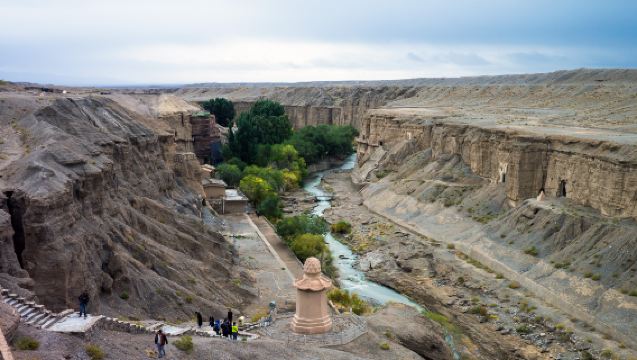
![[Private charter tour] Dunhuang Day Trip | Sunset viewing at Yangguan Pass + Yumenguan Pass + Yadan Geological Park | pick up&drop off service + Enjoy Sunset + Available for Booking by 1 Person](https://ak-d.tripcdn.com/images/0354412000suqusi3A35C_C_568_320.png?_fr=wc)
Free cancellation
Instant confirmation
Book now for tomorrow
FromSGD 60.46
5.0/5
· 1 reviewFree cancellation
Instant confirmation
Book now for tomorrow
Save SGD 0.66
FromSGD 64.57SGD 65.23
Instant confirmation
Book now for tomorrow
Save SGD 1.54
FromSGD 152.61SGD 154.15
3.8/5
· 4 reviews· 45 bookedFree cancellation
Instant confirmation
Book now for tomorrow
Save SGD 0.81
FromSGD 79.20SGD 80.01
Featured Cultural experiences in Jiuquan
View all Cultural experiences
FromSGD 57.02
Free cancellation
Instant confirmation
Book now for tomorrow
FromSGD 29.85
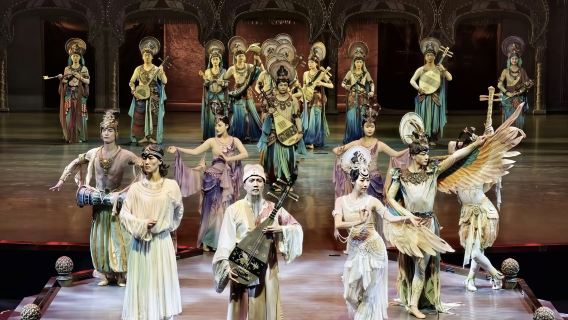
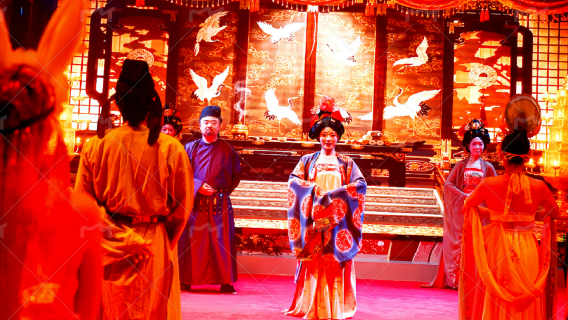
Ancient Sound of Dunhuang show in Jiuquan (immersive experience + live scenery + audio-visual feast)
Free cancellation
Book now for tomorrow
FromSGD 57.02
FromSGD 198.07
Free cancellation
Book now for tomorrow
FromSGD 29.85
Free cancellation
Book now for tomorrow
FromSGD 419.40
Free cancellation
Instant confirmation
Book now for tomorrow
FromSGD 57.02
FromSGD 282.64
Free things to do in Jiuquan
Dunhuang Bookstore
Dunhuang · 485m from downtownBook now for today, Cancel anytimeDunhuang Museum
Dunhuang · 1.4km from downtownDunhuang Night Market
Dunhuang · 527m from downtownSon of the Earth
Guazhou · 16.3km from downtownDunhuang Press
Dunhuang · 1.2km from downtownImmediate access, Book now for today, Cancel anytimeSleeples Stwon
Dunhuang · 4.5km from downtownWest Han Dynasty Jiuquan Park
Jiuquan · 3.7km from downtownBoundless Sculpture
Guazhou · 16.7km from downtownLeiyin Temple
Dunhuang · 4.3km from downtownJiuquan Museum
Jiuquan · 484m from downtown
More ways to travel from Jiuquan
Private Tours in Jiuquan
View More Private Tours in Jiuquan


Group Tours in Jiuquan
View More Group Tours in Jiuquan
What travellers say about Jiuquan

皮皮爱吃锅包肉11 October 2026
5.0
This is extremely important, and I must say it first: don't trust the bookstore's own mini-program for booking a visit at a specific time. The description said there was a 9 PM visit after closing time, but I booked that one. Luckily, my itinerary ended early, and I arrived around 8:30 PM, only to be told they were closing and I should go to the second floor first. Closing time was 9 PM, and I almost missed it!
Remember to wear shoe covers once inside. They're in the basket on the right. Put them on before entering. The bookstore is quite spacious, with the second floor being the main attraction, perfect for taking photos.
Dunhuang Bookstore

leowxp7 October 2026
5.0
The museum is located in the city center, very close to the night market. It gets dark quite late in Dunhuang, so after visiting the Mogao Grottoes, it's a good opportunity to review the visit at the museum.
Admission is free, just make a reservation. Guided tours are available for a fee. The advantage of the museum is that the exhibits are arranged chronologically, making them clearer. Finally, the souvenir and creative shops are also great to browse; the prices are very reasonable. Don't bother with fridge magnets and other items at the night market; they're much better quality here.
Dunhuang Museum

acyeveryday4 August 2026
5.0
The Shazhou/Dunhuang Night market is clean, cohesively decorated, and conveniently located in the city center! As part of your silk road travels visit this well put together market for delicious food and souvenir buys! 🛍 We bought cashmere wool scarves, magnets, and knick knacks all for great prices. The vendors are not pushy at all! We had a pleasant experience wandering the shops and the vendors were very friendly and accommodating. I'd recommend having alipay or wechat pay set up as this is the most convenient payment method when travelling China but at this market the vendors did accept cash from our fellow tour guide travellers. 🐟 The food court area gives camping vibes. You'll see small camp stools and chairs around small fires. Our tour guide told us that the fish and beef cakes are the most popular. We tried the fish which was yummy and the beefcakes welllll the line was a little too long for us but our fellow tour group travellers said it was delicious and even bought some for the road the next day! 🎐 Since the market was in the city center we explored the shops nearby and then caught a Didi back to our hotel. The night market is worth visiting, probably one of the best I have visited in my travels.
Dunhuang Night Market

布晓呆3 June 2023
5.0
There is a famous tourist attraction hidden in this Gobi Desert. A baby-like statue has become a popular check-in spot for internet celebrities. It looks like a baby sleeping on the ground. It was designed by a professor from the Tsinghua Academy of Fine Arts and took a year to complete. This lying sculpture is also known as the "Son of the Earth."
Son of the Earth

M23***0227 September 2026
5.0
If you have kids who love collecting stamps, you should definitely visit the stamp shop. You can comfortably play with your children for two hours. There's food, drinks, and air conditioning. They have a huge selection of stamps and many creative cultural products, which is quite interesting.
Dunhuang Press

星星贩卖官27 May 2026
5.0
Excellent location, user-friendly accessibility
The town is adjacent to Mingsha Mountain and Crescent Lake, about a 5-10 minute walk from the scenic area, saving you the hassle of traveling to and from the city center. It's incredibly convenient for watching the sunset and sunrise. A one-stop shop for dining, accommodation, and shopping, with complete amenities including guesthouses, restaurants, and intangible cultural heritage workshops, offering great value for money.
Sleeples Stwon

西单大叔10 July 2021
5.0
Jiuquan has had a spring since ancient times. It is said that when General Huo Qubing of the Han Dynasty led his troops to conquer the Xiongnu, he poured the imperial wine into the spring after the victory and drank it with all the soldiers. This is the origin of the name Jiuquan. In fact, Jiuquan is a large park, but because of the Jiuquan spring, it has become a 4A-level scenic spot, which shows the importance of Jiuquan. There are also statues and poems of Li Bai lying drunk in the park, which are also the most famous poems related to Jiuquan. There are also children's playgrounds and restaurants and teahouses in the park. You can also go boating on the lake, which is also an important place for citizens to relax.
West Han Dynasty Jiuquan Park

linglizi25 July 2025
5.0
我们驾车经过雕塑《大地之子》,不远处就是有名的雕塑《无界》,是清华大学教授董书兵在甘肃瓜州戈壁创作的巨型大地艺术装置,由纯白色钢结构组成,仿似丝路古城遗址的幻影。作品以现代极简风格再现传统建筑轮廓,长60米、高21米,与荒漠环境形成强烈视觉对比,象征文明与自然的永恒对话。作为"戈壁方舟"艺术计划的一部分,它与《大地之子》共同构成瓜州独特的艺术地标,吸引众多游客打卡。免费开放。
Boundless Sculpture

吹你一脸灰17 May 2025
5.0
It is located at the confluence of the Yellow River and the Huangshui River in Xiaoci Village, Yanguoxia Town, Yongjing County. The entire building faces south and is built on the mountainside. The temples overlap and are known for their concentration, compactness and elegance. The design is based on a central axis, with horizontal symmetry, and gradually extends, rises, and becomes a whole on the flat ground and high platform. The temple looks very solemn, magnificent and imposing.
The founding date of Leiyin Temple cannot be verified due to its long history. According to the recollections of the elders in the village in the early days of the founding of the People's Republic of China, it was first built in the early Tang Dynasty and reached its heyday during the Tongzhi period of the Qing Dynasty. The grandeur of its architecture and the popularity of its incense are incomparable to ordinary temples. It’s a pity that it was destroyed in the subsequent war. The old site of Xing Temple still exists, located in an ancient city 300 meters northwest of the current temple.
With the opening of the Party's religious policy, Leiyin Temple began to prepare for reconstruction in 2002. During the construction process, it received strong support from generous donations from all parties. After seven years of gradual construction, it has reached its current scale. Leiyin Temple covers an area of 6,478 square meters, with a construction area of 963 square meters. The entire building is divided into three levels:
The first
Located on the flat land in front of the mountain, it consists of the Heavenly King Hall, also known as the "Mountain Gate", and the left and right wing rooms. The Hall of Heavenly Kings is a brick and wood structure with different ridge beasts, a roof covered with green tiles, and a width of three rooms. The lintel of the door reads "Leiyin Temple" in three large gold-plated characters. In front of the temple stands a pair of stone lions, giving people a sense of solemnity and majesty. In the center of the Hall of Heavenly Kings is a big-bellied Maitreya statue with a smiling face, kind and amiable, giving people a sense of intimacy. With his back against the guardian statue of Skanda, and on both sides are standing statues of the Four Heavenly Kings: "Dhritarashtra", "Zhongdudan", "Virtuosity" and "Vaiśravaṇa". Next to the Heavenly King Hall are the east and west wing rooms, which are two-story, brick-concrete, fully enclosed buildings that house the abbot's room, living room, dormitories, etc.
Channel 2
Located at the foot of the mountain, there are two classical side halls built on the east and west sides, the "Golden Flower Hall" in the east and the "Guanyin Hall" in the west. The Golden Flower Hall enshrines three seated gods: "Holy Mother of the Nine Heavens", "Fairy of Jinhua" and "Dragon King of Black Pool", all of which are made of bronze and are 2.3 meters high. On both sides, three gods are enshrined in sedan chairs carved from red sandalwood with exquisite craftsmanship. The statues of the gods are cast in bronze, with ingenious and solemn ideas. They are considered to be the best works among all the temples. On the front of the Guanyin Hall are seated statues of Guanyin Bodhisattva, Manjusri Bodhisattva and Samantabhadra Bodhisattva, all of which are 2.3-meter-high bronze statues. Guanyin Bodhisattva sits cross-legged on a lotus, holding a pure bottle filled with nectar in one hand and a willow branch in the other, symbolizing that the nectar is spread all over the world, regardless of spring or autumn. The Bodhisattva of Literature rides on a green lion, has a jade bun on his head, which represents "wisdom", and holds a sword in his hand, which represents the sword of wisdom, thus representing "wisdom and power". Channel 3
Located on the hillside, the Main Hall against the mountain is the main hall of the temple. It has a multi-story structure and a double-eaved hip roof. It is 16 meters high and covers an area of 242 square meters. The whole hall has a ridged roof, flying eaves on all four sides, colorful arches, and is majestic and spectacular. On the front of the hall are three 3.3-meter-high bronze Buddha statues, namely Sakyamuni Buddha, Medicine Buddha and Amitabha Buddha. The three giant Buddhas have kind faces and sit on lotus pedestals with Sumeru Vajra pedestals below. They are finely carved with exquisite craftsmanship. On both sides are clay sculptures of the Eighteen Arhats. Some are glaring and performing rituals, subduing dragons and tigers; some are gentle and elegant, reading scriptures; some are gazing in deep thought, pretending to sleep with their chins in their hands; their expressions are different and lifelike.
Leiyin Temple

M57***517 July 2026
5.0
The museum is clean, quiet, and comfortably air-conditioned. Restrooms, drinking fountains, and seating are conveniently located. Clear signage and maps prevent getting lost. Most admissions are free by reservation, offering great value. Guided tours and audio guides are available; professional guides explain the stories behind the artifacts and patiently answer questions. The souvenir shop is designed to complement the collection, offering unique gifts. A children's study area and reading corner are provided, suitable for families and students.
Fun: Immersive historical experience, providing a systematic learning experience of local culture, archaeology, and art, combining education and leisure. Avoiding peak hours allows for quiet, solitary viewing, offering a calming and therapeutic experience, perfect for reflection, photo opportunities, and suitable for all ages.
Jiuquan Museum


