Things to do in Jinzhou
Explore top experiences
Top 10 attractions in Jinzhou


Bijia Mountain Scenic Area
Bijia Mountain is an island located near Jinzhou Bay in the Bohai Sea. There are three peaks surrounded by steep cliffs, and the island is home to a number of important Taoist temples. During low tide, a natural pebble causeway links the island to the mainland.Jinzhou · 31.3km from downtown

Fengguo Temple
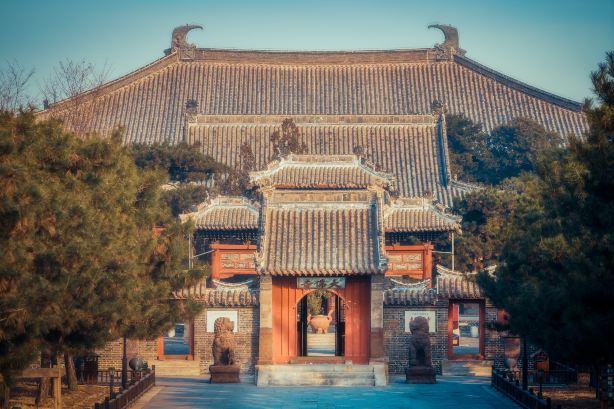
Fengguo Temple is one of China's three remaining major Liao dynasty temples and monasteries. It's symbolic ancient building is one of the larger Buddhist halls to survive from ancient times. Inside is a group of ancient and relatively large painted clay Buddha statues. The main seven Buddhas, seated upright on pedestals, were sculpted in the Liao dynasty, and include Kasyapa, Krakucchaṃda, Sikhin, and Vipasyin.Yi County · 1.5km from downtown

North Mount Putuo
North Putuo Mountain has lush forests and beautiful scenery. Structures in the scenic area include the North Putuo Zen Buddhist Temple Lower Court, the Upper Court and Guanyin Cave. Some of the interesting landscapes that can be enjoyed at North Putuo Zen Buddhist Temple include the Yinniu (Drinking Cow) Spring and the Shouzi (Long Life) Rock. The main peak of Jiguan Mountain is more than three hundred meters above sea level. Up on top of the mountain, stands a statue of Laotse. In good weather, visitors can get a panoramic bird's-eye view of the entire scenic spot from here. Sometimes the urban districts of Jinzhou City can even be seen in the distance. Guanyin Cave is also a spot in the park that is not to be missed. It is a temple built into the cliff face. Inside the temple is a shrine to the Bodhisattva Guanyin. Close to Guanyin Cave is also the Yuelao Temple, along with ancient monuments such as a pagoda built by eminent monks of years past.Jinzhou · 10.7km from downtown

Qing Yan Si
Qingyan Temple is south of Yiwulv Mountain in Beining City. The temple is popular, and there are upper and lower courtyards. The Qingyan Temple in Shanmen has inscriptions by Zhao Puchu. Qingyan Temple has several large halls, such as Daxiong Hall and Heavenly King Hall. During the traditional temple fair, it is quite lively. Walking through the upper house and continuing to climb to the summit, Dazhi Manjushri was enshrined in the Wenshu Monastery. At Zhangyingtai, the summit of the mountain, get a wide view of the charming scenery.Beizhen · 20.1km from downtown

Wanfotang Grottoes
Wanfotang Grottoes are the earliest and largest grottoes in Northeast China, with high historical and artistic value. At the same time, Wanfotang Grottoes organically combines the magnificent cultural landscape with the dangerous, steep and beautiful natural landscape, making it more dazzling. The grottoes are divided into two areas, east and west, with 16 caves of different sizes. The western area grottoes were carved in the 33rd year of Hehe in the Northern Wei Dynasty (499), with a total of nine caves, divided into two layers. There are three small caves on the upper layer and six large caves on the lower layer. The first, second and sixth caves are the largest from the west. The valuable thing in the second cave is the "Statue Stele of Yuan Jing, the Governor of Yingzhou, Pingdong General". The inscription was made on the wall of the cave, with 304 characters, each of which is vigorous and elegant, and the brushwork is vigorous. The sixth cave is large, and a large Maitreya Buddha is exposed outside, which is more than ten feet tall and has high artistic value. The eastern area was carved in the third year of Jingming in the Northern Wei Dynasty (502), with a total of seven caves. On the lintel of the fifth cave is engraved "Han Zhen Statue Inscription", with 269 characters remaining, recording the whole story of how Han Zhen and 74 other people came together to build the caves.Yi County · 8.3km from downtown

Yiwulü Mountain
Located in the western suburb of Beizhen City, Yiwulü Mountain is known for the worship of "medicine and witchcraft culture" in ancient China. It is now also called Lü Mountain for short. The scenic spot is a good place to climb the mountain and appreciate its scenery. The mountain has a galaxy of historical sites as well as ancient temples, making it a celebrated scenic spot for people to worship Buddha. Except for Beizhen Temple located at the foot of the mountain, all other scenic spots within the scenic area are seated on the mountain and most of them are located close together beside Guanyin Pavilion. Although Yiwulü Mountain may not be prominent among a number of famous mountains in China, it was a noted one in north China in ancient time.Beizhen · 6km from downtown

Potala Palace Square
Potala Palace Square is a landmark square within the Jiuhuashan Scenic Area in Western Liaoning. It gets its name from the Tibetan-style architectural complex built against the mountain behind it—with red walls, white plaster, and layered golden roofs, the view from the square has a touch of the grandeur of the snowy plateau. Many people simply call this complex the "Little Potala Palace of Western Liaoning." Thanks to this red-and-white architectural group, it frequently goes viral on social media and has become a famous photo spot in Western Liaoning, with tourists often making special trips just to take pictures. The square itself is an ideal location for photography: standing in the center and shooting upwards allows you to capture the entire complex layered against the mountain in your frame, and the area next to the white pagoda and prayer wheels is a popular spot for taking photos of yourself looking back. You can rent Tibetan-style clothing near the square. Once dressed up, with the red-and-white buildings as a backdrop, the photos often make people think you have traveled to the plateau. After nightfall, the lights come on, outlining the contours of the buildings, and the night view offers a different kind of charm, making it worth staying until evening to take another round of photos. If you visit during the day, it is recommended to schedule your photo session for the afternoon, when the light is softer and more photogenic. When it is crowded, there is no need to join the throng; including just a corner of the building or choosing a spot with interesting light and shadow will also yield great photos. In addition, the scenic area is dotted with replicas of landmarks like the Mini Great Wall and the Hall of Prayer for Good Harvests at the Temple of Heaven. Taking a stroll through them after visiting the square feels like checking off landmarks from all over the country in one go.Linghai · 2.2km from downtown

Jiuhua Mountain Park
Jiuhua Mountain ParkLocated in Linghai City, Liaoning Province, this AAAA-rated attraction covers approximately 35 square kilometers. It's a comprehensive destination combining natural views, cultural heritage, modern amusement facilities, and ecological fruit picking. Renowned for its abundant natural landscapes and profound cultural significance, the park boasts over 90% vegetation coverage, featuring unique rock formations and lush cypress trees that create distinctive natural garden scenery.Additionally, the park features buildings modeled after Xizang, showcasing a rich historical and cultural atmosphere. Mount Jiuhua is renowned for its hot springs, with mineral-rich water sourced from 2,100 meters underground containing 52 beneficial elements like strontium, potassium, sodium, calcium, and magnesium. These therapeutic waters help treat skin conditions, rheumatism, and arthritis while offering wellness and beauty benefits. The park features a 5-star hot spring resort and water park, providing comprehensive services including dining, accommodation, and leisure activities. The park features a large amusement area covering approximately 100,000 square meters, with rides including Hot Wheels, Flying Tower, Merry-Go-Round, and Dodgem Cars, making it perfect for family visitors and children. Jiuhua Mountain has a long history, named after the Ming-Jin War, and was once a strategic military location. The park also contains Buddhist structures like temples, attracting numerous Buddhist devotees and visitors.Linghai · 1.8km from downtown

Guangsheng Temple Pagoda
Guangsheng Temple Pagoda, located in the southwest corner of the ancient town of Yizhou in Yi County, Jinzhou City, Liaoning Province, is a historic pagoda dating back to the Liao Dynasty. Built in the 7th year of the Liao Dynasty's Qiantong era (1107 AD), this millennium-old structure still stands tall and majestic. The pagoda features a unique octagonal design with thirteen tiers of eaves, resting on a Sumeru-style base with a wide waistband adorned with exquisite relief carvings on each side, showcasing the distinctive architectural style of the Liao and Jin periods. More than just a treasure of ancient architectural art, Guangsheng Temple Pagoda serves as a historical witness to the prosperity of western Liaoning towns and the spread of Buddhist culture. Visitors can ascend to the top for a panoramic view of the ancient town, immersing themselves in its profound historical significance and cultural charm. As a nationally protected key cultural heritage site, the pagoda attracts numerous visitors who come to appreciate its unique cultural value and historical legacy.Yi County · 884m from downtown

Jinzhou Oriental Happy Kingdom Water World
Jinzhou Oriental Happy Kingdom Water World is located on the east side of Bijiashan Scenic Area in Binhai New District, Jinzhou City. It is a large coastal water park with the theme of oriental marine culture and fantasy forest. It includes more than a dozen large-scale theme projects, including: Sky Bridge Waves, Mountain and Sea Viewing, Happy Water Village, Children's Island, Sky-high Carousel, Oriental Aegean Sea, Crazy Trumpet, Fantasy Drifting, Sea Surfing, Water Bar, Cliff Restaurant, Tianlu Hot Spring, Customs Performance, Music Carnival, Fireworks Show, Private Beach, etc. The Sky Bridge Waves Wave Pool that can create 3.5-meter waves is a must-experience project in the park. Fantasy Drifting, Happy Water Village, Children's Island, Tianlu Hot Spring, Private Beach are suitable for all ages, and the customs performances, music parties, and fireworks shows that take place every day light up the night sky of the park.Jinzhou · 29.7km from downtown
Free things to do in Jinzhou
Bijia Mountain Scenic Area
Jinzhou · 31.3km from downtownFengguo Temple
Yi County · 1.5km from downtownImmediate access, Book now for today, Cancel anytimeNorth Mount Putuo
Jinzhou · 10.7km from downtownImmediate access, Book now for today, Cancel anytimeQing Yan Si
Beizhen · 20.1km from downtownBook now for today, Cancel anytimeWanfotang Grottoes
Yi County · 8.3km from downtownImmediate access, Book now for today, Cancel anytimeYiwulü Mountain
Beizhen · 6km from downtownPotala Palace Square
Linghai · 2.2km from downtownJiuhua Mountain Park
Linghai · 1.8km from downtownGuangsheng Temple Pagoda
Yi County · 884m from downtownJinzhou Oriental Happy Kingdom Water World
Jinzhou · 29.7km from downtown
What travellers say about Jinzhou

Anonymous user13 October 2026
4.0
Overall, it's alright. If you get up early, you can walk from the scenic area gate to Bijia Mountain at low tide; at high tide, you can take a speedboat. Once you reach Bijia Mountain, you need to hike, and it's not far to Sanqing Pavilion. Climbing Sanqing Pavilion requires walking uphill, passing through Pangu Square.
Bijia Mountain Scenic Area

道士不好惹19 October 2026
5.0
Fengguo Temple, first built in the ninth year of the Kaitai era of the Liao Dynasty (1020), is a national treasure praised by Liang Sicheng for its millennium-long history. Free from the hustle and bustle of commercialization, the entire main hall itself is a living museum of Liao Dynasty artifacts.
The Mahavira Hall is the largest surviving nine-bay Liao Dynasty hall in China, its 48 massive wooden pillars joined entirely by mortise and tenon joints, without a single iron nail. The ingenious architectural structure of the Liao Dynasty craftsmen has allowed the hall to withstand earthquakes and wars, standing for a thousand years.
The attendant bodhisattvas in the hall are the most captivating, their crowns and robes possessing graceful lines. The gold leaf paintings have peeled away with time, revealing the simple clay body; when the sidelight shines obliquely, the statues are half-lit and half-shadowed, their mottled and damaged appearance possessing a beauty refined by time—a testament to the saying "imperishable despite ruin."
Forty-two Liao Dynasty flying apsara paintings remain on the beams, their brushwork still retaining Tang Dynasty style, making them extremely precious and rare.
Over the course of a thousand years, it has endured numerous calamities. The legendary unexploded shell that landed inside the temple in 1948 adds a layer of historical weight to the ancient temple.
Without the bustling crowds, Fengguo Temple stands quietly and desolate. Only by standing beneath the massive trees and ancient Buddha statues can one truly feel the faith and craftsmanship hidden within the painted beams and sculptures of the Khitan artisans.
Fengguo Temple
Anonymous user30 September 2026
4.0
The scenery is beautiful, the ticket price is cheap, and you can drive your own car in, which is great. However, the roads in the scenic area, especially the walking paths, should be improved; some parts are in bad condition and quite dangerous. Also, the attitude of some staff at the cable car station needs improvement.
North Mount Putuo

妮彩雨彩8 June 2026
5.0
Who else has been a loyal fan for 17 consecutive years? Me? Haha 😃 A journey of tranquility. Stepping through the mountain gate, I felt inexplicably at peace. The air was fresh, the environment was beautiful, everything was wonderful. Seeing Qingyan Temple getting better and better these past few years makes me so happy 😁 May we all get better and better 👌🏻
Qing Yan Si

付遥14 October 2026
5.0
I'm so happy to have the opportunity to visit Fengguo Temple again. It's truly beautiful, especially since it just reopened after renovations in October. Overall, it's very nice, and I highly recommend and love it. I'm planning to visit the Ten Thousand Buddha Caves later; I hope it will be a wonderful experience as well. Today has been a wonderful day because of this wonderful trip.
Wanfotang Grottoes

halen80167 October 2026
5.0
We hiked on October 6th. It wasn't crowded. Children's tickets need to be purchased on-site at the scenic area. There were many performances and interactive programs, which were quite interesting and provided a great experience. There's no cable car, and the mountain isn't high or steep, making it suitable for both the elderly and children. We hiked at a leisurely pace, starting at 9:30 am and ending at 2 pm, including rest and lunch time. The glass walkway costs 30 yuan per person separately, and parking is 20 yuan per vehicle with no time limit. There are also some private parking lots outside the scenic area for 5 or 10 yuan.
Yiwulü Mountain

可爱的旅游生活8927 September 2025
4.0
The highlight is that it is open to the public free of charge and parking is free. The Tibetan-style buildings with red and white walls and golden roofs are very distinctive from a distance. Combined with the miniature landscapes such as the "Little Great Wall" and "Temple of Heaven" in the scenic area, the photo yield rate is high, and there is a light show to watch at night; but there are problems such as poor maintenance of some buildings and rough details.
Potala Palace Square

轻尘过客20 March 2025
4.0
It's not as good as when it was first opened. In recent years, some places have been changed and some have been closed. You can just take a look at it when you have time.
Jiuhua Mountain Park

Invisible Wind7 December 2024
5.0
辽宁锦州义县的广胜寺塔是一座始建年代久远且保存完好的辽代古塔。它的建筑形制为八角实心密檐式,共13层,高约42.5米,塔台正八角形,边长6米,高2.9米,原来形制已不可辨认,于2013年修复完成。塔座为须弥式,八边形各边相等,约占塔高的五分之一,束腰比较宽大。塔中间有灰砖伎乐天浮雕,高约50厘米,雕刻精美细腻。上枭每面各浮雕一撑足狮兽,屈身昂首,下踏束腰,上顶上枋和地伏(即莲花座)。锦州义县广胜寺塔是北方诸多辽塔始建年代久远且保存完好的古塔之一,是典型的具有辽宁地方特色的辽代古塔。
Guangsheng Temple Pagoda
Anonymous user7 August 2026
4.0
Advantages: Plenty of activities, beautiful environment, friendly staff, and children had a blast. Disadvantages: There was a lot of debris in the water; regular and timely cleaning is recommended.
Jinzhou Oriental Happy Kingdom Water World


