Things to do in Fengdu County
Explore top experiences
Top 10 attractions in Fengdu County


Fengdu Mingshan Scenic Area
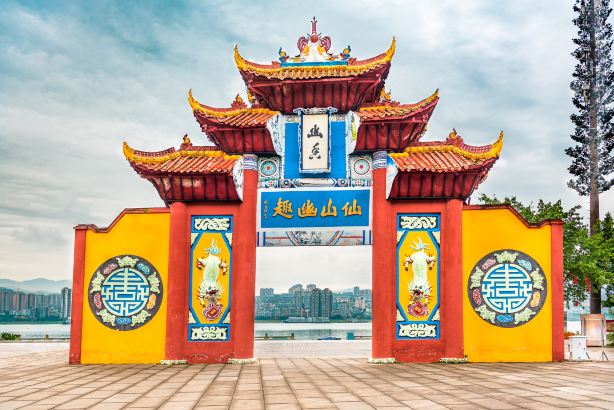
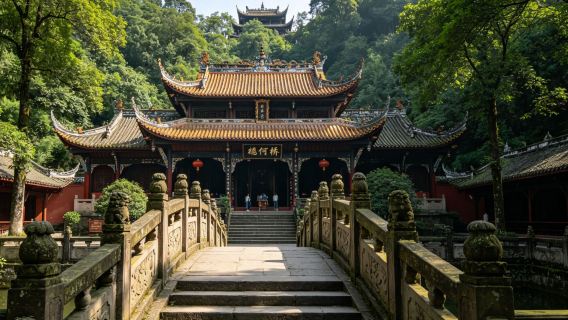
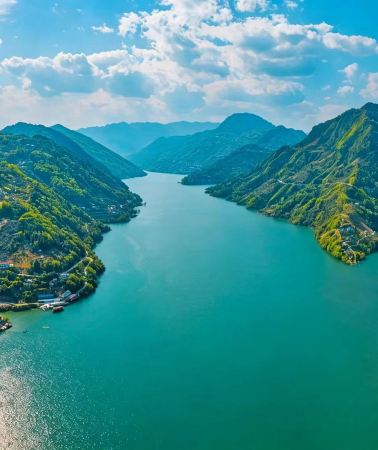
Fengdu Ghost City on the banks of the Yangtze River is the "Netherworld" in ancient Chinese legends. The Naihe Bridge, the Ghost Gate and the 18th Layers of Hell in ancient Chinese legends can all be found in the Ghost Town of Fengdu. Statues of the legendary netherworld judges and the King of the Netherworld have been erected in the Ghost Town of Fengdu to convey the traditional concept in ancient China of persuading people to perform good deeds and avoid doing bad deeds.Fengdu County · 2.6km from downtown

Nantian Lake National Tourist Resort
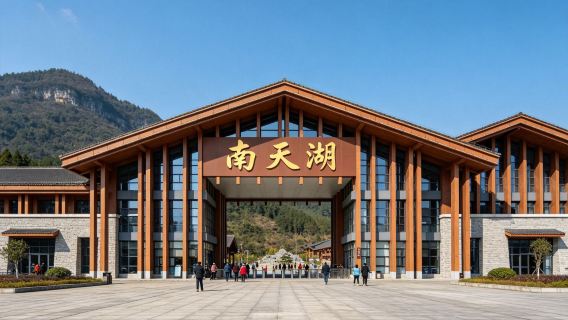
Nantianhu Scenic Area is located in Nantianhu Town, Fengdu County, Chongqing. The lake has a beautiful environment, unique natural landscape and charming scenery in all seasons. The country protects many rare animals and plants and is a famous summer resort. The scenic spot is mainly composed of 6 areas: Niu Dianxia Scenic Area, Shanshuping Scenic Area, Chestnut Garden Scenic Area, Shanwangdian Scenic Area, Dianchi Lake Scenic Area and Nantianhu Scenic Area.Fengdu County · 33.6km from downtown

Fengdu Xueyu Cave Scenic Area
Xueyu Cave is an attraction in the tourist area of Longhe. The stalactites in the cave are white and pure. It is one of a few of the rare white snow caves in the world. The landscape generated by sediments in the caves is of a wide variety, large-scale, densely distributed and exquisitely constructed. The water in the cave is also particularly clear and pure. The content of carbon dioxide in the cave air is very high. Xueyu Cave is divided into six areas: the elite, the heaven and earth, the step-by-step climbing, the scenery of the Northland, the Qionglou Yuyu, and the bright prospect. The white stalactites and the tower corals are very attractive.Fengdu County · 11.2km from downtown

Shuanggui Hill National Forest Park
Shuangguishan National Forest Park, located on the bank of the Yangtze River in Fengdu County, Chongqing, with a total area of 100 hectares, the park is green with green trees, birds sing, ravines and springs, clouds steaming and clouds, and is known as the Yangtze River. The Three Gorges Scenic Area is a tourist attraction that receives many tourists. The main attractions of Shuanggui Mountain National Forest Park are Luming Temple, Su Gong Temple, Enlai Pavilion, Huguo Temple, Liangyuan Pavilion, Helong Pavilion, Confucius Temple and so on. At present, in addition to the historical and cultural relics and famous mountains and Shuanggui Mountain scenic spots, Fengdu has also successively opened tourist attractions such as Ghost Country Street, Yintong Ghost Street, Xiedu City, and Folklore Museum, as well as the Longhe Riverside Scenic Tourist Route, Baoluan Yuanjia Natural Karst Cave, Ascension Tower, Eighteen Layers of Hell, Liushapo, Xiandao Resort, Siping Mountain Resort and other attractions. After several years of afforestation, Shuanggui Mountain has more than 500,000 trees of different varieties, more than 100 varieties of flowers and trees, of which more than 20 kinds of precious trees, bamboo gardens, gui gardens, banana gardens, and peach gardens have grown in scale. Every "ghost town" temple fair (the third day of the third lunar month) and major festivals, a legendary lantern festival is held here. Pilgrims from all over the world gather. Candles are shining in the sky, cigarettes are lingering, and bells and drums are ringing.Fengdu County · 3km from downtown

Fengdu Ghost City, Ming Mountain Scenic Area - Huangquan Road, Chongqing
Fengdu County · 2.7km from downtown

Fairy Mountain National Forest Park
Fairy Mountain National Forest Park is located in Wulong, Chongqing, featuring rare alpine grassland scenery in southern China. Its vast forests, peculiar peaks, meadows, and snowfields are hailed by travelers asFairy Mountain"Four wonders". The attraction features interconnected forests and rolling hills, where numerous free-ranging cattle, sheep and horses roam. With its picturesque scenery, it is hailed as the "Little Switzerland of Chongqing." The attraction offers over 20 recreational activities including horseback riding, grass skiing, kart racing, paintball shooting, zorb ball, paragliding, bonfires and barbecues. It also provides accommodation facilities such as hotels, villa complexes, treehouse cabins, rustic lodges and European-style triangular log cabins, making it an ideal retreat for leisure and summer escapes. Here in winter, the land is blanketed in white snow, adorned in silver, and features a ski resort where you can admire the snow, ski, and play in the snow, experiencing the unique charm of the season.Chongqing · 40.2km from Fengdu County

Three Natural Bridges
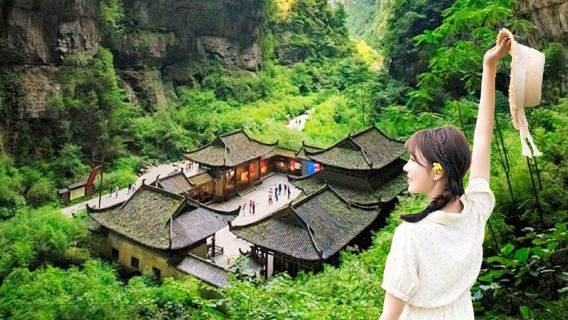
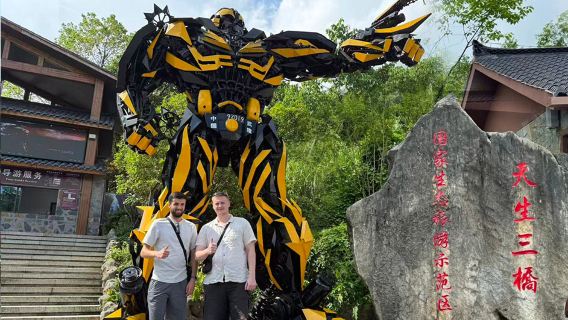
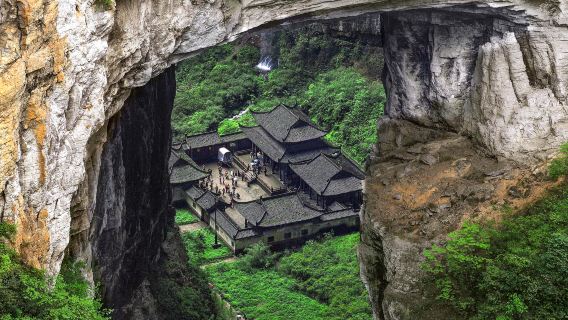
Three Natural Bridges, a typical karst landscape and a rare geological wonder tourist area, is also a filming location for the movies Curse of the Golden Flower and Transformers: Age of Extinction. Three bridges spanning two pits Three Natural Bridges in Wulong consists of three natural stone arch bridges: Tianlong Bridge in Three Natural Bridges attraction, Qinglong Bridge in Three Natural Bridges attraction, and Heilong Bridge in Three Natural Bridges attraction. The three bridges span across the Yangshui River Gorge, with each bridge's span and height above the canyon floor exceeding 100 m. These stone bridges connect the mountain masses on both sides of the gorge, forming the unique "three bridges sandwiching two pits" view. The pits between the bridges are also known as "tiankeng" (sky pits). Travel route After entering the attraction, travelers can take the sightseeing elevator down to the tiankeng at the valley bottom, then stroll along the tranquil paths. Surrounded by lush greenery and flowing streams, they can look up to see towering cliffs with mountain springs cascading down. Movie scene Near Tianlong Bridge in the sinkhole stands the Tang-style "Tianfu Inn," the filming location for Zhang Yimou's movie "Curse of the Golden Flower." The inn cost tens of millions to build. This area also served as a Chinese filming location for "Transformers 4," and today the attraction features a model of the mechanical monster from the film. Take the eco-friendly bus to Longshui Gorge After the visit, you can walk to the attraction exit via an uphill path or take electric bikes to the exit. Travelers at the attraction exit can take eco-friendly vehicles back to the town's traveler center or ride them to nearby Longshui Gorge for further exploration.Chongqing · 48.2km from Fengdu County

Wulong Karst Tourism Area
Wulong Karst Tourism Area is located in Wulong District, Chongqing, downstream of the Wu River, a tributary of the Yangtze River. It features a typical karst landscape, with magnificent natural bridges, vast sinkholes, and steep, deep gorges. You can descend into a 100 m deep sinkhole and look up at the towering cliffs surrounding you like clouds. Alternatively, you can explore the valley floor within the gorges, following the underground river along the rock walls, and experience the wonders of nature. Tiankeng attractionIt features natural bridge clusters and sinkhole clusters. The area gained widespread recognition after serving as a filming location for the movie Curse of the Golden Flower. It was also used as a filming location for Transformers: Age of Extinction. Longshuixia ground fissure offers a distinct experience: first take the sightseeing elevator down to the mountainside, then hike deep into the valley bottom, following the underground river along cliffside walkways with waterfalls and streams accompanying the journey, their sounds echoing between steep walls. Xiannü mountain presents a rare alpine grassland in southern China, averaging nearly 2 km in elevation where forests meet meadows, with summer temperatures around 20°C and winter ski opportunities; Furong cave is renowned for its cave deposition views, featuring stalactite marvels like Coral jade pool and Giant curtain waterfall, each displaying unique formations.Chongqing · 55km from Fengdu County

Bridge over Troubled Water
Fengdu County · 2.6km from downtown

Tianmen Mountain National Forest Park
Tianmen Mountain National Forest Park is named after the natural wonder "Tianmen Mountain National Forest Park - Tianmen Cave." When visiting the attraction, you can enjoy a bird's-eye view of the winding Heaven-Linking Avenue and the stunning mountain scenery from the cable car. The brave can also walk along the cliff-hugging glass skywalk for an exhilarating aerial experience. Tianmen Mountain National Forest Park is located close to Zhangjiajie city. The Tianmen Cave in the park is a natural karst cave, and locals believe it leads directly to heaven. For ordinary travelers, Tianmen Cave is not open year-round. During winter each year, due to snow and icy roads, both Tianmen Cave and the Avenue toward Heaven (a winding mountain road with 99 turns) leading to it are closed. The lower station of the attraction's cableway is located in Guanliping, Yongding District, and the upper station isTianmen MountainTop. In 2020, the attraction opened the express cableway. The lower station of the express cableway is near the entrance to Tianmen Mountain, and the upper station is atTianmen CaveNear the parking lot. Tianmen Mountain National Forest Park is filled with ancient towering trees and intertwined vines. The attraction is divided into several main areas, including Tianmen Mountain National Forest Park - Tianmen Cave, central route, eastern route and western route. Travelers can choose different routes and areas to explore based on their preferences and physical condition. The core attraction along the central route is Tianmen Mountain Temple. Nearby lies the "Child-seeking cave," where folk legends claim Guanyin, the child-giving bodhisattva, manifested her divine power—devout prayers here are believed to grant offspring. The western route's highlight is a 60 m-long glass walkway clinging to sheer cliffs, with fully transparent flooring that induces both vertigo and exhilaration as visitors tread above abysses. Currently, the eastern route and Panlong Cliff each feature their own approx. 60 m glass walkways. No stay is allowed in the attraction, so it can only be visited within one day. There is a "Cherry Bay Restaurant" near Tianmen Mountain Temple, which offers snacks and fast food. Near the lower station of Tianmen Mountain cableway, there is transportation to the "Grand Canyon Theater", where you can watch the live show and magical musical "Tianmen Fox Fairy". Adapted from the mythological tale "Liu Hai cuts firewood", it tells a touching love story between a human and a fox. With live music, lighting effects, and captivating scenes like a giant moon, fox spirit transformations, snowflakes filling the sky, and high-altitude flying bridges, this legendary romance is vividly brought to life.China · Zhangjiajie
Experiences you can't miss in Fengdu County
Featured Day tours in Fengdu County
View all Day tours
Free cancellation
Instant confirmation
FromAED 212.41

10% off
Limited-time sale
FromAED 368.61AED 409.57

5.0/5
· 1 reviewBook now for tomorrow
FromAED 999.56

4.9/5
· 3.2k reviews· 22.6k bookedFree cancellation
Instant confirmation
Book now for tomorrow
98.4% of travelers recommend
FromAED 218.81

4.9/5
· 9.8k reviews· 48.7k bookedFree cancellation
Instant confirmation
Book now for tomorrow
99.4% of travelers recommend
FromAED 218.15

4.9/5
· 19.7k reviews· 16.2k bookedFree cancellation
Instant confirmation
Book now for tomorrow
99.8% of travelers recommend
FromAED 208.91
Featured Outdoor experiences in Fengdu County
View all Outdoor experiences
4.9/5
· 672 reviews· 4.4k bookedFree cancellation
Instant confirmation
Book now for tomorrow
36 consecutive positive reviews
FromAED 202.31

4.9/5
· 271 reviews· 1.4k bookedFree cancellation
Instant confirmation
100 consecutive positive reviews
FromAED 455.20
4.9/5
· 112 reviews· 719 bookedFree cancellation
Instant confirmation
Book now for tomorrow
45 consecutive positive reviews
5% off
Limited-time sale
FromAED 233.97AED 246.29

4.8/5
· 53 reviews· 424 bookedFree cancellation
Instant confirmation
Book now for tomorrow
92.5% of travelers recommend
5% off
Limited-time sale
FromAED 139.97AED 147.34
Featured Cultural experiences in Fengdu County
View all Cultural experiences
Instant confirmation
Book now for tomorrow
FromAED 109.96

2.0/5
· 1 reviewFree cancellation
Instant confirmation
FromAED 313.36
Free cancellation
Instant confirmation
9% off
Limited-time sale
FromAED 326.56AED 362.84
FromAED 301.12

Free cancellation
Instant confirmation
FromAED 213.31

Free cancellation
Book now for tomorrow
FromAED 1,127.00
More ways to travel from Fengdu County
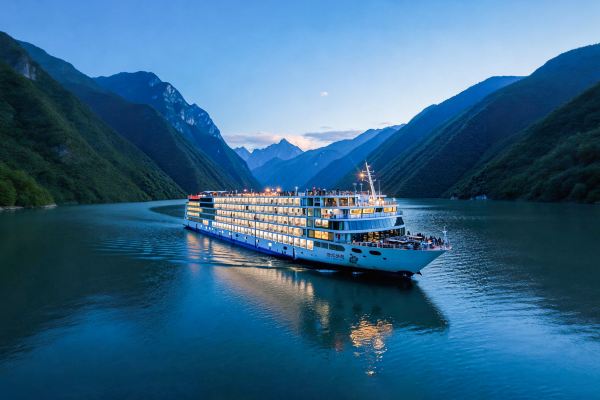
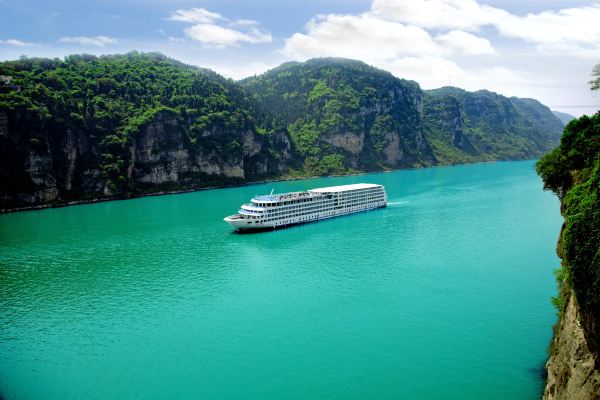
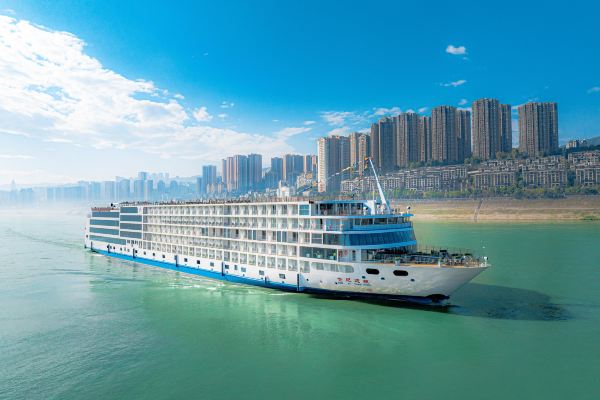
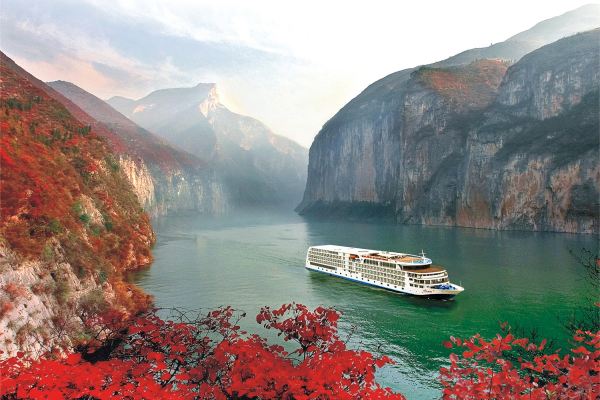
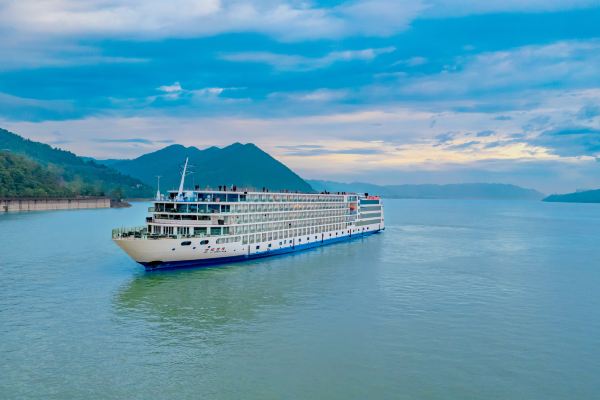
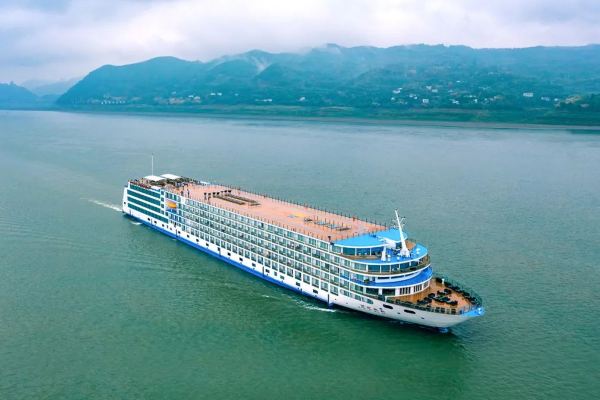
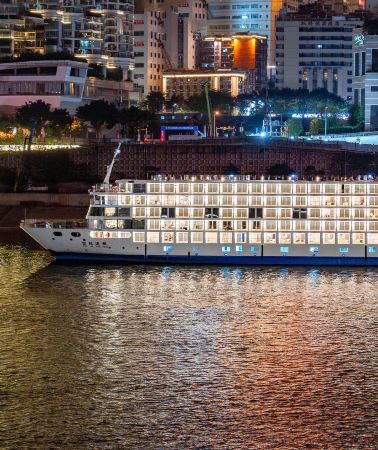
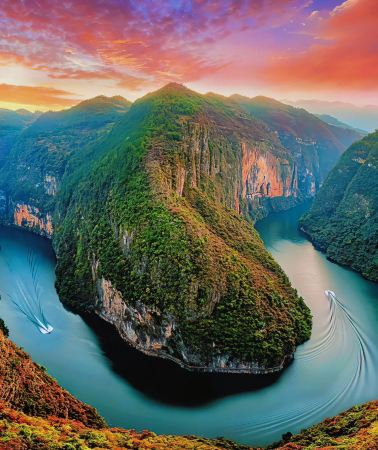
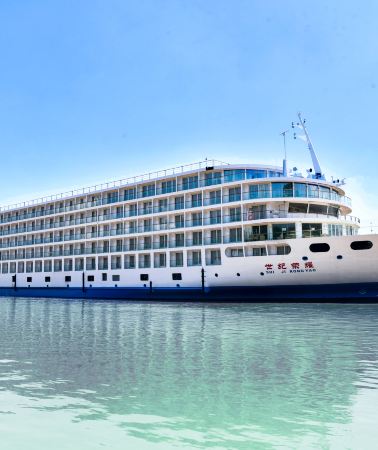
Fengdu County Cruises
See all cruises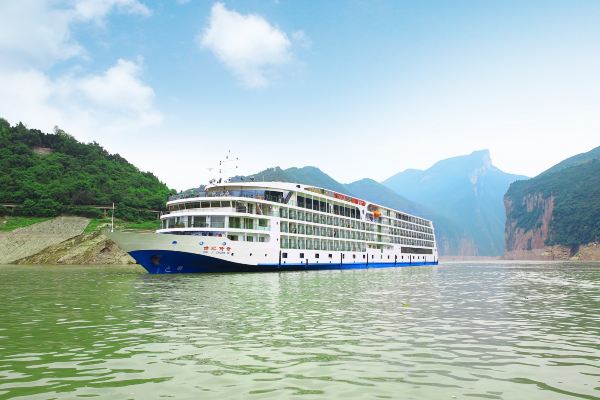



Private Tours in Fengdu County
View More Private Tours in Fengdu County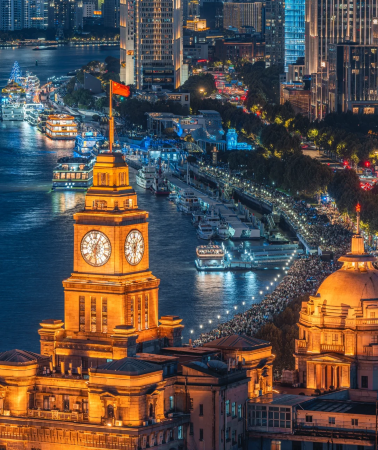




Group Tours in Fengdu County
View More Group Tours in Fengdu County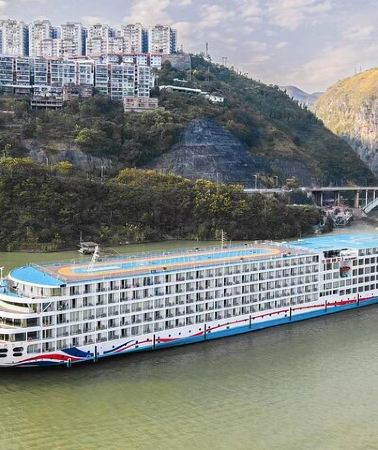
Free things to do in Fengdu County
Fengdu Mingshan Scenic Area
Fengdu County · 2.6km from downtownNantian Lake National Tourist Resort
Fengdu County · 33.6km from downtownFengdu Xueyu Cave Scenic Area
Fengdu County · 11.2km from downtownShuanggui Hill National Forest Park
Fengdu County · 3km from downtownFengdu Ghost City, Ming Mountain Scenic Area - Huangquan Road, Chongqing
Fengdu County · 2.7km from downtownFairy Mountain National Forest Park
Chongqing · 40.2km from Fengdu CountyImmediate access, Book now for today, Cancel anytimeThree Natural Bridges
Chongqing · 48.2km from Fengdu CountyImmediate access, Book now for todayWulong Karst Tourism Area
Chongqing · 55km from Fengdu CountyImmediate access, Book now for todayBridge over Troubled Water
Fengdu County · 2.6km from downtownTianmen Mountain National Forest Park
China · ZhangjiajieImmediate access, Book now for today
What travellers say about Fengdu County

Anonymous user15 October 2026
5.0
The Ghost City is unique in China, with a perfect combination of ghost culture and mountain scenery. There aren't many tourists, and the overall atmosphere isn't scary. The tour guide's explanation is quite informative. The shuttle bus inside the scenic area is worth taking, as it saves a lot of travel time. You can also see the Yangtze River from the mountain, which is excellent.
Fengdu Mingshan Scenic Area

M59***4016 August 2026
5.0
The scenery is quite beautiful, perfect for escaping the summer heat. Many people camp there, and you can also stay in guesthouses or hotels. We enjoyed cycling, boating, and lake tours. There's a beautiful field of verbena flowers, but it's not very large, and there aren't many places to do other activities. It's best suited for a two-day, one-night trip.
Nantian Lake National Tourist Resort

M47***833 May 2025
5.0
夏天很值得推荐的地方,沿途有很多小型瀑布群,到达景点之后,停车6元,沿着崖壁栈道前行大约30分钟,中途还有猴群,很有意思,到达洞里温度很低,洞里楼梯的高度落差大概有十层楼的高度。总体来说这是一个夏天爬坡不会出汗的地方
Fengdu Xueyu Cave Scenic Area

白驹幕府过隙6 July 2021
3.0
The cruise team designated scenic spots, from Fengdu Wharf directly take the battery car up the mountain.
It is said to be the smallest forest park in the country, with an area of only 1.5 square kilometers.
It is indeed very small, and there are regular cultural performances. Apart from locals, most tourists are brought here by cruise ships.
Shuanggui Hill National Forest Park

郭润龙浪迹天涯22 May 2023
5.0
20230421 afternoon:
1. "Huangquan Road" is located in the 4A scenic spot "Fengdu Ghost City". Fengdu Ghost City is the location of the underworld in ancient legends. It was originally named "Fengdu" and is famous throughout the country for its unique netherworld culture. The mountain where the ghost city is located is called "Mingshan", formerly known as "Pingdu Mountain". When the Northern Song Dynasty literary giant Su Shi came to visit, he created "Pingdu Tianxia Ancient Famous Mountain", so it was renamed Mingshan. In history, there are also footprints of celebrities such as Lu You, Feng Zikai, Wang Shizhen, and Feng Yuxiang.
① Address: No. 152 Mingshan Road, Mingshan Town, Fengdu County, Chongqing.
② Transportation: Direct bus access, easy to park by car.
③ Peak season: Spring, there is a Fengdu temple fair on the third day of the third lunar month every year.
④ Time: 2 hours.
⑤ Notes: Shandong tourists can enter the park for free with their ID cards.
2. There are many origins of the ghost town. The more reliable version is the "Legend of Two Immortals": According to the "Biographies of Immortals" written by Liu Xiang of the Western Han Dynasty, Wang Yuan, a doctor of the Western Han Dynasty, abandoned his official position to cultivate immortality and ascended to heaven in Mingshan. The "Biographies of Immortals" of the Jin Dynasty also recorded that Yin Changsheng, the great-grandfather of Empress Yin of Emperor Liu Zhao of the Eastern Han Dynasty, became an immortal in Mingshan in the first year of Jianguang in the Eastern Han Dynasty (121 AD). In the Song Dynasty, the names of Yin Changsheng and Wang Yuan were simplified by the people and read as "Yin Wang", that is, "King of the Underworld". The reputation has been passed down from generation to generation and has spread to this day. There are many other legends about the origin of the ghost town, but they are less reliable. Originally, there were mostly Taoist temples on Mingshan, ranking 45th among the 72 blessed places of Taoism (recorded in "Water Classics" by Li Daoyuan, a geographer of the Northern Wei Dynasty), but most of them were destroyed in the late Ming and early Qing dynasties. They were rebuilt later, but many were converted into Buddhist temples. Currently, Buddhism, Taoism and Confucianism coexist. During the Great Steel Production Movement in 1958, many temples on the mountain were destroyed. Fortunately, Premier Zhou passed by Fengdu and stopped it in time after hearing about it. He also adopted the suggestion to simplify the name of Fengdu to Fengdu, which means "abundant food and clothing".
3. There are no stairs after this. After a flat "Yellow Spring Road", you will reach the main hall "Tianzi Hall"). The "Admonition Monument" on the road was built in the 16th year of the Republic of China, that is, in 1927 by Pengxi County Magistrate Sun Zhiguo and Tongliang County Magistrate Wu Zaiyi, admonishing the world to do more good and less evil).
Fengdu Ghost City, Ming Mountain Scenic Area - Huangquan Road, Chongqing
Anonymous user10 October 2026
5.0
Chongqing, this mountain city, offers a fantastic experience! The night view of Hongyadong is dazzling, the scenery along the two rivers is incredibly atmospheric, and the 8D magical city is truly unique. The hot pot is spicy and flavorful, and the noodles and snacks are authentic and delicious. The locals are warm and friendly, the streets and alleys are full of life, there are many photo spots, and the trip is very pleasant and well worth visiting.
Fairy Mountain National Forest Park

有机西兰花16 October 2026
5.0
It was a worthwhile trip! There was no wind that day, so I didn't need a raincoat at the crevice; an umbrella was enough. I recommend going on a sunny day for a more beautiful view.
Regarding transportation, after arriving at Wulong South Station, head straight to the exit for the shuttle bus. It costs 16 yuan per person and takes about 45 minutes to reach the visitor center. Then take a shuttle bus to the Sansheng Bridge. After visiting the Sansheng Bridge, you can take another shuttle bus from the exit to the crevice. After visiting the crevice, take the bus back to Wulong South. We arrived at Wulong South around 8:50 AM, reached the Sansheng Bridge at 10:00 AM, took a bus from the crevice exit around 2:40 PM, and arrived at Wulong South around 4:00 PM. Finally, we took the G2436 train departing at 4:47 PM back to Chongqing. It was a leisurely trip overall.
Three Natural Bridges

RozaABR21 October 2026
5.0
Went to the Fairy Mountain, was truly a magical place. It was foggy when we arrive in the afternoon. So we can’t really see the whole grassland but truly a magical experience. Could see a family of goats and wild horses in the distance. Totally recommend the train ride up and was super cheap at 25 RMB. Shops are at the front, super convenient and cheap. An amazing place to just sit down and enjoy.
Wulong Karst Tourism Area

不期而爱TC26 May 2024
5.0
Good deeds are blessed by gods and Buddhas, while evil deeds are hard to cross the Naihe Bridge. If you do not do bad things, you will not be surprised when you cross the Naihe Bridge. Everyone has heard of the legend of Naihe Bridge and Meng Po. It is said that it is a bridge that people will pass after death. There is Meng Po on the bridge and a bowl of soup. However, today we will take a look at the story of this real Naihe Bridge. There is a Naihe Bridge in Fengdu. This bridge was built during the Hongwu period of the Ming Dynasty. It was built by Zhu Chun, the King of Shu Xian in the Ming Dynasty, in front of Liaoyang Palace. It has been more than 500 years since then. Later, it was changed to Naihe Bridge by Buddhists. The stone pool under the bridge is called Xuehe Pool. There are two ancient couplets on this bridge, which can be called classics. Let's read them together. The couplets on the Naihe Bridge are also called bridge couplets. The first one is: Accumulate virtue and practice, and it is easy to cross the Naihe Bridge. Greed and sin, it is difficult to escape from Jiandao Mountain. This couplet seems simple, but it is actually very reasonable. It warns everyone to accumulate virtue, cultivate kindness, do good things, and not do evil things. After all, everyone knows that good will be rewarded with good and evil will be rewarded with evil. The ancients' earnest admonitions are remembered in their hearts. The second one is: Cross the Naihe Bridge in three steps, and you will know whether you are good or evil. Walk through the gold and silver road in one breath, and you will be blessed and rich. Speaking of this couplet, it is related to the customs of the Naihe Bridge to be discussed later. It looks a bit mysterious, but it is actually very particular. Cross the Naihe Bridge in three steps to know right and wrong, good and evil, and the gold and silver road are the other two bridges. Here, we can't help but think of the principle that blessings and disasters are born together, which can also be expressed with awe. Cross this Naihe Bridge and reflect on your heart. Good and evil are in an instant. Have you ever done something wrong in your life? This also reflects the wisdom of the ancients and warns the world to have good thoughts. Next, let's talk about the customs of the Naihe Bridge. There are three Naihe Bridges in Fengdu. In front of the famous Liaoyang Temple, there are three stone arch bridges in parallel. The size and appearance of the three bridges are the same. The custom handed down from ancient times to the present is that the middle bridge can be used to test good people and bad people. The other two are different. The bridge on the left is the golden bridge and the bridge on the right is the silver bridge. This is consistent with what is said in the second couplet. Interestingly, if you are young and single, you have to cross the bridge in three steps. Men take the left foot first and women take the right foot first. If you are a couple or a lover, you have to walk across the bridge hand in hand in nine steps, so that you can be together forever. If you are a child or an older person, you can cross more than three steps, but the number of steps must be odd. If you cross safely, you are a good person, and you can pass the Naihe Bridge smoothly, and your soul will be free from suffering, and vice versa. Of course, this is just a legend and custom. The ancients spread it this way for their own reasons. The purpose is to warn future generations to do more good deeds and be good people. Pay tribute to the classics and the wisdom of our ancestors.
Bridge over Troubled Water

Al Amin Abu Ahmed Ashraf21 October 2026
5.0
The weather was crazy ! We loved it ! Is it possible to share live temperature or predication of weather so that people can take necessary prep. Overall we love that .
Tianmen Mountain National Forest Park


