





 4.6/5
4.6/5 Morpheus462
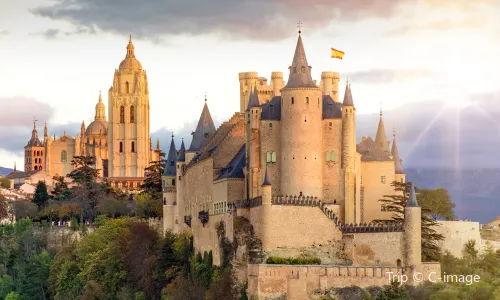
Definitely recommended, when visiting Segovia it's one of the main attraction of segovia
 4.4/5
4.4/5 旅の径
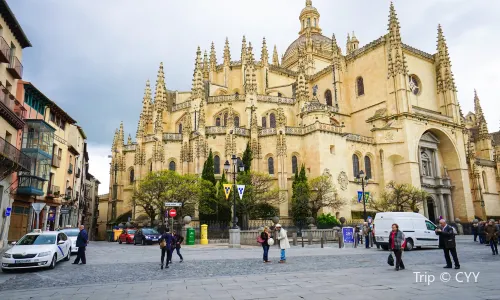
旅の径The Segovia Cathedral, which stands at the highest point of the ancient city of Segovia, has won the reputation of "the lady of the church" for its graceful and elegant shape. In 1520, the old Romanesque church on the original site was burned down in the war; during the reign of Carlos V, the construction of the new church began in 1525 and took nearly 200 years to complete. As the latest Gothic church built in Spain, the Segovia Cathedral is a classic of late Gothic architecture. The 88-meter-high Byzantine bell tower pierces the sky, the Romanesque arch is magnificent, the Gothic spire towers are scattered, and the towering main tower and the numerous small spires are set off, which makes the "lady" look more beautiful... In the Plaza Mayor in front of the church, enthusiastic tourists took photos with the cathedral as the background.
 4.6/5旅の径
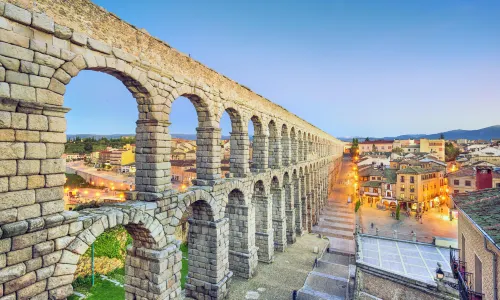
The most iconic and well-known landscape in Segovia, Spain, is the "Ancient Roman Aqueduct". During the reign of Emperor Trajan of Ancient Rome (53-117 AD), in order to bring the water of the Frio River 18 kilometers away into the city of Segovia, the method of digging a canal and building an aqueduct was adopted to bring water into the city. The aqueduct, with a total length of 813 meters, is made of dry masonry (without mortar) of khaki granite, which is extremely solid and magnificent. The aqueduct is 813 meters long, and 128 towering columns support 148 double-layer arches. The top of the trough is a water channel, which is more than 30 meters above the ground; the initial cross-section standard is 30X30cm, which was repaired and enlarged at the end of the 15th century, and was converted into a cement trough around 1930, and has been maintained and used ever since. The aqueduct has become the city symbol of Segovia. The city emblem and flag of Segovia, the image of the aqueduct are in the center. In 1985, the ancient city of Segovia and the ancient Roman aqueduct were listed as world cultural heritage. Today, the aqueduct stands at the southern end of the core tourist area of the ancient city of Segovia; the south side is the parking lot (vehicles are not allowed to enter the core tourist area), and the north side is the large square and the tourist center. The bustling tourists coming and going, looking up and queuing up to take pictures, are all impressed by the unique and beautiful scenery.
 44.8/5
 Annie长翅膀的喵
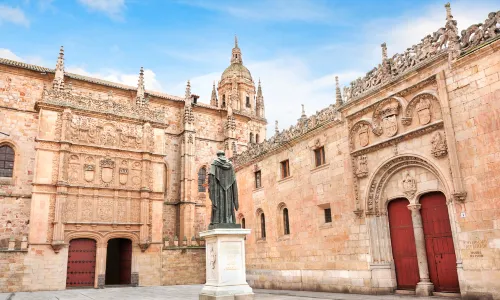
The University of Salamanca is Spain's oldest public university, founded in 1218, and is named "the four oldest schools in Europe" by UNESCO as a World Heritage Site. The open campus is very large, the architecture integrates Roman, Gothic, Baroque and other styles, listen to the legend of lucky frog reliefs, strolling on the campus, it seems that in the physical crossing and spiritual communication, constantly switching and moving...
 54.8/5
 乖小咪
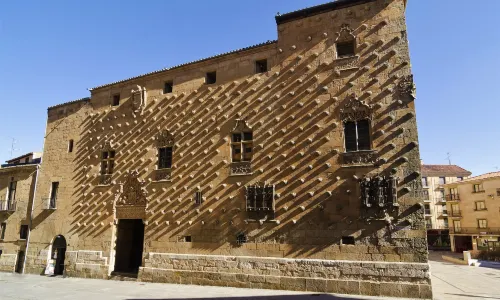
乖小咪There is a very famous building in Salamanca, the Shell Stand, which is famous because tens of thousands of shells are carved on the outer wall of the building. It looks densely packed, hence the name. It is also one of the most famous attractions in Salamanca, and you must come and see it.
 64.8/5乖小咪
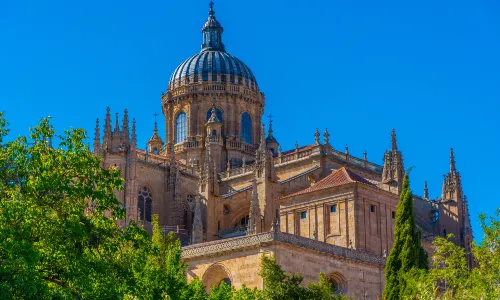
Salamanca Cathedral is the most famous church in Spain. It is famous for the many mysterious statues on the reliefs of this church, such as astronauts, which were found in this church. This church has a history of more than 400 years and is definitely one of the most famous churches in Spain. Don't miss it.
 74.9/5
 pan***he
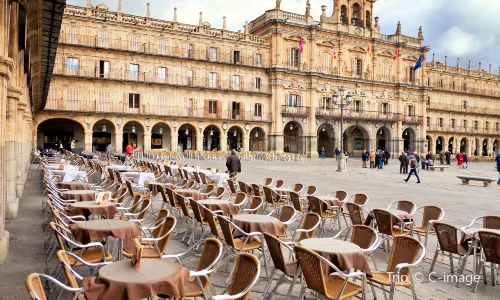
The main square of Salamanca is said to be the most beautiful in Spain. It is indeed beautiful, but the weak light in winter cannot compare with the bright sunshine in summer, so the photos we took are not as good. There are many celebrity portraits around the square. According to LP, Franco's portrait is covered with plastic bags to prevent it from being damaged, but we didn't find it and left.
 84.2/5旅の径
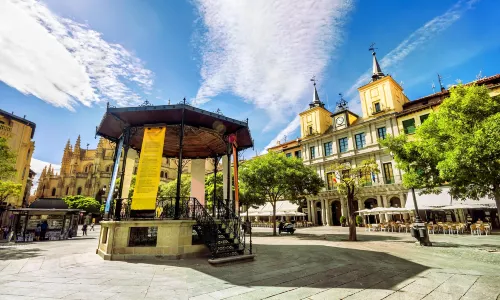
Plaza Mayor, built in 1610, is located in the center of the city and is the largest of the N squares in the ancient city of Segovia. The spacious square, with its shiny bluestone slabs showing its vicissitudes, the quaint iron pavilion sitting in the center, and the surrounding shops lined up one after another, with tourists looking around with interest. The square is surrounded by exquisite buildings, including the Juan Bravo Theater with pink exterior walls completed in 1917 in the east, the Segovia Cathedral built in 1678 in the west, which is known as the "Lady in the Church", the San Miguel Church rebuilt in 1558 in the south, and the bright yellow City Hall built at the same time as the square in 1610 in the north... The colorful colors and diverse styles complement each other and shine.
 94.5/5
 _We***95
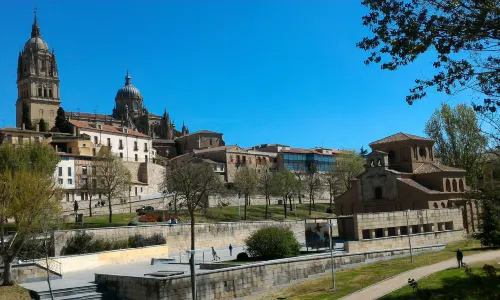
We walked out of the hotel and to the end of the Roman bridge. It was a lovely walk across the bridge and out of town, perfect for taking photos of the beautiful bridge with the church in the background. Turn left at the end of the bridge and walk along the river to the second bridge which leads back into town, a great way to finish off breakfast. Highly recommended.
 104.6/5乖小咪
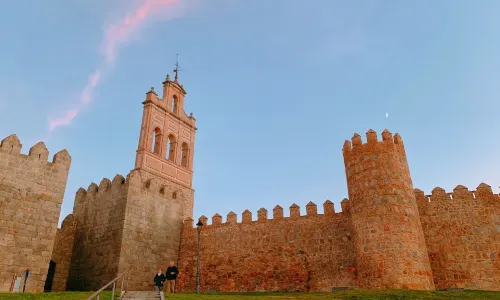
The ancient city of Avila is an ancient city in Spain with a history of thousands of years. It preserves very complete city walls, city gates and churches. The walls of the entire ancient city are very thick. It can be seen that this must have been a military stronghold in ancient times. Walking in the ancient city, it seems to have returned to Europe thousands of years ago. It is really worth a visit.


 Explore Segovia: From Bell Towers to Castles, Every Step Is a View
 No. 1 of Night Attractions in Castile and Leon