
Things to do in Shangli
Explore top experiences
Top 10 attractions in Shangli

Nielong Cave
Located in Yangqi Mountain, north of Pingxiang City, Nielong Cave is a karst cave. In the legend, there is a dragon named Nielong in Poyang Lake. It wanted to turn Jiangxi into a swampland. It caused destructions everywhere and hurt lots of people. In the end, it was subdued by Xu Zhenjun in the cave at the bottom of Yangqi Mountain, hence it is called Nielong Cave. There are many features in the cave, such as Xian Nu Xia Fan, Shi Zhong Chang Ming, Shen Dong Qing Xue, and so on. They are all mysterious yet beautiful. Known for its depth and beauty, Nielong Cave has attracted many Chinese and foreign tourists to visit.Shangli · 15.5km from downtown


Yangqi Mountain
The Yangqi Mountain Attraction has a planned area of 54.9 square kilometers and consists of four Attraction: Yangqi, Nielong Cave, Gutang, and Jiulong Cave. The Attraction is characterized by a long-standing Zen temple, fantastic karst landscape, and rich and diverse folk culture. It is a scenic spot with the functions of inheriting Zen culture, exploring karst landscapes, and popularizing scientific knowledge. The Attraction is 25 kilometers away from Pingxiang City, 100 kilometers away from Changsha, and 240 kilometers away from Nanchang. It faces the Changsha-Zhuzhou-Xiangtan urban agglomeration and is located at the gateway and passage. The inter-regional transportation and location conditions are very superior. Among them, the core Attraction Yangqi Attraction Yangqi Ordinary Temple is the birthplace of Yangqi Sect, one of the five schools and seven sects of Zen Buddhism. It is the ancestral temple of Yangqi School of Linji Sect, with a prominent status and far-reaching influence; Nielong Cave is 3,200 meters long and is known as "the first cave in the world" and "underground art gallery". The Twenty-four Scenic Spots of Yangqi: There are the famous "Twenty-four Scenic Spots of Yangqi" in Yangqi Mountain Scenic Area: Yongquan Pool, Qianqiutian, Guanyin Cliff, Tiger Cave, Turtle Cave, Qiangutang, Hougutang, Xianyutang, Hanpo Rock, Zhangkou Lion Cliff, Guanmen Stone, Yangqi Grottoes, Golden Bottle Drying Fruit, Monkey Peeling Stone, Bullfighting Stone, Tiger in Iron Cage, Xiaotianchi, Sandao Lake, Mountaintop Spring, Square Bamboo Forest, Chessboard Stone, Unique Cave, Ziwu Spring, and Anshan Pass.Shangli · 12.1km from downtown

Orange Isle Scenic Area
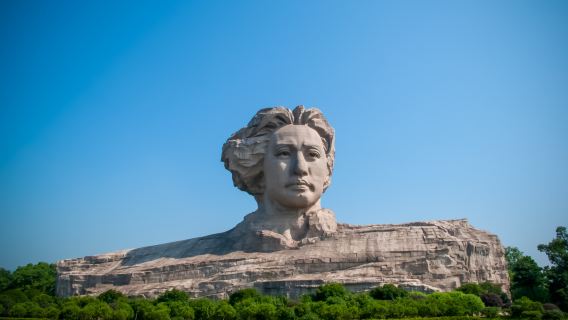
Orange Isle Scenic Area is a narrow sandbar lying across the heart of the Xiang River in Changsha, stretching approx. five km. It faces Yuelu Mountain to the west and borders Changsha's old city to the east, surrounded by water on all sides. Named after the abundant orange trees planted on the isle, it was historically called Shuiluzhou. Formed by river alluvium, this sandbar has existed for over a millennium, where the "River and sky in evening snow" scenery was once among the Eight Views of Xiaoxiang. In 1925, the poem "Spring in a pleasure garden - Changsha" was composed here, with its iconic line "Alone I stand in the biting fall, watching the Xiang River flow north past Orange Isle's head," which made this riverine landmark widely renowned. The highlights of the visit are concentrated at the islet's head: A granite art sculpture over 30 m tall, modeled after the 1925 youth image, stands facing the river as Changsha's highly recognizable landmark. Nearby, the Questioning Heaven Platform extends toward the river center, where leaning on the railing reveals the mighty Xiang River flowing northward, with Yuelu Mountain and the city skylines on both banks facing each other across the water. The Songju Pavilion, white marble poetry stele, and the 200-year-old ancient phoenix tree at the islet head are all in this area. Heading north from the islet head, a hundred-acre orange orchard bears golden fruits in fall, while bamboo groves, peach orchards, plum gardens, and osmanthus groves take turns showcasing seasonal flora. The historic Zhuzhang Ferry (where Zhu Xi and Zhang Shi once crossed the Xiang River for lectures) and the Huxiang Culture Exhibition Hall are scattered along the way. At the islet's tail, the reconstructed Jiangshen Temple and Gongji Tower area was precisely where ancients admired the "River and sky in evening snow" scenery. The island is long and narrow, making round-trip walks quite tiring. A sightseeing train is available for transportation, with multiple stops along the way for hopping on and off. Travelers with limited time are advised to head straight to the island's tip to see the sculpture and river views, then stroll leisurely along the riverside path. At dusk, watching the sunset over the Xiang River and seeing the lights gradually illuminate both shores from the island's tip is especially worth setting aside time for.Changsha · 88.6km from Shangli

Jiangxi WuGong Mountain Scenic Area
Jiangxi Wugong Mountain is located in the west of Jiangxi, spanning the three cities of Pingxiang, Yichun, and Ji'an. It has scenic spots such as Pingxiang Wugong Mountain, Yichun Mingyue Mountain, Anfu Wugong Mountain, and Anfu Yangshimu. It is a large-scale mountain type integrating human landscape and natural landscape. Scenic spot; Jiangxi Wugong Mountain-Pingxiang Wugong Mountain Scenic Spot is located in the southeast of Pingxiang City, belonging to the northern section of the Luoxiao Mountains on the border between Hunan and Jiangxi. It is a large-scale mountain-type scenic spot with the most abundant tourism resources in western Jiangxi Province. In history, it was once known as the three famous mountains in the south of the Yangtze River together with Lushan Mountain and Hengshan Mountain, and it is known as "the first martial arts in Hengshou and Luwei". Baihe Peak (Golden Summit), the main peak of Wugong Mountain, is 1918.3 meters above sea level. Jiangxi Wugong Mountain-Yichun Mingyue Mountain Scenic Spot is located 15 kilometers southwest of the central city of Yichun, with a total area of 389 square kilometers. Mingyue Mountain has four major resources of "mountain, spring, Zen, and agriculture". It is a scenic spot featuring "sightseeing, leisure and vacation, health care and religious tourism" as a whole. Jiangxi Wugong Mountain-Anfu Wugong Mountain is located in Taishan Township, Anfu County, Jiangxi Province. The depth of the scenic spot is about 150 kilometers. It is the highest mountain in Jiangxi. In history, Wugong Mountain was once known as the three famous mountains in the south of the Yangtze River together with Hengshan Mountain and Lushan Mountain, and was named "the first of Hengshan and Luwei in martial arts". Wugong Mountain is a scenic spot integrating human landscape and natural landscape. It is a mountain under development among the famous mountains in the south of the Yangtze River. , and natural landscape and intact original ecological environment, with charm. Jiangxi Wugong Mountain-Anfu Yangshimu Scenic Area is located in the northwest of Wugong Mountain in Anfu County, Jiangxi Province, a scenic spot, a national natural heritage site, a national forest park, and a national geological park. The scenic spot is dominated by granite peak forest landforms, which are majestic and majestic in various poses and with different expressions.Luxi · 59.3km from Shangli

Pingxiang Wugong Mountain Scenic Area
Wugong Mountain is located inLuoxiao MountainsNorthern section, main peakWhite crane peak(Golden Summit) The altitude is approx. 1,900 m. As the mountain range spans two cities, Wugong Mountain is divided into the Pingxiang and Anfu attractions, each with its own characteristics. Pingxiang Wugong Mountain Scenic Area is known for its classic alpine meadows, and travelers who come to Wugong Mountain for hiking and sightseeing usually choose Pingxiang. The attraction includesYangshi Peak, Golden Summit, Fayunjie attraction, and Jiulong Mountain. Among these, Golden Summit has well-developed trails and cable cars for ascending and descending the mountain, making it the most developed tourist route in Wugong Mountain. Reaching the golden summit, watching the sunrise and sunset, and admiring the sea of clouds and starry sky are the three major experiences here, and many hiking and photography enthusiasts choose to team up for a trekYangshi Peak- Fayunjie attraction - Golden Summit - Jiulong (three days) is considered one of the more challenging hiking routes in East China. Ordinary travelers typically combine walking with cable cars to explore Golden Summit in one or two days, enjoying the sunrise and sea of clouds, which is much more relaxed. The trail at Golden Summit roughly forms a "P" shape. To the right of the entrance are two-level cable cars leading to the mountain top, while the left side includes attractions such as the Diaoma Zhuang in Jiangxi Wugong Mountain National Scenic Area,Hero slopeThe hiking trails of the attraction. The "three major experiences" itinerary is as follows: start at noon on the same day, hike up from the right side with the assistance of a cableway, stay overnight at the golden summit, watch the sunrise and sea of clouds early the next morning, then continue counterclockwise to return via the left hiking trail. On the way from the entrance to the lower cableway station, you'll pass Shigu temple and Wugong Mountain Cultural Park in Pingxiang Wugong Mountain National Scenic Area, where you can spend half an hour for a brief visit. Sitting on the cable car, you'll see steep peaks and cliffs with pristine secondary forests above, and lush bamboo groves and terraced fields below, offering delightful views. If hiking up, you'll encounter scenic spots like Jinxin bridge, Jinxin waterfall, and Muzi rock along the way. Both options have their merits. If you don't want to miss either, you can choose to hike this section when descending the next day. After getting off the cable car, you'll enterValley of good fortuneIn this area, you will feel the air becoming fresh. The Zijigong Temple next to the cable car station is also called "Zhong'an," where the Prince of Wugong Mountain is enshrined. After visiting Ziji palace, it's time to ascend to the summit. You can take the left path to Diaoma Zhuang in Jiangxi Wugong Mountain National Scenic Area, the middle path to Echo Valley in Pingxiang Wugong Mountain National Scenic Area, or the right path toValley of good fortune, the Diaoma stake route follows the stream upwards, passes the Diaoma stake plank walkway, and climbsHero slope, until reaching the alpine meadow at the summit. The trail is quite steep, winding along sheer cliffs and ancient forests, requiring significant physical exertion. Echo Valley in Pingxiang Wugong Mountain National Scenic Area is an old official path, featuring attractions like the echo wall and Leida Gorge.Valley of good fortuneThis is a mountain path specially built for travelers in recent years. It takes approx. 1.5 hrs to walk from here to the Golden Summit. For those who prefer not to walk, there is an additional cable car ride available, making it very user-friendly. The suspension bridge direction is usually chosen, starting fromValley of good fortuneUp, down to Diaoma Zhuang in Jiangxi Wugong Mountain National Scenic Area. Walking onValley of good fortuneThe trail boasts a thriving ecosystem, with rock formations like the Lucky Star Rock resembling a deity of fortune and the Wishing Stone shaped like a heart.Talent platformThe Inquiry Platform in Pingxiang Wugong Mountain National Scenic Area offers a panoramic view of the kilometer-long suspended wooden plank trail behind it, making it an ideal spot for photography. However, due to the steep terrain and limited space, visitors should exercise caution when crowded. At the end of Fuxing Valley trail lies the kilometer-long wooden plank path, where you can take a breather after the climb while walking on the flat planks. This section also serves as a scenic corridor, showcasing not only the undulating mountain ranges but also unique Wugong Mountain flora like Jiangxi azaleas and pleiones, with distant views of forest terraces. The suspension bridge and glass viewing platform along the way can be thrilling; those with acrophobia can take the regular trail beside the suspension bridge. Upon reaching the lower station of the secondary cableway, take the cable car up and walk a short distance to witness Wugong Mountain's distinctive alpine meadow view and the thousand-year-old altar. On the way from the secondary cableway upper station to the alpine meadow, there are several remarkable rock views worth seeing, such as the "Wugong divine fist" resembling a clenched fist and the majestic and profound "Wugongshan god"Etc., follow the trail through the meadow, where scattered ancient altars serve as a link between humans and the heavens, dating back approx. 1700 years, and are a signature view of Mount Wugong. Continue forward past Baihe Temple, where you'll find a row of small houses for stay and meals. Further ahead at Guanyin Dang is a camping site suitable for pitching tents. This is also the camping ground for the Wugong Mountain tent festival held every September, where the colorful tents on the meadow create a spectacular sight. Stay overnight in the mountains, and early the next morning when the red sun rises from the horizon, the mountain gradually turns crimson, creating a vast and open feeling. After sunrise, you can witness the spectacular sea of clouds. Especially in fall, with reeds blooming across the mountains and golden meadows shining brilliantly under the sunlight. After watching the sunrise, pass by Double Breasts Peak, take photos at Jiangxi Wugong Mountain National Scenic Area—Diaoma Stake, and explore Fayunjie attraction withHero slopechoose the latter at the fork in the road and walk pastHero slopeAfter climbing hundreds of steep stone steps, you'll return to the easier cobblestone path. Walk past the Diaoma Zhuang boardwalk, continue forward for about 1 km, and you'll reach the Ziji Palace Cableway Station. From here, take the downhill ride back to the main gate. Exiting the gate and turning right leads to water features like the Seven Immortals Pool and Red Rock Valley Waterfall. If time permits, you could allocate half a day to explore these sights as well.Luxi · 59.3km from Shangli

Tengwang Pavilion Tourist Area
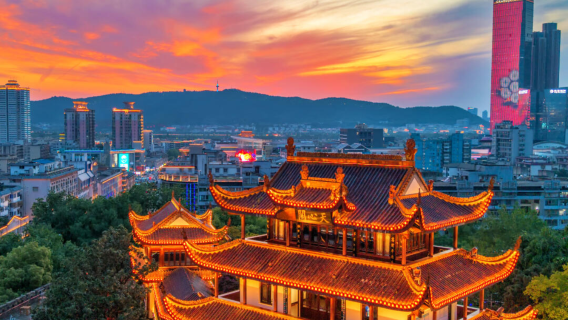
Tengwang Pavilion Tourist Area is located on the east bank of the Gan River in Nanchang, with the riverside Tengwang Pavilion as its centerpiece. Originally built in the fourth year of the Yonghui era of the Tang Dynasty by Li Yuanying, Prince of Teng and son of Emperor Gaozu of Tang, it gained eternal fame through Wang Bo's "Preface to Tengwang Pavilion." Alongside the Yellow Crane Tower and Yueyang Tower, it is hailed as one of the "Three Great Towers of Jiangnan." Historically destroyed and rebuilt nearly thirty times, the current structure is a Song-style replica completed in 1989, designed based on Liang Sicheng's reconstruction sketches. With its green tiles and layered eaves, it remains a landmark of Nanchang to this day. The main pavilion follows a "three visible, seven concealed" layout: appearing as a three-story structure with encircling corridors from the outside, while actually containing seven interior floors—nine levels including the two-tiered base symbolizing ancient city walls. Turquoise-roofed galleries extend north and south from the base's flanks, connecting at their ends to auxiliary pavilions named "River-taming" and "Greenery-embracing," forming a mountain-shaped silhouette with the main tower. Below, an artificial lake and the nine-bend wind-and-rain bridge add classical garden charm to the majestic architecture. Each floor of the pavilion offers something remarkable. The white marble relief "A timely wind delivers Tengwang Pavilion" in the first-floor preface hall depicts the legend of Wang Bo riding the wind to compose his famous preface. The second-floor mezzanine features the long scroll painting "Gallery of eminent figures," gathering Jiangxi's historical luminaries like Tao Yuanming, Ouyang Xiu, Wang Anshi, and Tang Xianzu in one artwork. The third-floor mural "Linchuan dream" recreates Tang Xianzu's staging of "The peony pavilion" here. The fourth-floor "Land of wonders" painting compresses Jiangxi's iconic landscapes—Mount Lu, Sanqing Mountain, Dragon-Tiger Mountain, and Poyang Lake—into a single masterpiece. The fifth floor is the highlight for panoramic views: its central hall displays a bronze tablet inscribed with Su Dongpo's calligraphic version of "Preface to Tengwang Pavilion," while the east hall exhibits a scale model of the pavilion. Strolling the veranda offers sweeping views of the Gan River and modern skyline across the water. The top floor bears the plaque "Ninth heaven," with its west hall housing an antique-style theater flanked by replica ancient instruments like chime bells and stone chimes. Above, spiral-arranged bracket sets adorn the caisson ceiling, and between the double eaves hangs Su Dongpo's gilded "Tengwang Pavilion" plaque. After descending from the main pavilion, take time to explore the garden area: the square in front of the pavilion, the grand Song-style archway, the antique street lined with calligraphy and antique shops, and the small Suzhou-style garden Fuchang Garden with its lake reflections and bridge views—perfect for slowing your pace. To experience the poetic scene of "a solitary wild duck flying with the sunset glow, while the autumn water blends with the vast sky," an evening ascent to the pavilion is ideal. The fifth-floor corridor offers an expansive view, making it a prime spot to admire the sunset over the Gan River.China · Nanchang

Lushan National Park
Mount Lu is known as one of China's “four great summer retreats,” together with Jigongshan, Beidaihe, and Mount Mogan. Mountain peaks, waterfalls, unique views of “cloud oceans,” and garden architecture all lend Mount Lu its rich charm. The mountain climate allows visitors to feel the cool and comfortable feel of spring even in the summertime, and has secured Mount Lu's position as a famous scenic area and historic vacation spot and retreat.China · Lushan City

Mount Yuelu
Mount Yuelu stands on the west bank of the Xiang River and is a landmark mountain in Changsha. At its foot lies the Yuelu Academy, founded during the Northern Song Dynasty, a millennium-old institution sharing the mountain's name. Ascending from here leads to Qingfeng Gorge, where the Aiwan Pavilion, named after Du Mu's poetic line "I stop my carriage to admire the maple woods at dusk," is surrounded by maple trees. Midway up the mountain, the ancient Lushan Temple, established in the Western Jin Dynasty over 1,700 years ago, features a lush six-dynasty-era podocarpus tree in front of its sutra repository. At the summit stands the Yunlu Palace, a Taoist temple built during the Ming Dynasty, offering panoramic views of the Xiang River and Changsha's urban area. The mountain's historical sites extend further, with the Yu King Stele, Python Cave, and Changsha Battle Memorial Stele scattered along its trails. Modern figures such as Huang Xing, Cai E, and Chen Tianhua are also buried here, making the mountain a condensed repository of profound modern history. Most cultural attractions are concentrated near the south gate, where you can visit major historic sites in sequence from Yuelu Academy to Aiwan Pavilion. For those preferring not to hike, a cableway station near the east gate allows easy ascent, eliminating most uphill climbing. With an elevation of about 300 m and well-developed trails, reaching the summit on foot is manageable. Ancient trees like Jin dynasty podocarps, Tang dynasty ginkgos, Song-Yuan era camphor trees, and Ming-Qing maple-chestnuts line the paths, making the entire mountain resemble a natural botanical museum. In late fall when maple leaves turn red across the slopes, it becomes an ideal time for hiking. Allocate half a day to leisurely photograph Aiwan Pavilion and the mountaintop viewpoints.Changsha · 90.8km from Shangli

Du Fu Pavilion
This is a riverside structure, an ancient-style building constructed in honor of the great Tang dynasty poet Du Fu. Due to its proximity to the Xiang River, it is an ideal spot to watch the fireworks display at the Orange Isle attraction. Today, Du Fu Pavilion stands as a local landmark, offering a delightful experience to enjoy panoramic views of both banks of the Xiang River, sip tea, and feel the riverside breeze. Du Fu Pavilion features exhibits on the great poet's life and works. During fireworks displays, the number of visitors increases significantly, so arriving early is necessary to secure a good viewing spot.Changsha · 87.9km from Shangli

Yue Yang Tower
"Be the first to worry about the world's worries and the last to enjoy its pleasures"—this line from Fan Zhongyan's Northern Song dynasty essay "Yueyang Tower chronicle" made Yue Yang Tower by Dongting Lake a household name. The main tower, Yueyang Tower, is said to have evolved from a naval review tower built by Lu Su of Eastern Wu during the Three Kingdoms period. Alongside Yellow Crane Tower in Hubei and Tengwang Pavilion in Jiangxi, it is hailed as one of the three great towers of southern China. Poets like Li Bai, Du Fu, Meng Haoran, and Bai Juyi once climbed it to compose verses. From the top floor, leaning on the railings, you can take in the vast expanse of Dongting Lake stretching hundreds of miles, with Junshan Island visible across the waters—where timeless verses and the lake's beauty converge in this moment. The tower itself is an architectural treasure: its three-story, triple-eave structure is built entirely of wood with mortise-and-tenon joints—no iron nails used—and four golden nanmu pillars run straight from the ground to the rooftop. The helmet-shaped roof, called "helmet crown," is supported by layered ruyi bracket sets, a rare design among surviving ancient towers in China. Inside, carved Qing-dynasty panels of "Yueyang Tower chronicle" are preserved—pause to admire them when ascending. The small attractions within the attraction each have their own highlights: near the gate, the "Five-dynasty towers" use bronze miniature models to recreate Yueyang Tower's different architectural styles from the Tang, Song, Yuan, Ming, and Qing dynasties, showcasing a millennium of changes at a glance. On the lakeshore in front of the main tower, ancient iron artifacts resembling shackles and weighing several tons are displayed—their casting era and purpose remain debated, forming a long-standing historical mystery. Additionally, there are the Shuanggong Shrine commemorating Fan Zhongyan and Teng Zijing, the stele corridor engraved with poems about the tower from various dynasties, and the Xiaoqiao Tomb—said to belong to the wife of Three Kingdoms general Zhou Yu—waiting to be explored. If you wish to extend your itinerary, you may also take a boat tour of Dongting Lake and visit Junshan Island on the opposite shore. The nearby Bianhe Street, a cobblestone-paved antique-style street, is lined with local snack stalls and souvenir shops, making it convenient to explore along with the nearby Baling Square.China · Yueyang
Experiences you can't miss in Shangli
Featured Day tours in Shangli
View all Day tours
Free cancellation
Instant confirmation
Save AU$0.89
FromAU$87.77AU$88.66
Free cancellation
Instant confirmation
Book now for tomorrow
FromAU$64.21
FromAU$172.36
5% off
Limited-time sale
FromAU$235.25AU$247.64

Hunan Provincial Museum English Guided Tour (Private Small Group + No Join-in Tours + Premium Guide)
Free cancellation
Instant confirmation
FromAU$247.64
FromAU$642.01
Free cancellation
Instant confirmation
FromAU$70.63
Free cancellation
Instant confirmation
Book now for tomorrow
Save AU$5.96
FromAU$113.40AU$119.36
Featured Outdoor experiences in Shangli
View all Outdoor experiences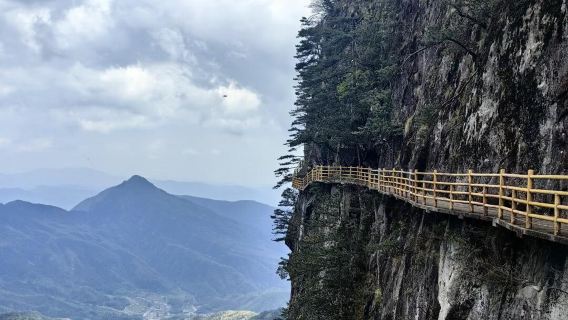
5% off
Limited-time sale
FromAU$235.25AU$247.64
![Pingxiang Unmissable Wugong Mountain 1-Day Tour: A Year-Round Haven for Hikers [Private Car Service]](https://ak-d.tripcdn.com/images//0581x12000rrqq2ps946E_C_568_320.jpg?_fr=wc)
Pingxiang Unmissable Wugong Mountain 1-Day Tour: A Year-Round Haven for Hikers [Private Car Service]
Free cancellation
Instant confirmation
Book now for tomorrow
Save AU$2.16
FromAU$213.28AU$215.44
5% off
Limited-time sale
FromAU$235.25AU$247.64
FromAU$396.61
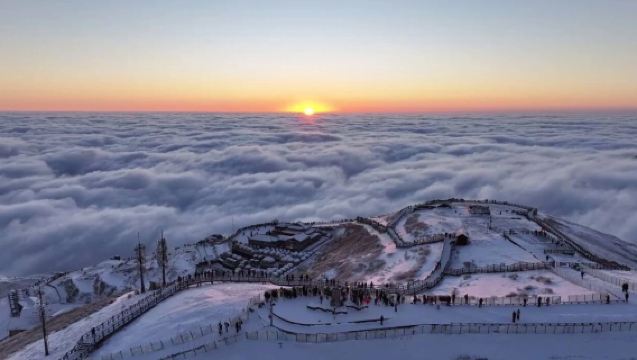
![[Changsha] Twilight River Dance of Snowflakes experience (live painting-like scenery + snowscape backdrop)](https://ak-d.tripcdn.com/images//0583y12000qnk8sriB712_C_568_320.jpg?_fr=wc)
3.0/5
· 1 reviewFree cancellation
FromAU$27.80
Free cancellation
Instant confirmation
Book now for tomorrow
Save AU$1.39
FromAU$138.03AU$139.42
![Poetic Day Tour to Pingxiang Wugong Mountain: Unveil Alpine Meadows [Ticket+Private Car]](https://ak-d.tripcdn.com/images/0356g12000rbvm280B794_C_568_320.jpg?_fr=wc)
Free cancellation
Instant confirmation
Book now for tomorrow
Save AU$0.65
FromAU$64.98AU$65.63
Featured Cultural experiences in Shangli
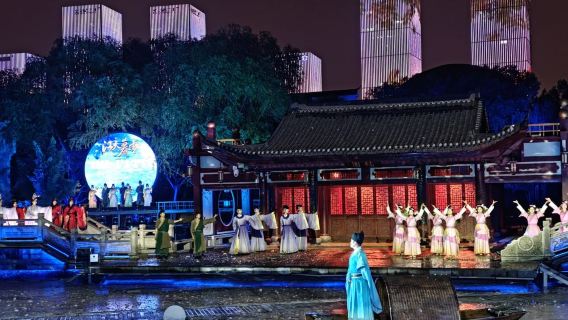
View all Cultural experiences![[Changsha] Twilight River Dance of Snowflakes (snowscape backdrop + immersive experience)](https://ak-d.tripcdn.com/images/0356i12000p94fn4jC649_C_568_320.jpg?_fr=wc)
5.0/5
· 2 reviews· 72 bookedFree cancellation
Instant confirmation
FromAU$27.80
5.0/5
· 1 review· 87 bookedFree cancellation
Book now for today
FromAU$27.80

4.0/5
· 1 reviewFree cancellation
Book now for tomorrow
FromAU$8.62


5.0/5
· 1 reviewFree cancellation
Book now for tomorrow
FromAU$9.70
Free things to do in Shangli
Nielong Cave
Shangli · 15.5km from downtownYangqi Mountain
Shangli · 12.1km from downtownOrange Isle Scenic Area
Changsha · 88.6km from ShangliJiangxi WuGong Mountain Scenic Area
Luxi · 59.3km from ShangliPingxiang Wugong Mountain Scenic Area
Luxi · 59.3km from ShangliImmediate access, Book now for today, Cancel anytimeTengwang Pavilion Tourist Area
China · NanchangImmediate access, Book now for today, Cancel anytimeLushan National Park
China · Lushan CityImmediate access, Book now for today, Cancel anytimeMount Yuelu
Changsha · 90.8km from ShangliDu Fu Pavilion
Changsha · 87.9km from ShangliImmediate access, Book now for today, Cancel anytimeYue Yang Tower
China · YueyangImmediate access, Book now for today, Cancel anytime
What travellers say about Shangli

QQdeng15 April 2026
5.0
I was unsure about this performance at first, but definitely worth going! Go earlier to pick up your ticket and explore around. Lots to see and do before the show!
Nielong Cave

yychao5 September 2022
5.0
Here we mainly introduce the Nielong Cave Scenic Area in Yangqi Mountain. Compared with the temples in Yangqi Mountain, the natural landscape of Nielong Cave is even more amazing. It is really a good place to live in such a small county town.
Yangqi Mountain

Anonymous user8 October 2026
5.0
There were no assigned seats, so you could sit anywhere. We spent most of our time on the third deck enjoying the view and taking photos. Although it was very hot outside, there was a breeze on both sides of the deck, so it wasn't too bad. There were karaoke machines and vendors selling snacks and drinks on both the second and third decks. The air conditioning on the second deck was very strong. We arrived at the pier half an hour early, and there was already a queue.
Orange Isle Scenic Area

夜空星城6 July 2026
5.0
The experience of visiting Wugong Mountain was quite good. The hiking route was of moderate difficulty and not strenuous. The view from the summit was expansive, overlooking vast meadows. The breeze was pleasant and refreshing. There were also ample supply points along the way, so I didn't need to bring too much with me. It was a very relaxing trip.
Jiangxi WuGong Mountain Scenic Area

某某公子16 October 2026
5.0
It's very convenient, saves time, protects your knees, and is suitable for the elderly and children, or hikers who are in a hurry or whose legs are worn out after hiking 😅. The price is also reasonable.
Pingxiang Wugong Mountain Scenic Area

Raikkonen7115 October 2026
5.0
Climbing to the top of Tengwang Pavilion and overlooking the Gan River, one is struck by its magnificent grandeur. Its upturned eaves and corners exude a timeless charm. The saying "The setting sun and the lone wild goose fly together" is truly fitting; as the premier pavilion in Jiangnan, this trip was well worth it!
Tengwang Pavilion Tourist Area

_We***9015 October 2026
4.0
Perhaps it's because you can't see anything on a rainy day, so I don't dare to say much about the scenery. You can usually see colorful birds in this season, but there's nothing happening now. However, I feel that the scenic area's management is still a bit lacking.
Lushan National Park

118***585 October 2026
5.0
During the National Day holiday, the crowds were immense. Our tour guide, Xiao Xiang, led us along the way, providing lively and engaging explanations that saved us from taking unnecessary detours and greatly improved efficiency. He also clearly outlined the key locations.
Mount Yuelu

M12***748 October 2026
5.0
The poetic pavilions along the Xiang River offer expansive views of the river from their heights. The exhibits inside tell the story of Du Fu's time in Hunan, and the night view is particularly stunning. It's worth stopping by to experience this cultural heritage of Hunan when visiting Changsha.
Du Fu Pavilion
Anonymous user12 October 2026
4.0
We didn't enter the scenic area until 4 PM, so we could only do a quick look around. The queue at Yueyang Tower was incredibly long; it was almost evening, and we waited for over half an hour. Everyone just turned on their phone flashlights, groped their way up and down the stairs in the dark, took some photos, checked off our list, and left 😂 It felt like there were still so many places we didn't get to see. Yueyang Tower, as an original ancient tower, is the only one of the four famous towers built entirely of wood. Next time, I'll spend more time learning about this historical tower and watching the evening shows!
Yue Yang Tower


