Qi County

Things to do in Qi County

Search attractions or local attractions & tours
Search

Explore top experiences

Top 10 attractions in Qi County

View all Attractions
The Qiao's  Family Compound
No. 16 of Best Things to Do in Shanxi

The Qiao's Family Compound

7.8
4.7/5
15.1k reviews

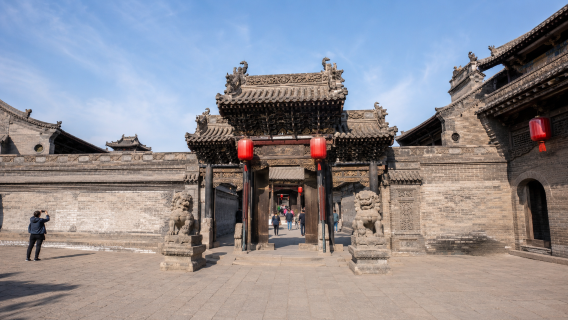
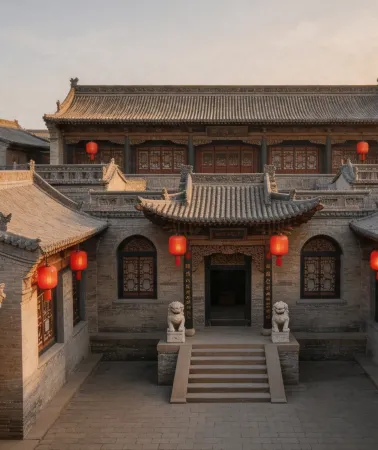
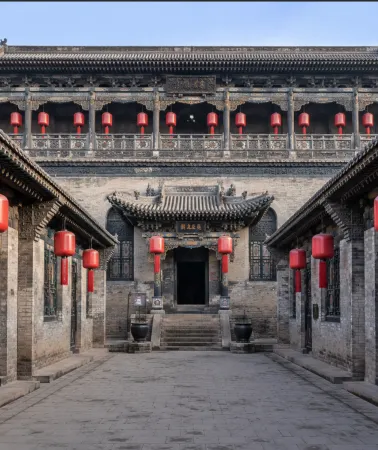
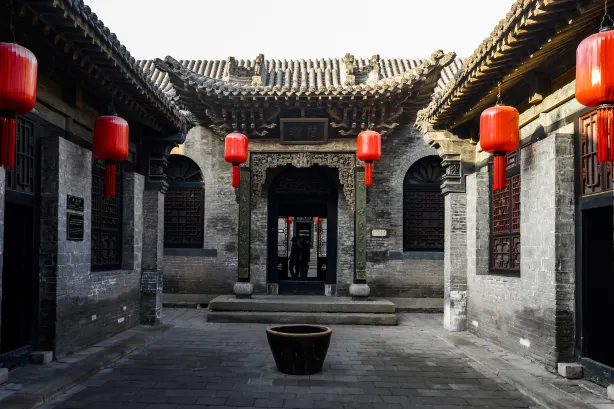
The Qiao's Family Compound is located in the center of Qiaojiapu village, Qi county, also known as "The Qiao Family CourtyardIt was the residence of Qiao Zhiyong, a renowned commercial and financial capitalist in the Qing Dynasty, and has served as a filming location for over 30 movies and TV series, including "The Qiao Family Courtyard" and "Raise the Red Lantern." If you've seen these films, you'll surely recognize the scenes here: rows of red lanterns hanging high, towering brick walls, exquisite carvings, beautiful bracket sets and upturned eaves, and deep alleys. This is the famous The Qiao Family Courtyard. This is a residential complex from the Ming and Qing dynasties, its architecture resembling a castle, imposing and grand, typical of the living style of a large northern family during the Ming and Qing periods. Viewed from above, the entire courtyard layout resembles the Chinese character "囍" (double happiness), symbolizing good fortune. The complex is meticulously laid out yet also varied; even the more than 140 chimneys on the rooftops are unique. It is said to have been built by the imperial family.The Forbidden CityThere's a saying that "for residential architecture, visit the Qiao family courtyard". Upon entering the Qiao family courtyard, a straight stone-paved path approx. 80 m long divides the six courtyards into two rows, north and south. According to traditional naming, the three courtyards on the north side of the Qiao family courtyard are called the old courtyard, northwest courtyard, and study courtyard from east to west. The three courtyards on the south side are called the southeast courtyard, southwest courtyard, and new courtyard, reflecting the construction sequence of each courtyard. The brick carvings, painted decorations, and inscribed plaques in each courtyard are exquisitely crafted. The standout is the "hundred longevity characters" screen wall at the main entrance, featuring 100 uniquely styled seal-script "longevity" characters, where art and culture blend seamlessly. The brick carvings at the land god shrine are also noteworthy. Under the eaves of every room in the Qiao family courtyard, you'll find genuine gold-painted decorations, notably created using the raised paste technique with meticulous layering and final gold application. Among the many inscribed plaques at the Qiao family courtyard, the one personally calligraphed by Fu Shan in the fourth courtyard is particularly remarkable.Danfeng pavilion“Plaque”, when visiting here, be sure to learn about the story behind this plaque. Additionally, there are three treasures in the Qiao Family Courtyard: the ten-thousand-people ball, the rhinoceros gazing at the moon mirror, and the nine-dragon lantern. The rhinoceros gazing at the moon mirror was the treasure that brought wealth to the Qiao family, while the nine-dragon lantern was a gift from Empress Dowager Cixi, located in the courtyard at the southern center. Today, the Qiao family courtyard also serves as a folk museum, with its six courtyards respectively displaying agricultural life through the seasons, life rituals, inner gardens, commercial customs, luxurious furnishings, and the history of the Qiao family. Visitors can explore while learning about the Qiao family's philosophy of life, household management, and business.

Qi County · 10.8km from downtown
Pingyao Ancient City
2026 Asia 100 - Night Attractions

Pingyao Ancient City

8.4
4.6/5
27.3k reviews

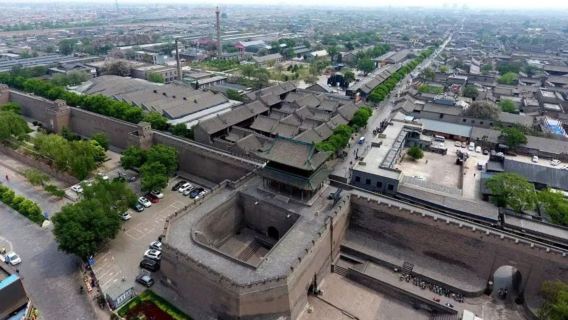
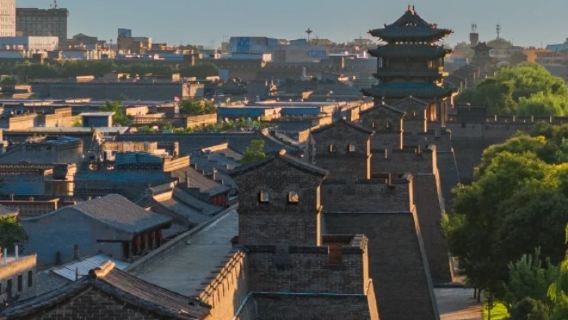
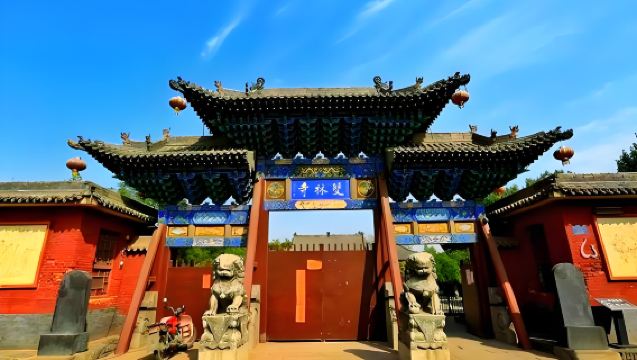
Pingyao Ancient City is one of the best-preserved ancient cities in China and, along with Lijiang Ancient City, is one of the two ancient cities in China to have successfully been designated as a World Cultural Heritage site in its entirety. Pingyao was once the financial center of China during the late Qing dynasty. Walking into this once-prosperous ancient city, you can feel the atmosphere of Shanxi merchant culture everywhere. The streets, shops, and residences within the ancient city still maintain their traditional layout and appearance. The overall street pattern is in the shape of the Chinese character 'tu', consisting of four main streets, eight small streets, and seventy-two lanes. The ancient city has six city gates in total, and the areas around the south gate and west gate are where visitors are concentrated. When touring, you usually enter the city through the lower west gate and walk along West Street to Rishengchang Exchange Shop, where you can learn about the development history of ancient banking and experience the legend of Shanxi merchants conducting business across the world. South Street, which runs north-south through the city, is the central axis of the ancient city. During the Ming and Qing dynasties, South Street gathered more than half of the country's financial institutions and was known as the "Wall Street of China" at the time. Today this street is called the Ming and Qing Ancient Street, and most of the ancient city's attractions are concentrated here. Centered on the landmark Market Tower, attractions such as Xietongqing Exchange Shop, Weitaihou Exchange Shop Museum, and the Chinese Escort Agency Museum are distributed around it, and a large number of shop buildings from the Ming and Qing periods are preserved along the street. At the Pingyao County Government Office in the south of the ancient city, you can see a large number of ancient documents and instruments of torture, and there is a daily performance of the county magistrate holding court; the City God Temple and the Confucian Temple in the east of the city have grand and refined architecture. The ancient city wall is very well preserved, and climbing the wall offers a panoramic view of the ancient city. The gate tower of Yingxun Gate at the south gate is especially exquisite, and watching the sunset from the city wall in the evening is a magnificent sight. In addition to the ancient city itself, the Zhenguo Temple and Shuanglin Temple outside the city are also part of the World Cultural Heritage. The Ten Thousand Buddha Hall of Zhenguo Temple is entirely made of wood, assembled with mortise and tenon joints without a single nail; Shuanglin Temple preserves painted sculptures from the Yuan to Ming dynasties, which are exquisite in form and renowned as a "treasure house of Eastern painted sculpture art."

Pingyao County · 21.8km from Qi County
Zhaoyu Ancient Town Tea Merchant Cultural Tourism Zone

Zhaoyu Ancient Town Tea Merchant Cultural Tourism Zone

4.2
4.7/5
214 reviews

The ancient city of Zhaoyu was first built during the Taihe period of Emperor Xiaowen of the Northern Wei Dynasty. It has a history of more than 1,500 years and is one of the "oldest" county towns in my country's more than 2,000 counties. During the Ming and Qing Dynasties, it flourished due to the development of tea merchants, and became a trend of "living in the countryside, setting up a store in Zhaoyu, and doing business all over the world". The ancient city of Zhaoyu is slightly longer from east to west (about 850 meters) and slightly shorter from north to south (about 700 meters). It is rectangular and has a circumference of about three kilometers. There is a missing corner in the southeast direction of the city, and the whole city is shaped like the gauze hat worn by ancient officials, so it is called "Gauze Hat City". The layout of the entire urban area is centered on the cross street, with four main streets in the east, west, south and north intersecting vertically, with the south straight and the north straight, and the east and west corresponding. With the cross as the skeleton, the whole city is supplemented by 28 streets and alleys that run vertically and horizontally with it. Most of these streets and alleys are neat and standardized, parallel to the main streets, showing that the entire layout structure is rigorous, reflecting the traditional architectural design thought system of ancient my country. Whether it is the shape of the "Shamao City", the layout of the city with the south straight and the north straight, and the east and west corresponding, the deep courtyards with luxurious decoration, exquisite painting and dazzling brilliance, the street shops with open columns and two-story structures, or the numerous temples and pavilions that follow the rules and are rigorous, they have achieved the unity of functional use and architectural art, and have a very important position in the history of Chinese architecture and aesthetics. It fully embodies the harmonious unity of the five basic characteristics of the classical landscape city theory of "symbiosis, coexistence, common prosperity, common joy and common elegance", and can be called a classic of the ancient city. In January 1994, it was approved by the State Council to be announced as a national historical and cultural city. In 2011, "Qixian Jinshang Old Street" was rated as a "Chinese Historical and Cultural Street". In December 2015, the Chinese Society of Business History awarded Qixian the title of "Tea Horse Road - Tea Merchant Capital". In March 2019, the State Administration of Cultural Heritage included the "Tea Horse Road" in the "China World Cultural Heritage Preliminary List". At the same time, the 13 existing tea merchant sites in Qixian were also included in the "China World Cultural Heritage Preliminary List". The open attractions in Zhaoyu Ancient City Cultural Tourism Area include the "Shanxi Merchant Culture Museum (Qu Family Courtyard)", "Qu Benqiao's Former Residence", "Tea Horse Road Museum (Changyuchuan Tea House)" and "Qi County Treasure House".

Qi County · 967m from downtown
Jinci Temple Museum
2026 Asia 100 - Family-friendly Attractions

Jinci Temple Museum

8.7
4.8/5
20.9k reviews

Jinci Temple Museum is located at the foot of Xuanweng Mountain by the banks of the Jin River. It is an ancestral temple built to commemorate Tang Shuyu, the founding feudal lord of the State of Jin, and is also one of the earlier surviving royal sacrificial gardens in China. There is a saying that "you have not truly visited Taiyuan until you have visited Jinci." The ancient buildings in the museum are arranged in sequence along the central axis, among which the Xian Hall, the Flying Bridge over the Fish Pond, and the Hall of the Holy Mother are known as the "three treasures," while the Zhou Cypress, the Never-Aging Spring, and the Song dynasty attendant statues are known as the "three wonders"—these are the core highlights of any visit. The "Three Treasures" are located on the central axis and can be visited together. Xian Hall is the place where sacrificial offerings are placed. The hall is surrounded by railings instead of walls, making it well-ventilated and bright, and its beam structure is simple and lightweight. The Flying Bridge Across Fish Pond is on the west side of Xian Hall. It is a cross-shaped ancient bridge built over a square pond, resembling a modern overpass in form, and this type of bridge structure is extremely rare among surviving ancient buildings. The west end of the bridge connects to Shengmu Hall, the oldest surviving building in the museum. Wooden carved dragons coil around the porch columns in front of the hall, making them relatively early surviving examples of wooden coiled dragons. The hall interior was built using the reduced-column method, creating a rather spacious interior. It houses dozens of Song Dynasty colored sculptures, with the main statue of Shengmu seated in the shrine and the remaining attendants arranged on both sides with varied expressions. One attendant statue is half joyful and half sorrowful, vividly lifelike and moving. With Shengmu Hall as the center, you can also seek out the "Three Wonders." The Zhou Cypress is located on the north side of Shengmu Hall. It is said to have been planted in the Western Zhou Dynasty, and its trunk leans south like a reclining dragon, full of ancient majesty. The Never-Aging Spring is located on the south side of Shengmu Hall and is the main source of the Jin River. The museum also houses the Stele of the Inscription and Preface to Jinci, composed and handwritten by Emperor Taizong of Tang, Li Shimin, whose running-script calligraphy is vigorous and forceful. In the southern part is the Shifang Fengsheng Zen Temple, said to have originally been the villa of the Tang Dynasty general Yuchi Gong. In the Futu Courtyard, the Sarira ShengSheng Pagoda can be climbed for a distant view. The Jinci temple fair has been passed down to the present day and has been included in the national-level intangible cultural heritage list. The Water Mirror Stage, an ancient theater stage in the museum, is an important venue for activities during the temple fair.

Taiyuan · 40.1km from Qi County

Traveller favourites curated for you

Experiences you can't miss in Qi County

Featured Day tours in Qi County

View all Day tours
One-day private charter to Pingyao Ancient Town and Qiao Family Courtyard from Taiyuan
󱌍
5.0/5
· 1 review
Duration: 10.5 hrs
English
Free cancellation
Instant confirmation
FromHK$548.37
Private tour | 1-day tour of Taiyuan (Qiao Family Courtyard + Pingyao Ancient City) with door-to-door pickup
󱌍
FromHK$639.89
Half-Day Tour of Pingyao Ancient City (English Guide)
󱌍
Duration: 5.5 hrs
English
Free cancellation
Instant confirmation
Book now for tomorrow
FromHK$1,067.38
Private Charter One-Day Tour to Mianshan Mountain, Jiexiu, Shanxi
󱌍
Duration: 11 hrs
English
Free cancellation
Instant confirmation
FromHK$1,200.80

More things to do

Private Tours in Qi County

View More Private Tours in Qi County
Qi County Today's weatherLight rain 3-12℃
Qi County weather for the next 2 days11/8: -5-10℃, 11/9: -5-11℃

Free things to do in Qi County

What travellers say about Qi County

user-avatar
我我我女神是Angelababy6 November 2026
5.0
The Qiao Family Compound is relatively well-preserved and quite large; it would take about a day to see everything. There are some particularly surprising exhibits, such as the Nine Dragon Lantern and the earliest surveillance footage. However, it does have a rather commercial feel.

The Qiao's Family Compound

user-avatar
超酷的小王同学。24 October 2026
5.0
Zhenguo Temple is a hidden gem of an ancient temple in Pingyao, not widely known but rich in historical significance. The Wanfo Hall is a rare example of a Five Dynasties wooden structure, over a thousand years old. Its imposing and simple bracket sets, constructed without a single nail, have stood the test of time, making it a living fossil of wooden architecture. The painted sculptures inside retain their original Five Dynasties appearance, with a dignified and weighty style, a stark contrast to the lively Ming Dynasty sculptures of Shuanglin Temple. The temple is serene and quiet, with few tourists, perfect for slowly appreciating the beauty of its ancient architecture. If you appreciate ancient architecture, after visiting Shuanglin Temple, a stopover at Zhenguo Temple offers a unique and worthwhile experience, allowing you to understand the architecture and sculptures of different eras.

Zhenguo Temple

user-avatar
Anonymous user5 November 2026
5.0
In November, I brought my family of three to Pingyao Ancient City. Avoiding the crowds, the ancient city possessed a unique tranquility characteristic of early winter. We parked near the Shangxi Gate and Yongding Gate; the surrounding trees were ablaze with vibrant colors, perfectly complementing the blue sky and creating a beautiful late autumn atmosphere. Stepping out of the car, we explored the cobblestone streets and weathered city walls. Red lanterns added a special charm to the cool air. Since my child had just returned from studying abroad, they were very interested in the ancient architecture, so we leisurely explored the buildings and listened to stories of Shanxi merchants, without any rush. Our love for ancient architecture was undeniable; the sheer number of buildings was overwhelming, and we decided to stay another day! The first night we watched "Encounter Pingyao Again," and the second night we saw the light show! A friend helped us book the Fanzhai Inn near the Shangxi Gate. The inn itself is a well-preserved Ming and Qing dynasty courtyard house with nearly two hundred years of history, a key cultural relic under protection, and is managed by the descendants of the Fan family. The exquisite brick, wood, and stone carvings throughout the courtyard exude the charm of Shanxi merchants. The cave-dwelling rooms are warm in winter and cool in summer, preserving traditional earthen beds and antique wardrobes while undergoing thoughtful modern renovations. Latex mattresses, separate wet and dry bathrooms, and hot water are all provided, ensuring uncompromising comfort. The location is quiet yet convenient, not far from the "Encounter Pingyao" theater, the county government office, and the city wall. In November, the area is less crowded and tranquil, allowing you to leisurely stroll and enjoy tea in the courtyard, watching the red lanterns illuminate the gray tiles and experiencing the unique serenity of the ancient city. The owners are warm and attentive, even offering helpful suggestions for sightseeing routes, making for a very pleasant experience. If you want to deeply experience Pingyao and authentically immerse yourself in the culture of Shanxi merchants, a stay at Fanzhai is highly recommended.

Pingyao Ancient City

user-avatar
M53***349 April 2026
4.0
Zhaoyu Ancient City boasts the history of Shanxi merchants' rise to prominence, the Qu family's emphasis on education and the prosperity of Shanxi, and, more importantly, the indomitable struggle of Shanxi merchants against foreigners in modern times to protect state-owned assets. It is a story worthy of our careful reflection and contemplation during these turbulent times.

Zhaoyu Ancient Town Tea Merchant Cultural Tourism Zone

user-avatar
Anonymous user27 October 2026
5.0
Shuanglin Temple comprises three courtyards and ten halls arranged in a staggered layout. The temple houses over two thousand painted clay sculptures from the Song, Yuan, Ming, and Qing dynasties, encompassing round sculptures, suspended sculptures, and wall sculptures, earning it the title of "Oriental Treasure House of Painted Clay Art." Each painted clay sculpture is exquisitely lifelike, especially the Four Heavenly Kings in the Hall of Heavenly Kings, and the Weituo and Guanyin statues in the Hall of a Thousand Buddhas—these are considered classic examples. The sculptures are vividly expressive and remarkably realistic. Unfortunately, the gloomy weather prevented me from fully enjoying them!

Shuanglin Temple

user-avatar
_TI***i231 October 2026
5.0
On a week day it’s a nice and calming experience. Especially if you bring cards and decide to sit at some of the metal table and chairs to play a card game, with the scenic view of the wall and the ancient city.

Pingyao Ancient City Wall

user-avatar
dod***876 November 2026
5.0
Jinci Temple is the oldest existing royal sacrificial garden in China and the source of Shanxi's cultural heritage. The Song Dynasty Holy Mother Hall, the Fish Pond Flying Bridge, and the Nanlao Spring are known as the Three Wonders. Inside the hall, the lifelike painted clay sculptures of maidens blend seamlessly with the ancient cypress trees, steles, plaques, and landscape. Strolling through the temple, one is surrounded by Song Dynasty wooden structures, carved beams, and ancient springs; every step reveals a historical site, making it an excellent place to understand Shanxi's ancient architecture and history.

Jinci Temple Museum

user-avatar
飞鸟与鱼00104 August 2020
5.0
Cao's Courtyard, also known as Sanduotang, is a traditional residential building in the style of the Ming and Qing dynasties. It is located in Beiguang Village, 5 kilometers southwest of Taigu County, Shanxi Province, and is adjacent to National Highway 108. Cao's Courtyard is a house of the Cao family, a wealthy Shanxi merchant in the Ming and Qing dynasties. Cao's Courtyard covers an area of ​​10,600 square meters (2014), and the overall layout is in the shape of a "longevity" character. It is known as "the wonder of Chinese folk houses". In 1999, it was opened as the Sanduotang Museum. Taigu Cao's Courtyard Museum has 277 houses and has a history of more than 400 years.

Sandodo Museum

user-avatar
jingtao9877123 February 2026
5.0
The scenery is antique and full of historical charm. There are many scenic spots inside, and I especially recommend the county government office, the security escort agency, and the money exchange. There is also a light show at night, but it gets very crowded on holidays, and the scenic area is probably overwhelmed. You can have to wait for half an hour to get into the county government office.

Rishengchang Draft Bank

Trip Moments in Qi County

Popular cities near Qi County

Frequently asked questions

What are the recommended tours and excursions in Qi County?

When choosing a tour, start with how much time you have and the kind of experience you're looking for. Trending options right now include One-day private charter to Pingyao Ancient Town and Qiao Family Courtyard from Taiyuan, One-Day Tour of Shuanglin Temple + Pingyao Ancient City + Qiao Family Compound in Taiyuan, Shanxi: Experience Shanxi's Culture in a Day, and Private tour | 1-day tour of Taiyuan (Qiao Family Courtyard + Pingyao Ancient City) with door-to-door pickup. Check the real-time availability and itinerary before you book.

As of 7 November 2026, the reference price for day tours and activities in Qi County is around HKD 429.62 – HKD 1,601.06. Rates vary by duration, group size, transport, tickets, meals, and any special admission requirements. Before you book, please confirm the billing currency and whether the price is quoted per person or per group.

Get help anytime, anywhere within 30 secondsContact customer support

Change and cancellation policies vary by attractions and tours. Please check the product details page for more information.

Ticket prices may vary between weekdays and weekends, as well as during peak and off-peak seasons. When booking with Trip.com, you can also use Trip Coins to get extra savings. For more tips on booking discounted tickets, please visit Trip.com for the latest information.