Nan County

Things to do in Nan County

Search attractions or local attractions & tours
Search

Explore top experiences

Top 10 attractions in Nan County

View all Attractions
Tianmen Mountain National Forest Park
2027 Global 100 - Best Things to Do

Tianmen Mountain National Forest Park

9.3
4.6/5
55.4k reviews

Tianmen Mountain National Forest Park is named after the natural wonder "Tianmen Mountain National Forest Park - Tianmen Cave." When visiting the attraction, you can enjoy a bird's-eye view of the winding Heaven-Linking Avenue and the stunning mountain scenery from the cable car. The brave can also walk along the cliff-hugging glass skywalk for an exhilarating aerial experience. Tianmen Mountain National Forest Park is located close to Zhangjiajie city. The Tianmen Cave in the park is a natural karst cave, and locals believe it leads directly to heaven. For ordinary travelers, Tianmen Cave is not open year-round. During winter each year, due to snow and icy roads, both Tianmen Cave and the Avenue toward Heaven (a winding mountain road with 99 turns) leading to it are closed. The lower station of the attraction's cableway is located in Guanliping, Yongding District, and the upper station isTianmen MountainTop. In 2020, the attraction opened the express cableway. The lower station of the express cableway is near the entrance to Tianmen Mountain, and the upper station is atTianmen CaveNear the parking lot. Tianmen Mountain National Forest Park is filled with ancient towering trees and intertwined vines. The attraction is divided into several main areas, including Tianmen Mountain National Forest Park - Tianmen Cave, central route, eastern route and western route. Travelers can choose different routes and areas to explore based on their preferences and physical condition. The core attraction along the central route is Tianmen Mountain Temple. Nearby lies the "Child-seeking cave," where folk legends claim Guanyin, the child-giving bodhisattva, manifested her divine power—devout prayers here are believed to grant offspring. The western route's highlight is a 60 m-long glass walkway clinging to sheer cliffs, with fully transparent flooring that induces both vertigo and exhilaration as visitors tread above abysses. Currently, the eastern route and Panlong Cliff each feature their own approx. 60 m glass walkways. No stay is allowed in the attraction, so it can only be visited within one day. There is a "Cherry Bay Restaurant" near Tianmen Mountain Temple, which offers snacks and fast food. Near the lower station of Tianmen Mountain cableway, there is transportation to the "Grand Canyon Theater", where you can watch the live show and magical musical "Tianmen Fox Fairy". Adapted from the mythological tale "Liu Hai cuts firewood", it tells a touching love story between a human and a fox. With live music, lighting effects, and captivating scenes like a giant moon, fox spirit transformations, snowflakes filling the sky, and high-altitude flying bridges, this legendary romance is vividly brought to life.

China · Zhangjiajie
Zhangjiajie National Forest Park
2027 Global 100 - Best Things to Do

Zhangjiajie National Forest Park

9.1
4.6/5
40.3k reviews

Zhangjiajie National Forest Park is where Zhangjiajie tourism starts. "The world knows Zhangjiajie, but who knows Wulingyuan?" Many travelers cannot distinguish the relationship between Zhangjiajie and Wulingyuan. Generally, Zhangjiajie has two concepts: Zhangjiajie City and Zhangjiajie Scenic Area. Zhangjiajie Scenic Area refers to Zhangjiajie National Forest Park, which together with Tianzi Mountain, Suoxiyu, and Yangjiajie forms the Wulingyuan attraction. Because Zhangjiajie National Forest Park was developed early and is well-known, even Zhangjiajie City was renamed after it, and people are accustomed to using Zhangjiajie National Forest Park or Zhangjiajie Scenic Area to refer to the Wulingyuan attraction. "Three thousand exotic peaks and eight hundred beautiful waters." The three thousand exotic peaks, in particular, are renowned worldwide. The mountains of Wulingyuan are entirely different from famous mountains around the world. Within its 398-square-kilometer area, more than 3,000 dense and intact sandstone peak pillars are scattered throughout, including 243 peak pillars over 1,000 meters tall. When the sea of clouds surges, these peak pillars appear to have no base, rising abruptly from the ground and piercing straight into the sky. Together with the redwood forests of North America and the glacial landscapes of Greenland, they constitute one of the world's four major natural geological wonders. Wulingyuan has a low elevation and is located in the subtropical zone. The area features lush forests and abundant water sources, and is home to a large number of endangered animal and plant species. Every peak pillar is full of vitality. Peak pillars, natural bridges, gorges, waterfalls, streams, pools, caves, and dense broad-leaved forests are often shrouded in mist and clouds on site, enhancing the beauty of the view. Together with the unique landforms, they form a distinctive view characterized by "steep mountains, elegant waters, wondrous peaks, secluded gorges, and beautiful caves," and are hailed as "an enlarged bonsai and a miniature fairyland." On December 14, 1992, the UNESCO World Heritage Committee unanimously approved the inclusion of Wulingyuan in the World Heritage List, filling the gap of China having no World Natural Heritage sites. The recognized outstanding universal value is: the quartz sandstone peak forest landform is rare in the world and has extremely high aesthetic value. UNESCO points out: "In terms of scenery, Wulingyuan can be compared with several national parks and monuments in the United States, such as the Grand Canyon, and can also be compared with the prominent sandstone peak areas of the Kimberley in Western Australia. However, because Wulingyuan has a lower elevation and is located in the subtropics, it has lush forests and abundant water sources. It also possesses a large number of peaks, displaying a more vertical profile than the heritage sites of the United States and Australia." At the end of 2009, the mesmerizing planet Pandora in the globally popular movie "Avatar" attracted countless viewers, and the prototype of its floating mountains originated from Wulingyuan. Meanwhile, Wulingyuan is also a live-action filming location for the Chinese classics "Dream of the Red Chamber" and "Journey to the West," as well as for films and TV dramas such as "Zhong Kui: Snow Girl and the Dark Crystal" and "Monster Hunt." In 2010, the unique landform of Wulingyuan was named "Zhangjiajie landform," becoming a globally recognized term and a rare landform type in the world named after a region. Attraction highlights Yuanjiajie: Landing on Pandora, the planet of Avatar Yuanjiajie is the filming location for the "Hallelujah Mountain" in the movie "Avatar," where you can explore the magical world of floating and scattered mountains from the film. If you happen to encounter a light rain in the mountains, or wait until the sky clears after the rain, you can enjoy the beautiful scenery of misty fog and layered peaks even more. The Mihun Platform is an ideal viewing spot; standing on it, you are surrounded by hundreds of towering stone peaks with magnificent momentum. Tianzi Mountain: once you've seen Tianzi, no other mountain will do When visiting Tianzi Mountain, you will see various uniquely shaped geological views and oddly formed peaks, such as Yubi Peak, Fairy Presenting Flowers, Dianjiang Terrace, Hanging Garden, and Immortal Bridge. There is no need to worry too much about whether these natural formations resemble what they are named after, because "the primitive scenery and natural beauty" are what make Tianzi Mountain so captivating. Especially in the hazy fog after a fresh rain, it feels as if you are in a fairyland. By winter, when the mountain is covered in silvery white, the scenery becomes even more enchanting. Huangshizhai: see all the other mountains as small from the summit "If you don't climb Huangshizhai, your trip to Zhangjiajie is in vain." Huangshizhai is a viewing platform in Zhangjiajie National Forest Park, surrounded by sheer cliffs and lush trees, and the top of the village is often shrouded in mist and clouds. Standing atop Huangshizhai and looking around, you can experience the lofty sentiment of "seeing all the other mountains as small." Yangjiajie: Thrills found in danger Yangjiajie is primarily known for its pristine natural beauty. With high mountains and narrow paths, it is famous for being "perilous" and is deeply favored by backpackers and adventurers. Wulong Village within the attraction is a very magical place in Zhangjiajie. It was once inhabited by bandits from western Hunan, and was later renamed after the TV series "Tales of Suppressing Bandits in Wulong Mountain." The village is built along the mountain, and there is a path up and down the mountain that requires using both hands and feet to climb to the summit. Suoxiyu: A natural ink wash landscape painting Suoxiyu is also called Suoxi, named because the stream within the attraction is shaped like a rope. Unlike other parts of the forest park, which are so steep and rugged, this place is shrouded in mist and clouds year-round, with clear streams flowing continuously through all four seasons and graceful peaks visible everywhere. Ten-Mile Gallery is the highlight attraction of Suoxiyu; within the 5 km-long gorge, wildflowers fragrance the air and fantastic peaks and unusual rocks abound. Walking through it is like stepping into a natural landscape painting. Golden Whip Stream: filming location of Journey to the West Jinbian Stream Gorge is the earliest developed area in the attraction. A clear stream runs through the valley, with towering peaks on both sides and lush greenery as far as the eye can see. This is also one of the filming locations for the classic version of Journey to the West, where fans can come and see iconic scenes such as the Water Curtain Cave and Cleaving the Mountain to Save the Mother.

China · Zhangjiajie
Orange Isle Scenic Area
No. 4 of Best Things to Do in Hunan Jiangxi Fujian Region

Orange Isle Scenic Area

9
4.6/5
13.7k reviews

Orange Isle Scenic Area is a narrow sandbar lying across the heart of the Xiang River in Changsha, stretching approx. five km. It faces Yuelu Mountain to the west and borders Changsha's old city to the east, surrounded by water on all sides. Named after the abundant orange trees planted on the isle, it was historically called Shuiluzhou. Formed by river alluvium, this sandbar has existed for over a millennium, where the "River and sky in evening snow" scenery was once among the Eight Views of Xiaoxiang. In 1925, the poem "Spring in a pleasure garden - Changsha" was composed here, with its iconic line "Alone I stand in the biting fall, watching the Xiang River flow north past Orange Isle's head," which made this riverine landmark widely renowned. The highlights of the visit are concentrated at the islet's head: A granite art sculpture over 30 m tall, modeled after the 1925 youth image, stands facing the river as Changsha's highly recognizable landmark. Nearby, the Questioning Heaven Platform extends toward the river center, where leaning on the railing reveals the mighty Xiang River flowing northward, with Yuelu Mountain and the city skylines on both banks facing each other across the water. The Songju Pavilion, white marble poetry stele, and the 200-year-old ancient phoenix tree at the islet head are all in this area. Heading north from the islet head, a hundred-acre orange orchard bears golden fruits in fall, while bamboo groves, peach orchards, plum gardens, and osmanthus groves take turns showcasing seasonal flora. The historic Zhuzhang Ferry (where Zhu Xi and Zhang Shi once crossed the Xiang River for lectures) and the Huxiang Culture Exhibition Hall are scattered along the way. At the islet's tail, the reconstructed Jiangshen Temple and Gongji Tower area was precisely where ancients admired the "River and sky in evening snow" scenery. The island is long and narrow, making round-trip walks quite tiring. A sightseeing train is available for transportation, with multiple stops along the way for hopping on and off. Travelers with limited time are advised to head straight to the island's tip to see the sculpture and river views, then stroll leisurely along the riverside path. At dusk, watching the sunset over the Xiang River and seeing the lights gradually illuminate both shores from the island's tip is especially worth setting aside time for.

China · Changsha
The Three Gorges Dam Tourism Area
2027 Asia 100 - Best Things to Do

The Three Gorges Dam Tourism Area

8.9
4.7/5
9k reviews

The Three Gorges Dam Tourism Area is located in the Xiling Gorge section of the Yangtze River in Yichang, Hubei. It is a scenic attraction built around the Three Gorges hydro project, covering over ten square kilometers. Currently, it offers travelers three viewing spots: Tanzi Ridge, the 185 viewing platform, and the river closure memorial park. The dam crest itself is not open to travelers, so visits primarily revolve around these three attractions. Tanzi Ridge is the highest accessible point in the dam area, named for its jar-shaped summit viewing platform resembling an overturned jar. It also served as the survey site for the dam's initial location selection. From the ridge top, visitors can overlook the Three Gorges Project in its entirety—the dam, power station, and twin five-level ship locks are all visible. The five lock chambers cascade down the mountainside, earning the nickname "Fourth Gorge of the Yangtze." The park displays engineering artifacts like ancient riverbed stones, river closure rocks, and foundation stones from the dam site, complemented by model exhibits that help visitors intuitively understand the origins and development of this mega-project. The 185 observation platform is located on the left bank of the dam. It gets its name from sharing the same elevation of 185 m as the dam crest. Standing on the platform feels like being atop the dam: on one side, the dam and vertical ship lift are within close reach, offering a chance to witness ships "riding the elevator" over the dam; on the other side lies the vast, tranquil reservoir upstream. The stark contrast between the stillness above and the dynamism below the dam is striking. The closure memorial park is situated on the right bank downstream of the dam, preserving artifacts like tetrahedral closure stones and large loading machinery used during the construction. It's an ideal spot to view the dam's full frontal grandeur. During flood seasons when the dam releases water, torrents rush out from the deep outlets, creating towering mist and thunderous echoes that reverberate through the valley—a truly awe-inspiring spectacle. The three attractions are far apart, and the scenic area provides shuttle buses for transportation. It is recommended to reserve half a day to visit them in order.

China · Yichang
Yueyang Tower Scenic Area
No. 1 of Family-friendly Attractions in Hunan

Yueyang Tower Scenic Area

8.1
4.6/5
11.5k reviews

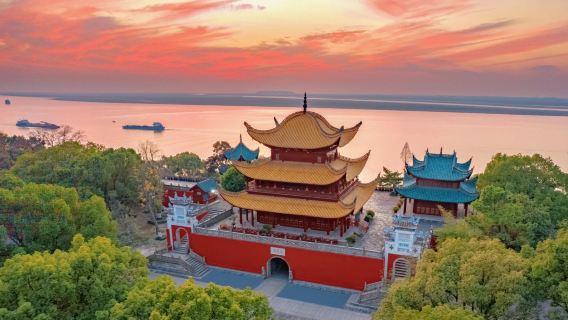
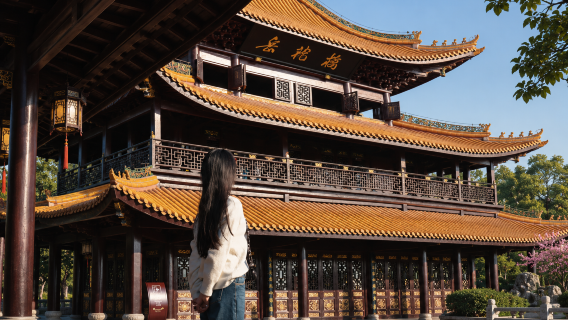
"Be the first to worry about the world's worries and the last to enjoy its pleasures"—this line from Fan Zhongyan's Northern Song dynasty essay "Yueyang Tower chronicle" made Yue Yang Tower by Dongting Lake a household name. The main tower, Yueyang Tower, is said to have evolved from a naval review tower built by Lu Su of Eastern Wu during the Three Kingdoms period. Alongside Yellow Crane Tower in Hubei and Tengwang Pavilion in Jiangxi, it is hailed as one of the three great towers of southern China. Poets like Li Bai, Du Fu, Meng Haoran, and Bai Juyi once climbed it to compose verses. From the top floor, leaning on the railings, you can take in the vast expanse of Dongting Lake stretching hundreds of miles, with Junshan Island visible across the waters—where timeless verses and the lake's beauty converge in this moment. The tower itself is an architectural treasure: its three-story, triple-eave structure is built entirely of wood with mortise-and-tenon joints—no iron nails used—and four golden nanmu pillars run straight from the ground to the rooftop. The helmet-shaped roof, called "helmet crown," is supported by layered ruyi bracket sets, a rare design among surviving ancient towers in China. Inside, carved Qing-dynasty panels of "Yueyang Tower chronicle" are preserved—pause to admire them when ascending. The small attractions within the attraction each have their own highlights: near the gate, the "Five-dynasty towers" use bronze miniature models to recreate Yueyang Tower's different architectural styles from the Tang, Song, Yuan, Ming, and Qing dynasties, showcasing a millennium of changes at a glance. On the lakeshore in front of the main tower, ancient iron artifacts resembling shackles and weighing several tons are displayed—their casting era and purpose remain debated, forming a long-standing historical mystery. Additionally, there are the Shuanggong Shrine commemorating Fan Zhongyan and Teng Zijing, the stele corridor engraved with poems about the tower from various dynasties, and the Xiaoqiao Tomb—said to belong to the wife of Three Kingdoms general Zhou Yu—waiting to be explored. If you wish to extend your itinerary, you may also take a boat tour of Dongting Lake and visit Junshan Island on the opposite shore. The nearby Bianhe Street, a cobblestone-paved antique-style street, is lined with local snack stalls and souvenir shops, making it convenient to explore along with the nearby Baling Square.

Yueyang · 67.6km from Nan County
Hunan Museum
2027 Asia 100 - Best Things to Do

Hunan Museum

8.8
4.8/5
16.4k reviews

Hunan Museum is a relatively large history and culture museum in Hunan Province, and among its collections, the artifacts unearthed from the Mawangdui Han Tombs are particularly representative. "The Changsha Mawangdui Han Tombs Exhibition" is the museum's permanent exhibition, presenting in a concentrated way the precious artifacts unearthed from three Western Han tombs. One of the most striking exhibits in the exhibition is the plain silk unlined robe with straight-cut front, as thin as cicada wings and weighing less than 50 grams, whose weaving technique is astonishing. In addition, visitors can see well-preserved printed silk padded robes, fine and elegant embroidery, brightly glossy painted lacquerware, and an exquisite T-shaped painted silk painting. More than 100,000 characters of silk manuscripts were unearthed from Tomb No. 3, among which are many lost texts long since gone from circulation, covering fields such as philosophy, history, astronomy, and medicine. The "Topographic Map of the Southern Part of the Changsha Kingdom," also from Tomb No. 3, was drawn using techniques broadly similar to those of modern maps and holds important value in the study of ancient maps. The well-preserved body of Lady Xin Zhui unearthed from Tomb No. 1 has survived intact for more than two thousand years and is another major highlight of the exhibition. The museum also features permanent exhibitions such as "Hunan People: A Historical and Cultural Exhibition of the Three Xiang Regions," displaying collections including Shang and Zhou bronzes, ceramics from famous Hunan kilns, and Ming and Qing calligraphy and paintings, presenting the historical and cultural threads of Hunan from different dimensions. The Mawangdui Han Tomb Exhibition and the Three Xiang Historical and Cultural Exhibition together form the museum's two core exhibitions, and are well worth setting aside ample time to view in detail.

China · Changsha
Hubei Provincial Museum
No. 1 of Family-friendly Attractions in Hubei

Hubei Provincial Museum

8.5
4.9/5
7.9k reviews

The Hubei Provincial Museum has ten treasures of the museum, including those unearthed from "Tomb of Marquis Yi of Zeng" the Hubei Provincial Museum's Zenghouyi chime bells; the Yue Wang Goujian sword, a masterpiece of the cold weapon era; the fossilized skull of the Yunxian Man dating back 1 million years; and a treasure of Yuan blue-and-white porcelain: the plum vase with the Four Loves design. The museum's regular exhibitions also feature distinctive characteristics of ancient Chu culture and ancient Yangtze River civilization. The Hubei Provincial Museum consists of the comprehensive exhibition hall,Chu culture hall,Chime bell hallIt is composed of multiple pseudo-classical buildings, and the layout reflects the high-platform architectural layout format of ancient Chu architecture, namely "one terrace, one hall" and "multiple terraces forming a group." Unearthed in 1978 at "Tomb of Marquis Yi of Zeng" in the Hubei Provincial Museum - the Zenghouyi chime bells have a wide range and their excavation rewrote the history of world music; the sword of Goujian, King of Yue, a masterpiece of the cold weapon era, is still incomparably sharp to this day, and displayed beside it is the "spear of Fuchai, King of Wu"; the geological age of the Yunxian human skull fossil is approx. 1 million years ago, earlier than the Peking Man skull fossil; the Yuan blue-and-white plum vase with four loves design is an extremely rare masterpiece among Yuan dynasty blue-and-white porcelain. Hubei is located in the middle reaches of the Yangtze River and belonged to the territory of the Chu state during the Spring and Autumn and Warring States periods. The permanent exhibitions at the Hubei Provincial Museum showcase ancient civilizations of southern China that differ from the Yellow River civilization of the north. The museum's current permanent exhibitions include "Yunxian Man: Prehistoric Humans in the Middle Reaches of the Yangtze River," "Qujialing: Prehistoric Culture in the Middle Reaches of the Yangtze River," and "Panlongcheng: Bronze Civilization in the Middle Reaches of the Yangtze River." In addition to viewing cultural relics at the Hubei Provincial Museum, you can also enjoy chime bell performances. In the museum's performance hall, chime bell performances are held from Tuesday to Sunday, and it is closed on Mondays.

China · Wuhan
Qingchuan Pavilion
No. 4 of Best Things to Do in Hubei

Qingchuan Pavilion

8.4
4.7/5
7.7k reviews

Qingchuan Pavilion stands on Yugong Rock at the eastern foot of Tortoise Hill in Hanyang, facing the Han River to the north and the Yangtze River to the east, gazing across the river at Yellow Crane Tower in Wuchang on the opposite bank. The pavilion's name is taken from the line "the clear river reflects the trees of Hanyang" by the Tang dynasty poet Cui Hao, and it was initiated for construction by Fan Zhizhen, the Ming dynasty prefect of Hanyang. First built during the Jiajing era of the Ming dynasty, it has a history of more than four hundred years. Throughout history, Qingchuan Pavilion was destroyed and rebuilt as many as six or seven times, the last destruction caused by a windstorm; the existing structure was rebuilt in the 1980s following the style of the Guangxu era of the Qing dynasty. Long known as one of the "finest sights of the Three Chu regions" and a "grand vista through the ages," Qingchuan Pavilion echoes Yellow Crane Tower across the river and stands out distinctly along the banks of the Yangtze. The attraction is composed of three main structures—Qingchuan Pavilion, Yuji Xinggong (Yu and Ji Ancestral Hall), and Tiemen Pass—along with auxiliary structures such as the ancient archway, Chubo Pavilion, Chaozong Pavilion, Yu Stele Pavilion, Jingchu Heroic Spirit Stele, and the poetry stele corridor, forming a complex of ancient and pseudo-classical buildings standing by the river. Among them, Yuji Xinggong was first built during the Shaoxing era of the Southern Song dynasty under the original name Yu Wang Temple; during the Tianqi era of the Ming dynasty, it was renamed "Yuji Xinggong" after its worship was changed to Houji and other former sages, and it has been an important site in Wuhan for successive generations to pay homage to Yu the Great. Tiemen Pass was first built during the Three Kingdoms period and has been a strategic location contested by military strategists since ancient times; it was restored in the 1990s. Ascending Qingchuan Pavilion offers a panoramic view of the expansive river scenery where the Yangtze River and the Han River converge. Inside the pavilion, permanent exhibitions such as "Traces of Yu Across the Nine Provinces" and "Historical Paintings of Qingchuan" present Yu the Great culture and the historical heritage of Qingchuan Pavilion from multiple perspectives, ranging from water-control culture to poetry and couplets. The attraction nestles between the hills and the river, with pavilions and terraces scattered in graceful arrangement. The poetry stele corridor preserves inscribed stones bearing verses by literati and poets of successive dynasties, and strolling through it allows visitors to feel the rich historical and cultural atmosphere.

China · Wuhan
Mount Yuelu
No. 1 of Fall Viewing Attractions in Hunan

Mount Yuelu

8.3
4.6/5
5.5k reviews

Mount Yuelu stands on the west bank of the Xiang River and is a landmark mountain in Changsha. At its foot lies the Yuelu Academy, founded during the Northern Song Dynasty, a millennium-old institution sharing the mountain's name. Ascending from here leads to Qingfeng Gorge, where the Aiwan Pavilion, named after Du Mu's poetic line "I stop my carriage to admire the maple woods at dusk," is surrounded by maple trees. Midway up the mountain, the ancient Lushan Temple, established in the Western Jin Dynasty over 1,700 years ago, features a lush six-dynasty-era podocarpus tree in front of its sutra repository. At the summit stands the Yunlu Palace, a Taoist temple built during the Ming Dynasty, offering panoramic views of the Xiang River and Changsha's urban area. The mountain's historical sites extend further, with the Yu King Stele, Python Cave, and Changsha Battle Memorial Stele scattered along its trails. Modern figures such as Huang Xing, Cai E, and Chen Tianhua are also buried here, making the mountain a condensed repository of profound modern history. Most cultural attractions are concentrated near the south gate, where you can visit major historic sites in sequence from Yuelu Academy to Aiwan Pavilion. For those preferring not to hike, a cableway station near the east gate allows easy ascent, eliminating most uphill climbing. With an elevation of about 300 m and well-developed trails, reaching the summit on foot is manageable. Ancient trees like Jin dynasty podocarps, Tang dynasty ginkgos, Song-Yuan era camphor trees, and Ming-Qing maple-chestnuts line the paths, making the entire mountain resemble a natural botanical museum. In late fall when maple leaves turn red across the slopes, it becomes an ideal time for hiking. Allocate half a day to leisurely photograph Aiwan Pavilion and the mountaintop viewpoints.

China · Changsha

Experiences you can't miss in Nan County

Nan County Today's weatherClear 7-17℃
Nan County weather for the next 2 days11/21: 7-20℃, 11/22: 11-17℃

Free things to do in Nan County

What travellers say about Nan County

user-avatar
马文 Marvin19 November 2026
4.0
Unfortunately I was very unlucky with the weather. It was so foggy that it completely hid the 999 steps and the gate. Check the forecast beforehand, because otherwise the price is definitely not worth it. The hike up to Fairy Point was decent and nice. The elevator ride is pretty long and very crowded on the way down. Hold out your hand for some high fives! Price is too expensive. Photo spot 5/10.

Tianmen Mountain National Forest Park

user-avatar
Stekmer19 November 2026
4.0
The scenery was quite impressive. On the shuttle bus there though, they were announcing that the cable car was under renovation and that the wait would be longer than usual and people should consider using the Bailong Elevator down instead.. The reality was no wait at all and only 3 of us in the same car.

Zhangjiajie National Forest Park

user-avatar
蒲公英的快乐w19 November 2026
4.0
📍No. 2, Orange Isle, Yuelu District, Changsha City, Hunan Province Orange Isle on a rainy day has a unique charm ☁️ Viewing the river from the carved stone walls, gazing at the Xiangjiang River through the misty air 🌊 You'll truly be moved by the scene before you! "Seeing the forests ablaze with color, a hundred boats racing" Standing here, you truly understand the meaning of this poem 🍂 The grandeur of great figures is on full display ✨ Remember the opening hours ⏰ 07:00-22:00 year-round (last entry at 22:00) It's recommended to go early to stroll around and take your time taking photos 📸 There are relatively fewer tourists on rainy days, allowing you to quietly appreciate the atmosphere. Chinese architecture paired with river views—every shot is a masterpiece 🌫️ #OrangeIsle #ChangshaTravel #ChangshaCheckIn #XiangjiangScenery #ChangshaGuide

Orange Isle Scenic Area

user-avatar
D17***339 November 2026
5.0
Booking tickets in advance was indeed convenient. There was no need to queue on-site; I could simply scan the code to board the scenic area bus and transfer to a sightseeing bus, saving a lot of time and allowing me to appreciate the magnificence of the Three Gorges Dam!

The Three Gorges Dam Tourism Area

user-avatar
Anonymous user19 November 2026
5.0
The half-day tour of Yellow Crane Tower was a fantastic experience! The tower is magnificent and steeped in history. Climbing to the top offers panoramic views of the Yangtze River. Along the way, you can appreciate the poems and historical sites. In just half a day, you can understand the thousand-year-old romance of Wuhan.

Yellow Crane Tower

user-avatar
M19***6118 November 2026
5.0
The scenic area isn't very large, perfect for a leisurely stroll. We entered from the south gate and exited from the north. The entrance features five miniature landscapes from different eras, with various calligraphic steles along the way, leading to the main attraction—Yueyang Tower. There's a queue to climb the tower (due to cultural relic protection, the number of visitors is limited). The stairs are quite narrow and entirely made of wood. From the tower, you can see Dongting Lake and distant islands, but unfortunately, the visibility was poor due to two consecutive cloudy days. There's a beautiful, lush camphor tree on the north side.

Yueyang Tower Scenic Area

user-avatar
M33***3419 November 2026
5.0
Hi Xiao Xiao! Thank you so much for your explanation today! 🥰 We brought our two children, aged 10 and 5, to the Hunan Provincial Museum. We had just visited the Hubei Provincial Museum a couple of days ago, and we were worried that the children might find it repetitive and boring. However, your explanation was incredibly vivid and engaging. Both children and adults listened attentively and didn't find it tedious at all. You explained the story of Mawangdui in a simple and easy-to-understand way, and we learned a lot! Thank you so much, highly recommended! 👍

Hunan Museum

user-avatar
大土豆一颗4 October 2026
5.0
The exhibited artifacts were quite good; I've also been to joint exhibitions organized by museums like the Hunan Provincial Museum. The Kremlin artifacts here are well-prepared and thoughtfully designed. However, the souvenir and merchandise section was rather boring. I was thinking of buying a pendant or something, but that saved me some money.

Hubei Provincial Museum

user-avatar
131***6210 November 2026
5.0
The trees of Hanyang stand clearly in the clear sky, and the fragrant grasses grow lush on Parrot Island. When you come to Wuhan, you must visit Qingchuan Pavilion. There aren't many people at night, and there are NPCs to guide you throughout the visit, providing explanations, interactive activities, and even silver notes that can be exchanged for nice little gifts.

Qingchuan Pavilion

user-avatar
205***5117 November 2026
5.0
The hotel rooms are clean, tidy, and comfortable, with high-quality bedding. The buffet breakfast offers a wide variety of choices, including Hunan rice noodles and stinky tofu. There is also a free laundry room, a gym, and free parking. I will definitely come back next time. Ah Song's service is excellent.

Mount Yuelu

Trip Moments in Nan County

Popular cities near Nan County

Frequently asked questions

What are the recommended tours and excursions in Nan County?

When choosing a tour, start with how much time you have and the kind of experience you're looking for. Trending options right now include One-Day Tour from Changsha: Yue Yang Tower + Lake Dongting + Quzi Garden, One order one group [Private tour] Yueyang tower + Lake Dongting + Qu Yuan's hometown Yueyang day tour, and Private Tour | Hunan One-Day Tour: Yueyang Tower + Dongting Lake + Bianhe Street / Optional English Guide. Check the real-time availability and itinerary before you book.

As of 20 November 2026, the reference price for day tours and activities in Nan County is around QAR 187.8 – QAR 751.18. Rates vary by duration, group size, transport, tickets, meals, and any special admission requirements. Before you book, please confirm the billing currency and whether the price is quoted per person or per group.

Get help anytime, anywhere within 30 secondsContact customer support

Change and cancellation policies vary by attractions and tours. Please check the product details page for more information.

Ticket prices may vary between weekdays and weekends, as well as during peak and off-peak seasons. When booking with Trip.com, you can also use Trip Coins to get extra savings. For more tips on booking discounted tickets, please visit Trip.com for the latest information.