Linying

Things to do in Linying

Search attractions or local attractions & tours
Search

Explore top experiences

Top 10 attractions in Linying

View all Attractions
Cao Wei Ancient City
No. 1 of Best Things to Do in Xuchang

Cao Wei Ancient City

5.9
4.1/5
77 reviews

Cao Wei Ancient City is located in Xuchang, Henan Province. This cultural attraction serves multiple functions including cultural exhibitions, tourism and leisure, commercial services, and distinctive residential areas. Bordered by Wenfeng Road to the east, Qiyi Road to the south, the Beijing-Guangzhou Railway to the west, and Bayi Road to the north, this historical and architectural themed attraction recreates the ambiance of the Three Kingdoms period. With its rich historical relics and immersive cultural experiences, it attracts numerous visitors eager to explore this magnificent chapter of history. The architectural complex within the ancient city recreates the building style of the Cao Wei period, with its blue bricks, gray tiles, and upturned eaves, exuding an aura of antiquity and grandeur. Strolling through the streets, visitors can immerse themselves in the rich historical atmosphere, as if transported back to the Three Kingdoms era. The city houses multiple historical exhibition halls showcasing abundant cultural relics and historical materials that detail the political, military, and cultural developments of the Cao Wei period. Beyond historical sightseeing, the attraction offers a variety of interactive activities such as Three Kingdoms cultural performances, traditional handicraft workshops, and ancient costume photography, allowing visitors to personally experience the charm of Three Kingdoms culture. This place is not only a paradise for history enthusiasts but also an ideal destination for family trips. Whether exploring history or immersing in cultural experiences, it promises a journey filled with discoveries and joy.

Xuchang · 24.3km from Linying
Chunqiu Tower scenic spot
Selected for Best Things to Do in Xuchang

Chunqiu Tower scenic spot

5.5
4.4/5
546 reviews

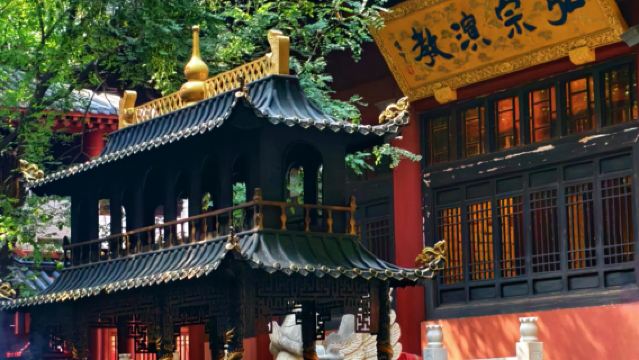
Located in the center of Xuchang City, it has been called Guan Gong Residence, Wu'an Wang Temple, Guan Wang Temple, "Liangyuan Yingfeng" Temple, Guan Fuzi Temple, and Guandi Temple in history. It is an ancient building complex in the style of Ming and Qing Dynasties and is a key cultural relic protection unit in Henan Province. In the fifth year of Jian'an in the Eastern Han Dynasty (200 AD), Cao Cao went on an expedition to the east and captured Guan Yu and Liu Bei's two wives, Gan and Mi, in the Battle of Xiapi. In order to protect the safety of his wife, Guan Yu temporarily surrendered to Cao Cao and came to Xuchang after the "Three Agreements on Tushan". Cao Cao loved talents and loved his generals, so he appointed Guan Yu as a general and gave him a mansion for Guan Yu and his two wives to live together. In order to avoid suspicion, he divided the mansion into two courtyards, letting the two wives live in the inner courtyard and himself in the outer courtyard. There was a building in the courtyard where Guan Yu read the "Spring and Autumn Annals" by candlelight all night long, and the Spring and Autumn Building got its name from this. The existing ancient building complex of Chunqiu Tower was first built during the Yuan Dynasty and was renovated many times during the Yuan, Ming and Qing dynasties. It has formed the basic pattern of "one house divided into two courtyards". On the central axis of the outer courtyard, there are the mountain gate, Chunqiu Tower and Guan Sheng Temple in turn. The architectural style of single, double and triple eaves is unique. The pavilions, platforms, towers and pavilions in the inner courtyard are scattered. It is adjacent to the Confucian Temple in the west. It is rare in the country to worship the two saints of "civil and military" at the same time. In particular, the main building of the Attraction, Guan Sheng Temple, is 33 meters high, and the 15-meter-high statue of Guan Gong inside is extremely rare. Today, the Chunqiu Tower Attraction is becoming a tourist attraction for tourists at home and abroad to visit and worship Guan Gong.

Xuchang · 24km from Linying
The Little Shang Bridge

The Little Shang Bridge

2.8
4.2/5
81 reviews

Xiaoshangqiao Scenic Spot is located in Xiaoshangqiao Village, Huangmiao Township, Chengnan, Linying County, Luohe City. The scenic spot is 10 kilometers away from Nanjie Village in the north, 12 kilometers away from Luohe City in the south, adjacent to the Beijing-Guangzhou Railway in the west and 107 National Road in the east. The geographical location is very important. At present, the scenic spot consists of two core landscapes, Xiaoshang Bridge and Yang Zaixing Memorial Garden. The Xiaoshang Bridge is located on the Xiaoshang River (Yinghe Ancient Road), and the Yang Zaixing Memorial Park is located 200 meters east of the Xiaoshang River on the north bank of the river. The Xiaoshang Bridge was originally located on the official road of the past dynasties, and it has been the key point of communication between the north and the south for more than a thousand years. In March 1987, the Provincial People's Government announced it as the second batch of cultural relics protection units in Henan Province. The Xiaoshang Bridge was built in the fourth year of Kaihuang in the Sui Dynasty (584), and was repaired in the Yuan, Ming, Qing and 1990s. There are also 4D theaters, Song and Jin military cultural areas, "Manjianghong" stone carvings, Phoenix Terrace, Ancient Post Station, Bridge Cultural Center, Inscription Gallery of Hundred Generals, Bagua Array, Fishing Boat Island, Shanghe Ancient Road, Shishan, Heroes Hall, Songjin The main core landscapes such as the Characters and Weapons Hall, Zhuanghuai Hall and so on. It is a large-scale cultural tourism scenic spot integrating ancient times, leisure and recreation.

Linying · 12.8km from downtown
Xuchang Museum

Xuchang Museum

4.3
4.7/5
126 reviews

Xuchang Museum is a medium-sized local comprehensive museum with more than 12,000 cultural relics, including bronzes, pottery, porcelain, jade, calligraphy and painting, and stone carvings. Most of them are from the Han Dynasty and the Three Kingdoms period, especially the stone carvings and pottery from the Han Dynasty. Chang Museum is large in scale, majestic, with novel architecture, simple and elegant. The layout is symmetrical from north to south with Wenfeng Tower as the central axis. The exhibition area adopts a "U"-shaped plane architectural pattern, forming two quadrangles: the sightseeing area is connected by a long corridor with pavilions, platforms, towers and pavilions. The entire building is a single-eaved rolled-roof antique building with white walls, gray tiles, red painted columns, flying eaves and corners, which are scattered and well-arranged, forming a perfect antique building group that integrates Suzhou gardens and northern quadrangles. It has both the exquisiteness, beauty and exquisiteness of southern architecture and the strength, dignity and strictness of northern architecture, which are in harmony with the ancient tower and complement each other. Han Dynasty portrait art is one of the collection features of Xuchang Museum. Its categories include exquisite stone carvings and molded and fired portrait bricks. The exhibition is divided into indoor portrait brick and stone exquisite display and outdoor portrait stone gallery exhibition area. Xuchang Han Dynasty paintings are relatively late, and most of them are works from the late Eastern Han Dynasty. The portraits are detailed, mostly flat reliefs with negative lines or shallow reliefs with positive lines. The lines are simple, clear, vigorous and powerful; the themes are mostly auspicious birds and beasts, exotic flowers and trees, chariots and horses, hunting, architecture, etc.; the portraits pursue the spirit, and the images are vivid and lifelike, showing the individual characteristics of Xuchang Han Dynasty paintings. Xuchang Han Dynasty paintings represent a leap forward in the development of Han Dynasty paintings, representing the artistic achievements of paintings in the late Han Dynasty, and have certain historical and artistic values. In addition, there are also collections of coins from various dynasties. The collections are of a long time, wide range, large quantity, and complete categories, showing the evolution and development of Chinese currency from various dynasties, and reflecting the economic development of China in different social periods.

Xuchang · 23.9km from Linying
Longmen Grottoes
2026 Asia 100 - Best Things to Do

Longmen Grottoes

8.9
4.7/5
62.4k reviews

Longmen Grottoes are located in the southern suburbs of Luoyang, Henan Province, on the cliffs along both banks of the Yi River. As one of China's three major grotto art treasures, they were inscribed on the World Cultural Heritage list in 2000. The grottoes were first carved when Emperor Xiaowen of Northern Wei moved the capital to Luoyang, and construction continued through the Eastern Wei, Western Wei, Northern Qi, Sui, and Tang dynasties, with the vast majority of niches and statues left from the Northern Wei and Tang periods. Today, more than 2,000 niches and over 100,000 statues remain, along with a large number of inscriptions and steles, making the site an important representative of Chinese stone carving art. The attraction is divided by the Yi River into two parts: West Hill and East Hill. The West Hill Grottoes are the essence of the site, carved from the Northern Dynasties through the Sui and Tang periods. Famous caves include Guyang Cave, Binyang Cave, Lotus Cave, Wanfo Cave, and Fengxian Temple. The Lushena Buddha at Fengxian Temple stands about 17 m tall, making it one of the larger Buddha statues at Longmen Grottoes. Its face is dignified and serene, with a faint smile, and legend holds that it was modeled on the appearance of Wu Zetian, earning it the name "Oriental Mona Lisa." The inner walls of Wanfo Cave are densely covered with about 15,000 small Buddha statues, each only a few cm tall, neatly arranged and finely crafted. Guyang Cave is the earliest cave carved at Longmen, and its inscription calligraphy is exquisite; the selected "Twenty Masterpieces of Longmen" are representative works of Wei stele calligraphy. Binyang Cave consists of the South, Middle, and North caves and took more than twenty years to complete. Its original reliefs depicting emperors and empresses worshipping the Buddha were looted and lost overseas in the 1930s. In Binyang North Cave, a Buddha statue has a distinctive hand gesture, with the right index and middle fingers raised in a shape resembling the modern "scissors hand," though it is actually a Buddhist mudra, and it once sparked heated discussion online. The East Hill Grottoes are mostly Tang dynasty works and are smaller in scale than those on West Hill, but from the opposite bank visitors can enjoy panoramic views of West Hill from different angles, especially distant views of the Lushena Buddha. The attraction also includes Xiangshan Temple and Bai Juyi Memorial Park (Bai Garden). The Tang dynasty poet Bai Juyi lived in Luoyang in his later years and once praised it, saying, "Of the scenic splendors of Luoyang's surrounding mountains and waters, Longmen ranks first." When visiting, simply follow the route West Hill—East Hill—Xiangshan Temple—Bai Garden, proceeding in one direction without backtracking. The West Hill Grottoes are densely packed with content, so it is advisable to set aside ample time for a closer look; East Hill is quieter and more secluded, suitable for a brief visit and gazing across the river when energy is limited.

China · Luoyang
Millennium City Park
2026 Asia 100 - Night Attractions

Millennium City Park

8.8
4.6/5
29.1k reviews

Millennium City Park is located by the shores of Longting Lake in Kaifeng. It is a large-scale historical and cultural theme park of the Song Dynasty, recreated one-to-one based on the famous painting Along the River During the Qingming Festival by Song Dynasty painter Zhang Zeduan. The park is divided into two sections by the Shuangting Bridge: the South Garden recreates the bustling street life of the Bianjing city, with taverns, eateries, teahouses, and pharmacies lined up along the streets; the North Garden is an imperial garden, with waterside halls, the Sifang Courtyard, and other palace buildings standing by the lake. Performers and street vendors in the park mostly wear Song Dynasty costumes, with ancient music lingering and bells and drums sounding, so that after a few steps visitors can easily fall under the illusion of "stepping into a painting in one morning, dreaming back a thousand years in one day." Architecture is the intuitive and tangible highlight here: the Rainbow Bridge spanning the Bian River is a replica of the famous bridge in the painting, shaped like a long rainbow, and standing on the bridge watching the grain boats pass by feels much like being inside the painting; the Fuyun Pavilion towers above all the other pavilions in the garden, with its tiered red towers and golden tiles on all four eaves, inviting one to climb from afar; the Shangshan Gate is rebuilt after the Northern Song dynasty Dongjing city gate, tall and majestic with brilliant painted decorations, making it the most imposing gate tower in the garden; and the Shuixin Xie, Shuangting Bridge, Jiulong Bridge, and other pavilions and waterside structures are scattered among the blue waves. The main attraction of the day is the immersive performances staged throughout the park: "Bao Zheng Inspects the Bian River Grain Transport" unfolds on the water on both sides of the Rainbow Bridge; "Squire Wang Seeks a Son-in-Law" features a decorated tower erected in front of Squire Wang's house where a silk ball is tossed to choose a groom; "Yue Fei Challenges Prince Xiao Liang" raises dust on the Song dynasty parade ground as horses gallop; and folk performances such as cockfighting, stilt walking, and pan drumming are interspersed throughout. To step into the action yourself, head to the Four Directions Courtyard to don traditional costumes and enter the examination cells for a hands-on Song dynasty imperial exam experience; families with children can enjoy carousel rides, roller coasters, and other amusement facilities wrapped in Song dynasty storytelling at the Song Dynasty·Royal Pleasure Ground; and in the entertainment quarters, face-changing, qigong fire-breathing, ancient magic, and other Song dynasty variety acts take turns on stage, with intangible cultural heritage feats ready to break out at any moment right beside you. After nightfall, the park takes on a different face: red lanterns light up one after another, the market streets are brightly illuminated, and it feels like a completely different park from the daytime. The large-scale water-based live performance "The Great Song Dynasty's Eastern Capital: A Dream of Splendor" is staged on the surface of Jinglong Lake. The entire show is woven together from eight classic Song ci poems and the painting Along the River During the Qingming Festival, drawing the audience back to the Northern Song dynasty's Eastern Capital a thousand years ago. The performance runs about 70 minutes, and many visitors deliberately plan their itinerary to stay until the evening to catch this show. Dining in the park is also convenient: the snack street at Dongjing Food Court brings together Kaifeng snacks such as fried liangfen, tongzi chicken, and almond tea, perfect for eating while strolling; if you want to sit down for a proper meal, you can visit the reconstructed Sun Yang Zheng Dian in the park, which was originally one of the seventy-two official restaurants of Bianjing in the Northern Song Dynasty, where you can taste traditional Henan dishes such as soup dumplings and carp with baked noodles.

China · Kaifeng

Experiences you can't miss in Linying

More things to do

Linying Today's weatherFoggy 6-17℃
Linying weather for the next 2 days11/15: 7-14℃, 11/16: 6-13℃

Free things to do in Linying

What travellers say about Linying

user-avatar
悟yzj29 January 2026
5.0
Nanjie Village is an administrative village located in Lin'ying County, Luohe City, Henan Province, China. It is nationally renowned for its adherence to a collective economy, its "wage + supply" distribution system, and its development of red tourism.

Nanjie Village

user-avatar
乂昭31 July 2025
4.0
曹魏古城是在汉末曹魏都城许昌的基础上复建的古城景区,其中有各类吃喝玩乐的店铺,以及曹丞相府和春秋楼等景点,临近还有胖东来商业中心。总的来说,是许昌市区内的核心景区,大概可以花费一两天的时间进行游玩

Cao Wei Ancient City

user-avatar
এ᭄哈佛ꦿృ༊1 October 2026
4.0
Aside from inclement weather, there are some short shows in the evenings, with the program changing daily. When I went, it was raining, so there were no shows that evening. Day and night tickets are valid for multiple entries within a day.

Prime Minister Cao’s Mansion

user-avatar
乐堡窝窝吃吃喝喝27 August 2026
4.0
Overall, it's alright. It's mostly artificially renovated. We went on the first day of the Lunar New Year, and it started snowing shortly after we entered the scenic area, which made it a beautiful sight. In Xuchang, it's worth visiting historical sites. Although it lacks the hustle and bustle of a modern city, it has a low-key and understated historical weight, making it very suitable for family travel.

Chunqiu Tower scenic spot

user-avatar
M2i***3i24 July 2026
5.0
The zoo has a lot of animals, making it a great place to bring kids. There are also many amusement facilities. The park has recently added a new attraction called the Space Walk, which goes around the entire park and allows you to sit on it and see all the animals. I'll definitely bring my kids to play here once it's completed.

Luohe Wildlife Park

user-avatar
M24***5019 April 2026
4.0
The attraction isn't large, consisting mainly of antique-style buildings themed around the Three Kingdoms period, featuring Cao Cao and Guan Yu. The clay sculptures and couplets depicting the Five Tiger Generals and the founding team of the Shu Han dynasty are quite interesting. After entering through the ceremonial gate, you can strike the bell and drum towers on either side.

Xuchang Baling Bridge Scenic Area

user-avatar
睡恣@M丶18 August 2021
4.0
The famous Xiaoshang Bridge is said to have been built in the fourth year of the Kaihuang reign of the Sui Dynasty, which is 584 AD, and has a history of a thousand years. If you look closely, you will find several traces of wheel tracks on the deck of the stone arch bridge. The person in charge of the scenic spot told me that in the past, this was the official road leading to the capital, and horse-drawn carriages often passed through the bridge. After years of rolling, the hard bridge deck was worn out by deep grooves by the wheels.

The Little Shang Bridge

user-avatar
行走毛毛15 April 2026
5.0
If you have the chance to visit Xuchang, don't just stop at Pang Donglai Restaurant and leave. Xuchang's museums are definitely worth seeing. The Xuchang City Museum is a very large museum, but unfortunately, an important floor was under maintenance when I went, so I couldn't see it. I hope to have the opportunity to visit again next time and explore the entire museum.

Xuchang Museum

user-avatar
M76***3413 November 2026
5.0
At 7:49 PM on November 13, 2026, as dusk slowly crept over the cliffs of the Longmen Grottoes, the face of the Vairocana Buddha remained gentle in the fading light. A mountain breeze, carrying the moisture of the Yi River, swept across the numerous niches, softly conveying the story of over a thousand years of carving to every visitor who paused to admire it.

Longmen Grottoes

user-avatar
lia***1013 November 2026
5.0
Five stars! Exceeded expectations, it was so much fun! My child is already saying they want to come back during winter break. How can a place be so fun, interesting, and interactive? We played until 10 pm two nights in a row before heading back to the hotel. From choosing the Beggars' Sect at the entrance, you're greeted by NPCs along the way, and even getting a free snack when you become an item—it's all so interesting. The highlight is the ironwork—it's incredibly beautiful and impressive; my child said it looks like scattered gold.

Millennium City Park

Trip Moments in Linying

Popular cities near Linying

Frequently asked questions

As of 14 November 2026, the reference price for day tours and activities in Linying is around OMR 66.28 – OMR 86.16. Rates vary by duration, group size, transport, tickets, meals, and any special admission requirements. Before you book, please confirm the billing currency and whether the price is quoted per person or per group.

Get help anytime, anywhere within 30 secondsContact customer support

Change and cancellation policies vary by attractions and tours. Please check the product details page for more information.

Ticket prices may vary between weekdays and weekends, as well as during peak and off-peak seasons. When booking with Trip.com, you can also use Trip Coins to get extra savings. For more tips on booking discounted tickets, please visit Trip.com for the latest information.