Things to do in Laiyuan
Explore top experiences
Top 10 attractions in Laiyuan


National Museum of China
The National Museum of China is an institution that, on behalf of the country, collects, studies, displays and interprets representative material evidence that fully reflects China's fine traditional culture and advanced socialist culture. It is a national palace of history, culture and art and a cultural living room. The National Museum of China currently has more than 1.4 million collections, covering ancient cultural relics, modern and contemporary cultural relics, rare books and ancient books, and artworks. Among them, there are 815,000 pieces (sets) of ancient cultural relics, 340,000 pieces (sets) of modern and contemporary cultural relics, more than 240,000 pieces (volumes) of rare books and ancient books, and a total of nearly 6,000 first-class cultural relics. In recent years, especially since the 19th National Congress of the Communist Party of China, the National Museum of China has increased its efforts to collect representative material evidence reflecting contemporary advanced culture, and publicly collected cultural relics collections from the society, collecting an average of about 50 sets of ancient cultural relics and more than 1,000 sets of modern and contemporary cultural relics, physical objects and artworks each year. The exhibitions of the National Museum of China include three series: basic exhibitions, special exhibitions, and temporary exhibitions, forming a three-dimensional exhibition system covering theme exhibitions, basic exhibitions, special exhibitions, and temporary exhibitions. Among them, "Ancient China", "Road to Rejuvenation" and "Road to Rejuvenation in the New Era" are the basic exhibitions of the National Museum, and are also important positions for promoting Chinese traditional culture, advanced socialist culture, and cultivating and practicing the core socialist values. The special exhibitions are mainly based on the collection of cultural relics, including more than ten special exhibitions such as ancient Chinese bronzes, Buddhist statues, jades, porcelains, modern classic works of art, and African wood carvings. Temporary exhibitions include two categories: self-planned exhibitions and introduced exchange exhibitions, covering historical culture, fine cultural relics, archaeological discoveries, classic works of art, regional culture, international exchanges and other aspects, with an average of more than 40 exhibitions held each year. The National Museum of China has rich research resources, a solid research foundation and strong research capabilities, and is the industry leader in the development of the domestic museum industry. Since 2018, in accordance with the principle of "not seeking to collect but to exhibit, open cooperation, mutual benefit and win-win", we have established strategic cooperative relations with many cultural and museum institutions, institutes, universities and colleges at home and abroad, jointly carried out academic research, held high-quality cultural relics exhibitions, convened seminars, launched postdoctoral research workstations, and took the lead in establishing two international organizations, the BRICS Museum Alliance and the Silk Road Museum Alliance, striving to play a greater role and make greater contributions in promoting the core socialist values, enhancing cultural confidence, promoting exchanges and mutual learning between Chinese and foreign civilizations, and building a socialist cultural power.China · Beijing

Wulonggou Great Wall
The Wulonggou Great Wall was built during the Wanli period of the Ming Dynasty and is part of the Inner Great Wall. It is connected to Xiaguan in the south of Pingxingguan in Shanxi Province in the west, and enters Laishui County in the northeast. The territory of Laiyuan is 150 kilometers long and passes through 12 towns. It is well preserved, majestic, and there is no danger or difficulty in the climb. This attraction is currently under development.Laiyuan · 24.9km from downtown
Yingxian Wooden Pagoda
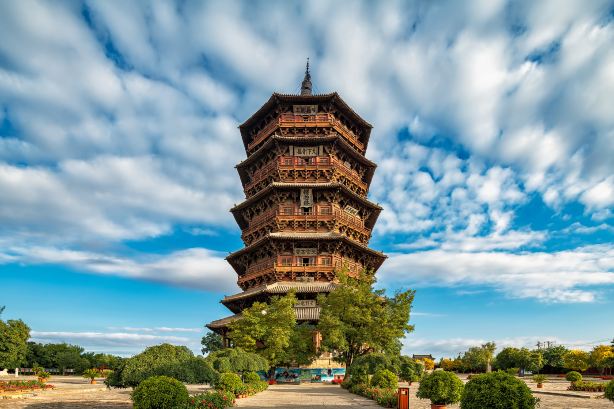
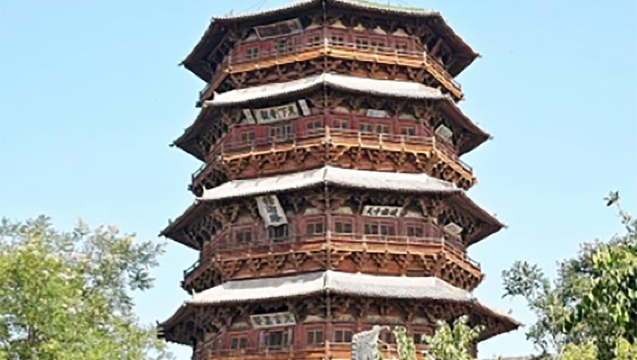
The full name of Yingxian Wooden Tower is Sakyamuni Pagoda of Fogong Temple. It is in the Fogong Temple in the northwest of Yingxian County. The octagonal wooden pagoda has five stories. Except for the high-end stone foundation of the first floor, the rest of the pagoda is made of wood using the traditional craftsmanship of Sunmao. Each layer of the wooden tower is equipped with wind chimes for a pleasant sound when the wind blows.China · Ying County

Shanxi Museum
"Five thousand years of history can be seen in Shanxi." Located on Binhe West Road in Taiyuan, the Shanxi Museum showcases the essence of Shanxi's cultural relics. The museum consists of a main building and four corner annexes, with the main building resembling both a dipper and a ding vessel, serving as the primary venue for travelers to view the collection. The main building has four floors. The first-floor lobby features a general service desk, while the second and third floors host thematic exhibitions on history and culture. The fourth floor showcases art-themed exhibitions, which together form the permanent displays of the Shanxi Museum. After entering the first-floor lobby, proceed to the second floor via the stairs to begin the historical journey themed "Soul of Jin." The cultural and historical thematic exhibition showcases the highlights of Shanxi's five-thousand-year civilization through numerous precious artifacts, ranging from ancient human relics to the rise and fall of Shanxi merchants during the Ming and Qing dynasties over five centuries. During your visit, several exquisite artifacts are not to be missed. The bird zun, a bronze ritual vessel from the Western Zhou period, was used in the ancestral temple sacrifices of the Jin marquis. The bird zun features an exquisitely crafted design with a phoenix as its main form. On the phoenix's back rests a small bird, serving as the handle for the vessel's lid. At the tail of the phoenix, an elephant is depicted, with its long trunk perfectly balancing the phoenix's two legs to form a stable tripod base. This artifact is a representative piece among the bronze collections in the museum. In addition, you can also admire: the Houma covenant texts, which are oath documents from the Spring and Autumn period used by the ministers of the Jin state; the lacquered wooden panel paintings, a painted screen from the Northern Wei dynasty depicting colorful stories from the "Biographies of Exemplary Women"; the white marble sarcophagus, a relic from the Sui dynasty, belonging to a tomb occupant who was a member of the Central Asian Yu people, with intricate carvings both inside and outside the sarcophagus, featuring figures with deep-set eyes, high noses, and black hair, characteristic of the Mediterranean Caucasian race. In the cultural thematic exhibition, you can also learn about the origins and development of Buddhism and traditional opera in Shanxi. The fourth floor of the main hall features an art thematic exhibition area. Among them, the "Timber and earth splendor" - ancient architectural art thematic exhibition showcases Shanxi's status as a province rich in cultural relics and ancient structures. "For above-ground relics, look to Shanxi" - Shanxi is renowned as the "treasure trove of ancient Chinese architecture," boasting over half of China's above-ground ancient structures with comprehensive categories, especially in the quantity of religious buildings. If you're a fan of ancient architecture, this is a must-visit. The Shanxi Museum also hosts temporary exhibitions periodically. At the first-floor lobby service desk, services such as hiring on-site guides (Chinese and English) and renting audio guides are available. The main building also houses a restaurant and a tea house for visitors.China · Taiyuan

Xinzhou Ancient City
Xinzhou was called Xiurong in ancient times. It is located between Taiyuan and Mount Wutai. It is the seat of Xinzhou Administrative Office and Prefectural Committee. In the Spring and Autumn Period, Xinzhou belonged to Jin State. In the Warring States Period, it belonged to Zhao State. In the Qin and Han Dynasties, it belonged to Taiyuan County, Yanmen County, and Taiping County. In the Sui Dynasty, it was Xinxingdu and Yanmen. During the Tang, Five Dynasties and Song dynasties, it was called Dingxiang Prefecture of Xinzhou. During the Jin, Yuan, Ming and Qing dynasties, it was called Xinzhou, Daizhou and Baodezhou. During the Anti-Japanese War and the War of Liberation, most of the area belonged to Jinchaji, and the area to the west belonged to Jinsui. In 1949, Xinzhou Prefecture was established. The cultural relics and historical sites in Xinzhou City include: Xinzhou North Gate Tower. Located in Xinzhou City, on the Gongchen Gate of the old north city wall. The North Gate Tower was built in the 24th year of Wanli in the Ming Dynasty. The tower is located on the 12-meter-high city wall, which makes it more majestic and magnificent. The city wall stands tall and is painted red on the outside. There is a Voucher doorway below, with a very high top and a bottom width of more than 3 meters.China · Xinzhou

Sun Park
Chaoyang Park is found in Beijing's East Fourth Ring. The park is enclosed with lakes, trees, pavilions, and European castles. The environment is a beautiful sight to behold. There are also numerous children's play programs in the park, ideal for relaxing strolls and staying busy. There are several lakes connected to the park. Each lake has a boat dock and you can rent a boat to ride at any of them.China · Beijing

Datong Ancient City
Datong Ancient City is the historic core of Datong, Shanxi. It served as the capital Pingcheng during the Northern Wei dynasty, the western auxiliary capital during the Liao and Jin dynasties, and a strategic frontier stronghold in the Ming dynasty, earning it the enduring title "northern key." Over its 2,000-year history spanning dynastic changes, the city's location remained largely unchanged, preserving its chessboard-style street grid centered on Sipailou to this day. The 2008 conservation and restoration project reunited the city walls, reconnected the moat, and gradually revived ancient architecture and old streets, layering the grandeur of an ancient capital with modern life within the same walled city. The ancient town offers an exceptionally dense concentration of noteworthy sights: in Huayan Temple's Liao- and Jin-dynasty halls, the graceful "clasped-hands, smiling" Liao-dynasty bodhisattva statue in the Scripture Depository Hall has long been hailed as the "Oriental Venus"; Shanhua Temple preserves a complete complex of Liao- and Jin-era wooden architecture. The Nine-dragon Wall, originally a glazed screen wall before the Ming-dynasty Dai Prince's residence (destroyed in war), survives with its nine coiling dragons still radiant—older and larger than its counterparts in Beijing's Forbidden City and Beihai Park. Climbing the reconstructed Ming-style city walls reveals a bird's-eye view of the square town's crisscrossing four main streets and orderly rooftops. An evening wait for sunset on the ramparts, followed by the illuminated outlines of walls and watchtowers after dark, makes for one of the town's most enchanting moments. Walking is recommended for touring: the attractions inside the city walls are spaced closely, allowing Huayan Temple, Shanhua Temple, the Nine-dragon Wall, and the drum tower to form a connected route. When tired, you may turn into the area around East Drum Tower Street, where time-honored shops and snack stores are concentrated, making it ideal for resting and replenishing. The ancient town covers a considerable area, so allocate at least half a day and wear comfortable shoes to leisurely appreciate the layered historical depth of this ancient capital.China · Datong

Shichahai Scenic Area
Shichahai Scenic Area refers to the front sea,Shichahai Scenic AreaAlong with the three lakes of Xihai and the adjacent areas, this place boasts vast stretches of beautiful lake surfaces and is also a famous historical district in Beijing, where numerous former residences of celebrities, princely mansions, and other historical sites are scattered, along with various delicacies close to the lives of ordinary people,Shichahai Scenic Area pub streetIt is also a long-standing hotspot for nightlife in the capital. Take a cruise in summer In summer, the lake is covered with lotus flowers. Cruise docks like the lotus market, wild duck island, and dreamlike Jiangnan line the shore, offering pedal boats and electric boats for self-rowing fun. Traditional punt boats are operated by boatmen in period costumes, who share old Beijing stories along the way. Ice skating on the lake in winter In winter when the lake freezes over, cruises stop operating, but you can still come to enjoy the winter scenery. Once the ice is solid, the Qianhai ice rink opens, offering skating and ice biking, a long-standing winter tradition in Beijing. Visit ancient architecture The ancient architecture around Shichahai Scenic Area keeps the attraction full of old Beijing characteristics. There areHuitong Temple, Deshengmen Arrow Tower, Prince Chun's Mansion,Guanghua Temple, Yinding Bridge, Bell and Drum Towers, and other attractions. Among the most famous is the residence of Heshen on Qianhai West Street—the Prince Gong Mansion. In addition to marveling at the lavish home of the corrupt Qing official Heshen, the mansion also houses over 10,000 hidden "fu" characters. The Kangxi Emperor's inscribed fu stele is particularly renowned, drawing travelers to queue for hours just to catch a glimpse. If interested, you can also detour to Yandai Byway to visit the Great Qing Post Office, which marks the birth of modern postal service in China. You can stamp a few beautifully patterned postmarks as souvenirs at the post office, though you'll need to purchase their postcards first to get the stamps. Try old Beijing snacks If you like to casually snack, you can buy a candied hawthorn stick, lean against the white marble railing of Shichahai Scenic Area, and enjoy the cruise boats coming and going on the lake while eating. If you want to specifically seek out Beijing snacks, you can go toJiumen snacks, in the traditional courtyard houses, you can find everything from soy-braised beef, dalian huoshao (a type of pancake), instant-boiled mutton, to tofu pudding; or head to the west side of the Mei Lanfang Memorial HouseHuguo Temple snack street, tube-shaped wings, palace cheese, and shoe sole pancakes, taste the delicious flavors from the hutong; additionally, there's a shop in the Lotus MarketQuanjude roast duck restaurant. Bars and nightlife When night falls, the lively time arrives. Around the Shichahai Scenic Area, numerous bars echo with singing, and some bar singers in the Shichahai Scenic Area truly perform well, with stories of the "Beijing drifters" behind the bars. Rock singer Dou Wei performed at the Shichahai Scenic Area for three years, and it is said that the restaurant Qingyunlou (Shichahai branch) in the Shichahai Scenic Area is now owned by him. Other famous bars include Hutong Sketch and Jiadingfang. Sitting in a bar, watching singers perform, you can almost hear the passion for music from the "Beijing drifters" in their songs. Nearby attractions Shichahai Scenic Area is adjacent to Nanluoguxiang to the east and Beihai Park to the south, with Jingshan Park, the Palace Museum, and Tiananmen Square a bit further south also within easy reach. Typically, visitors explore the Palace Museum or Tiananmen Square during the day and unwind at the bars in Shichahai Scenic Area in the evening. For those who prefer lakeside views over the Palace Museum or Tiananmen Square, combining a visit to Beihai Park with Shichahai Scenic Area is ideal. If shopping and sampling snacks are more appealing, one can head to nearby Nanluoguxiang after exploring Shichahai Scenic Area.China · Beijing

Tiananmen Square
Tiananmen Square is located in the center of Beijing, with a length of 880 meters from north to south and a width of 500 meters from east to west, covering an area of 440,000 square meters. It can accommodate up to one million people for grand gatherings. Along the central axis of Beijing, there are the national flagpole, the Monument to the People's Heroes, the Chairman Mao Memorial Hall, and the Zhengyang Gate Tower standing from north to south in the square. On October 1, 1949, the founding ceremony of the Central People's Government of the People's Republic of China was held in Tiananmen Square, marking the birth of the People's Republic of China. From then on, a new chapter in Chinese history was opened. On the day of the founding ceremony, 300,000 military and civilian personnel gathered in Tiananmen Square. Since then, Tiananmen Square has become an important venue for the Party and the state to hold major celebrations, grand gatherings, and foreign affairs receptions.China · Beijing

National Maritime Museum of China
The National Maritime Museum of China is located on the shore of the Bohai Sea in Tianjin Binhai New Area. It is a comprehensive maritime museum integrating collection, exhibition, research, and education, often referred to as the "Forbidden City on the sea." The white streamlined main building stretches along the coast, resembling a giant ship docked by the shore from afar. With the vast sea outside, the architecture itself is a noteworthy landmark worth stopping by. The museum's exhibitions revolve around the theme of "the ocean and humanity," with each of the six exhibition areas and dozen-plus halls offering unique highlights. In the "Ocean today" hall, a 9 m-long whale shark specimen is astonishing in scale, while a plastinated giant squid specimen stretches its slender tentacles. Together with rare specimens like a pregnant shark and thousands of other marine life specimens, they showcase the diversity of ocean life with striking visual impact. "Ancient oceans" traces Earth's origins, connecting billions of years of evolution through trilobite and ichthyosaur fossils. "Age of dinosaurs" recreates Mesozoic landscapes of sea, land, and air, where ichthyosaur and pterosaur fossils alongside dinosaur models are particularly popular with children. "Chinese maritime civilization" and "From sails to stars" chronicle China's journey from ancient navigation to modern scientific expeditions. The "Ocean and astronomy" hall with its starry dome and the interactive experience zone demonstrating the power of marine disasters are also crowd favorites in the museum. The museum's content density is remarkably high, and a thorough visit requires at least half a day. It is recommended to follow the order from the first floor upward, starting with ancient fossils before moving to modern marine exhibits. Those interested in paleontology, marine life, or maritime history will all find something to enjoy.China · Tianjin
Experiences you can't miss in Laiyuan
Featured Day tours in Laiyuan
View all Day tours
4.9/5
· 51 reviews· 255 bookedFree cancellation
Instant confirmation
Book now for tomorrow
51 consecutive positive reviews
FromRs 16,469.04
4.9/5
· 50 reviews· 204 bookedFree cancellation
Instant confirmation
Book now for tomorrow
50 consecutive positive reviews
FromRs 15,763.23


4.9/5
· 201 reviews· 328 bookedFree cancellation
Instant confirmation
Book now for tomorrow
99% of travelers recommend
FromRs 16,469.04
4.8/5
· 18 reviews· 77 bookedInstant confirmation
Book now for tomorrow
FromRs 17,645.40
5.0/5
· 6 reviews· 42 bookedInstant confirmation
Book now for tomorrow
FromRs 15,998.50
5.0/5
· 3 reviews· 36 bookedFree cancellation
Instant confirmation
FromRs 28,703.52

4.5/5
· 10 reviews· 31 bookedFree cancellation
Instant confirmation
Book now for tomorrow
FromRs 14,151.55
5.0/5
· 4 reviews· 29 bookedInstant confirmation
Book now for tomorrow
FromRs 18,821.76
Featured Travel photography in Laiyuan
View all Travel photography
FromRs 4,600.88

FromRs 55,210.50


FromRs 55,210.50


FromRs 46,008.75

FromRs 4,600.88

FromRs 46,008.75
Free things to do in Laiyuan
National Museum of China
China · BeijingWulonggou Great Wall
Laiyuan · 24.9km from downtownYingxian Wooden Pagoda
China · Ying CountyImmediate access, Book now for today, Cancel anytimeShanxi Museum
China · TaiyuanXinzhou Ancient City
China · XinzhouSun Park
China · BeijingDatong Ancient City
China · DatongShichahai Scenic Area
China · BeijingTiananmen Square
China · BeijingNational Maritime Museum of China
China · Tianjin
What travellers say about Laiyuan

E43***4413 October 2026
5.0
张洋导游讲解的非常好!All visitors should book the national Museum of China trip. It is not easy to book on your own, book through Trip.com and have a guide to share the history with you..
National Museum of China

冰咖啡彩虹糖22 January 2026
5.0
The Wulonggou Great Wall, located in Laiyuan County, Hebei Province, is part of the Inner Great Wall built during the Wanli period of the Ming Dynasty. It stretches approximately 150 kilometers, spanning 12 townships, connecting Laishui County in the northeast to Pingxingguan in Shanxi Province in the west. Its purpose was to defend against the threats posed by the Mongol and Manchu forces to the capital region, serving as an outer defense line of Zijingguan and linking with the defense system of Jizhou, Changping, and Baoding overseen by Qi Jiguang. It was listed as a National Key Cultural Relics Protection Unit in 2001. This section of the Great Wall is constructed of stone blocks, with watchtowers built of blue bricks and mortared. Over 90% of the existing wall remains intact. The watchtowers are densely packed, with some extending forward to form a mutually supportive defensive structure. The plaques of the barbican, such as "Zhenshuo Gate," are well-preserved. Due to minimal natural collapse and the lack of large-scale artificial repairs, its original appearance is superior to some modernly restored sections.
Wulonggou Great Wall

Anonymous user19 October 2026
5.0
Every snapshot is a beautiful scene! The park is very well maintained, with picturesque views at every turn and a wonderful atmosphere. The scenery is captivating, offering a high success rate for photos. You don't need to specifically find the right angle; every shot is a beautiful picture, making it a perfect blend of sightseeing and photography.
Yingxian Wooden Pagoda
Anonymous user7 October 2026
5.0
The tour guide was attentive and incredibly friendly, covering everything he needed to, and explaining things in considerable detail. With so many people during the National Day holiday, his experience helped us squeeze in every possible moment, and surprisingly, the trip wasn't crowded at all. The Yungang Buddha and the VR tour of Wutai Mountain were definitely worthwhile, and the Yanmen Pass Great Wall and Wang Family Courtyard were also very enjoyable. The driver was fantastic, incredibly experienced, and knew many shortcuts to Xiaoxitian, taking us directly to the scenic area entrance and saving us a lot of walking. The small group size meant it wasn't crowded, and the hotel arrangements were quite reasonable. The Yingxian Wooden Pagoda, the Yanmen Sunset, and the Wang Family Brick Carvings were all breathtakingly beautiful. The local tour guide was completely transparent and honest. I highly recommend this Shanxi tour; if you want to see ancient architecture but are afraid of doing research, book this tour without hesitation.
Shanxi Museum
Anonymous user17 September 2026
5.0
This is the most spectacular iron flower display I've ever seen! The program was diverse and engaging, the host was witty, the audience interaction was lively, the iron flower workers were incredibly skilled, and the iron flowers were dazzling and colorful – the effect was absolutely stunning! Thumbs up! 👍👍👍
Xinzhou Ancient City

YoYo_9H7U5N1A2 April 2026
5.0
The largest urban park within Beijing's Fourth Ring Road, it's free and incredibly welcoming. With its vast lawns, expansive lake, and stunning European-style architecture and fairytale castle, it's perfect for photos. You can run, boat, take your kids, and visit exhibitions. It's comfortable year-round, and locals often come here to relax.
Sun Park

118***6918 October 2026
5.0
It's definitely worth a visit. Huayan Temple in Datong Ancient City was built during the Liao, Jin, and Northern Wei dynasties. The architecture is magnificent and simple, and it's remarkably well-preserved. The Buddha statues inside are solemn and dignified, with vivid depictions. The murals, though hundreds of years old, remain remarkably vibrant. We are grateful to the people of Datong for protecting them so well.
Datong Ancient City

火 火19 September 2026
5.0
Shichahai (Qianhai + Houhai + Xihai), located at No. 49 Di'anmen West Street, Xicheng District, Beijing, is divided into three water areas: Qianhai, Houhai, and Xihai. The lakeside scenic area is free all day and requires no reservation.
Three main areas:
1) Qianhai (Lively main scenic area, the top choice for watching the sunset)
Yandai Xiejie: A 232-meter-long century-old street with creative shops and snacks, leading directly to Yinding Bridge.
Yinding Bridge: One of the "Eight Scenic Spots of Yanjing," Yinding Guanshan (Viewing the Mountains from Yinding Bridge), a good spot for sunset photography at Orange Sea in the evening, offering distant views of the Western Hills.
Lotus Market: A pond full of lotus flowers in summer, offering opportunities for rowing boats and sightseeing boats.
2) Houhai (Bars + Hutongs, the heart of nightlife)
Houhai Bar Street: A cluster of folk music bars, creating a vibrant atmosphere at night; avoid the expensive bars along the street and explore the deeper hutongs for better deals.
Houhai North Bank: A quiet lakeside walking path, less crowded, suitable for strolling and taking photos, passing by Prince Chun's Mansion (the birthplace of Puyi). 3) Xihai (a local favorite, the least crowded) Xihai Wetland Park (free): reeds, wild ducks, lakeside boardwalk, a hidden gem in the bustling city, almost no tour groups, perfect for a quiet city walk.
Shichahai Scenic Area

行万里路不如读万卷书24 September 2026
4.0
Tiananmen Square is a place that hundreds of millions of people yearn for; it is a symbol of the Republic, and every tourist visiting Beijing takes a photo in front of Tiananmen. However, advance reservations are essential, and security checks are a must. The only parts of the Tiananmen area open to the public are the Zhengyangmen Gate Tower, the Chairman Mao Memorial Hall, the Tiananmen Gate Tower, and the National Museum. Every year during the National Day holiday, Tiananmen Square is decorated with flowers for photos, and you can arrive early to watch the flag-raising ceremony. In short, a day trip to Beijing can include both Tiananmen and the Forbidden City, leaving a lasting impression of the capital's splendor.
Tiananmen Square

Joyce122711 October 2026
5.0
A Day Trip to the Maritime Museum
The Maritime Museum was a must-see on this trip to Tianjin.
It's free, but reservations are required. If you can't get a reservation, you can buy a special exhibition ticket.
There were several exhibitions, and I specifically chose the blue ocean one. I love aquariums, so I chose this one.
The aquarium isn't very big, but it has fish, jellyfish, and soft-shelled animals. There's also a mermaid show on the hour.
The exhibition hall is large and very unique.
From chaos to order, from the deep sea to the stars.
See ancient marine life frozen in rocks.
See humanity's journey from the ocean to the stars.
National Maritime Museum of China


