Jincheng

Things to do in Jincheng

Search attractions or local attractions & tours
Search

Explore top experiences

Top 10 attractions in Jincheng

View all Attractions
Gaoping Tiefo Temple
No. 4 of Best Things to Do in Jincheng

Gaoping Tiefo Temple

6
4.7/5
23 reviews

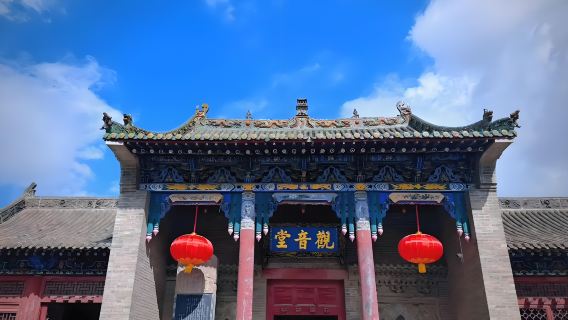
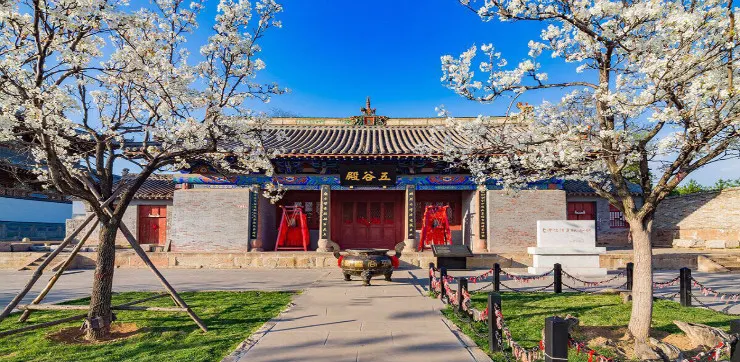
Gaoping Tiefo Temple is located in Mixi Village, Mishan Town. Facing south, it covers an area of approximately 667 square meters. The exact founding date is unknown, but iron Buddha statues were cast and the temple rebuilt in the 7th year of the Jin Dynasty's Dading era (1167). Renovations were carried out during the Ming Dynasty in the 1st year of Jiajing (1522), the 3rd year of Wanli (1575), and during the Qing Dynasty. The temple features a single courtyard layout with a south hall and main hall along the central axis, flanked by side rooms, and a mountain gate positioned at the southeast corner. The main hall has three bays wide and six rafters deep, with a single-eave overhanging gable roof, glazed ridge decorations, and a seven-purlin front corridor structure. The column-top brackets feature double cantilevers with five-step corbelling. Inside the hall, Buddhist altars are arranged in the central bay and along the east-west gable walls, featuring a central Buddha flanked by two bodhisattvas, twenty-four heavenly guardians on either side, Guanyin sculptures on the screen wall, and backside hanging sculptures depicting Journey to the West stories. The temple preserves a stone inscription from the 3rd year of Wanli (1575).Stele of the Reconstructed Iron Buddha TempleIt features one cave and over 30 colored sculptures from the Ming Dynasty. It was designated as an 8th batch National Key Cultural Relics Protection Unit on Oct 7, 2019.

Gaoping · 5.8km from downtown
Xiangyu Ancient Castle
No. 5 of Best Things to Do in Jincheng

Xiangyu Ancient Castle

5.7
4.5/5
152 reviews

On the picturesque map of Qinshui, a county with millennia of history, lies a hidden treasure—Xiangyu Ancient Castle. Xiangyu Ancient Castle is located in Xiangyu Village, approximately 50 km southeast of Qinshui County, Shanxi Province. This historic site was the hometown of Sun Juxiang (Minister of Revenue) and Sun Dingxiang (Vice Censor-in-Chief of the Censorate) during the late Ming Dynasty. Recognized as a National Key Cultural Relics Protection Unit and a AAAA-level tourist attraction, it has been acclaimed by experts as "China's Premier Ming Dynasty Rural Castle in Northern China." The ancient fortress stands with Phoenix Mountain to the north, Xiangyu River to the south, Dongyang Mountain to the east, and Tiger Valley Peak to the west, blending architecture with natural landscapes to create a rustic and pristine beauty. Built under the direction of brothers Sun Juxiang and Sun Dingxiang, construction began in 1614 during the Ming Dynasty's Wanli era and was completed in 1634 during the Chongzhen era, spanning 20 years. Covering approximately 32,500 square meters, the south-facing fortress is built against the mountain with layered courtyards and towering structures, showcasing grandeur. It uniquely combines military defense, East-meets-West architectural fusion, and metaphysical design elements. The ancient fortress features a "three-horizontal, nine-vertical" street layout resembling scattered stars, forming a honeycomb-style castle from the Ming Dynasty. Within its walls lie eight cultural theme courtyards showcasing military defense, folk customs, historical officialdom, and imperial examination traditions. The hidden troop tunnels stand as masterpieces of the cold weapon era, combining professional defensive structures with a unique bead-string corridor design. The surviving "Panorama Tower" blends Eastern and Western architectural elements, featuring arched doorways and windows adorned with intricate "eyebrow-eave hanging pillar" brick carvings—an oriental fortress with distinct Western influences. Mystical patterns of ancient metaphysics like the "Hetu Luoshu," the fortress's strategic grid layout, and distinctive "tiger-paw paths" further shroud the entire castle in an aura of mystery. Xiangyu Ancient Castle is the epitome of Taihang ancient fortresses, a model of Ming and Qing architecture, and a marvel of harmonious integration with its natural surroundings. It has become a hub for traditional Chinese culture, a filming location for movies and TV shows, and a popular spot for artistic sketching. Now evolving into a slow-living destination, it offers visitors a perfect retreat for wellness, leisure, and vacation.

Qinshui · 39.3km from downtown
Taihang Xiyagou Tourist Resort
No. 1 of Best Things to Do in Wangmangling Mountain Scenic Spot

Taihang Xiyagou Tourist Resort

5.3
4.6/5
112 reviews

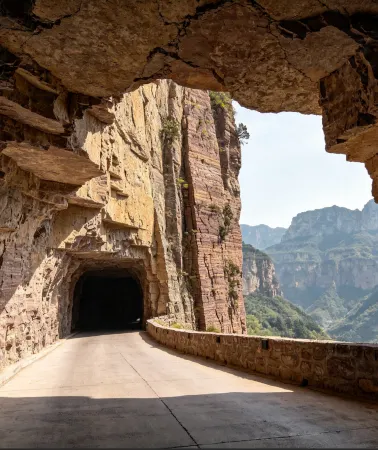
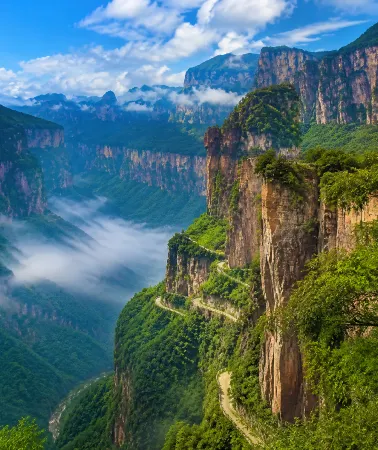
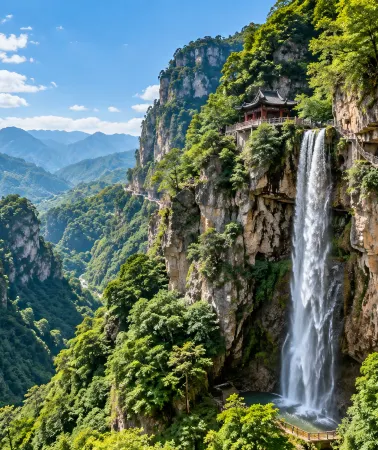
Xiyagou is located in a deep valley with a drop of more than 1,000 meters around the southern end of the famous Wangmangling Scenic Spot, bordering Huixian County, Henan Province. The mountain is steep and the ditch is deep, the terrain is dangerous, and the cliffs are surrounded by cliffs. Here is the famous wall-hanging road. It was artificially excavated by generations of people in Xiyagou for 30 years. It created a miracle in the history of rural road construction in China and is known for the wonders of the world. The barrier of the mountains has also created a paradise, the valley bottom of the area has traffic, Mianqiao flowing water, green fields, simple folk customs, and beautiful natural scenery. There is a north-south canyon in the village that is vertically separated, such as the crevices of Tiankeng. The depth can reach more than 200 meters. It is deep and long. The cliffs are like screens and sandstones are like cinnabars. A clear spring flew down from the wall, the sound of the waves was like thunder, the cold air was pressing up, the clouds and mists were misty, and it was spectacular. The buildings in the village are mostly made of stone, such as stone houses, stone bridges, stone paths, stone tables, stone mills, extensive and simple, and rich in "game". The "tiankeng type" terrain environment makes the small climate here mild, the water abundant, the vegetation dense, the lakes and mountains, and the small bridges and flowing water, such as to the south of the Yangtze River.

Lingchuan · 32.4km from downtown
Guoyu Ancient City
No. 7 of Best Things to Do in Jincheng

Guoyu Ancient City

5.2
4.0/5
148 reviews

Guoyu Ancient City, located 300 meters south of the AAAAA-level tourist Attraction Huangcheng Xiangfu (Huangcheng Xiangfu is actually the north wing of Guoyu Ancient City, and Shilangzhai is the east wing of Guoyu Ancient City), is a "Chinese Historical and Cultural Village" and a castle-style village at the foot of Taihang Mountain. The city is a unique Ming and Qing architectural complex, which is a national key cultural relic protection unit and is praised by Luo Zhewen, a master of ancient architecture, as "the treasure of Chinese folk houses". It is also known as "China's First Rural City". Guoyu Village is also the former residence of Zhang Pengyun, the governor of Shuntian in the Ming Dynasty, Zhang Ersu, the assistant minister of the Ministry of Justice in the Qing Dynasty, and Wang Chongxin, a wealthy businessman in the late Ming and early Qing dynasties. It is the place where Chen Tingjing, a university scholar of Wenyuan Pavilion in the Qing Dynasty, grew up, and it is also the place where the Seventh Military Medical University, the predecessor of the Third Military Medical University, was established. Guoyu Village has a long history. It was built by the Guo family and named after their surname. Guoyu was first built in the early Tang Dynasty. In the Ming Dynasty, Guoyu was a village, and in the Qing Dynasty, it was also called a town. In the sixth year of the Republic of China (1917), the village system was implemented and Guoyuli was renamed Guoyu Village. Guoyu Village is large in scale and well-formed. The ancient building area of ​​the village is 180,000 square meters, with city walls and towers, official residences, houses, temples and ancestral halls, shops and workshops, gardens and gardens, gatehouses and screen walls, wells, and ruins. It is not only an ancient building complex with local characteristics in the Qinhe River Basin of our county, but also a unique ancient building complex in the whole country.

Yangcheng · 15.1km from downtown
Yuhuang Temple Painted Sculpture and Mural Museum
No. 6 of Best Things to Do in Jincheng

Yuhuang Temple Painted Sculpture and Mural Museum

5.2
4.9/5
32 reviews

The Jade Emperor Temple is located in Fucheng Village, Zezhou County. It was a large-scale and influential Taoist temple in ancient Zezhou. It is unknown when the temple was founded. It was rebuilt on the original site in the ninth year of Xining in the Northern Song Dynasty (1076), and was titled "Jade Emperor's Palace". The main existing buildings are the Jade Emperor Hall built in Song Dynasty, Tang Emperor Hall built in Jin Dynasty, the left and right Duo Hall in the backyard and the east and west side buildings were built in Yuan Dynasty, and the rest were built in Ming and Qing Dynasties. The temple faces south, the building layout is a three-entry courtyard, and the plane layout is rectangular. On the central axis from south to north, there are Toudao Mountain Gate, Yimen, Chengtang Hall, Xianting Pavilion, Jade Emperor Hall, and East and West Side Halls; Liangyu Twenty-eight Sus Halls, Twelve Chen Halls, Thirteen Yaoxing Halls, and Guandi Halls. , Silkworm Temple and wing rooms, the second floor of the bell and drum. The shape of the mountain gate is a single eaves hanging on the top of the mountain, decorated with colored glaze, and the glazed peacock orchid components on the top of the Bell and Drum Tower are very bright. The Temple of the Gods is located in the middle of the middle courtyard. It is a wooden pavilion, three rooms wide, six rafters deep, and a single eaves overhanging the top of the mountain. It is quaint and simple, with a soup image. There are statues of Dongyue and the Three Kings in the east and west side halls. On the east and west sides are Yaowang Hall, Wudao Hall, and Gaomou Temple. The south hall, the Ksitigarbha Bodhisattva Hall in the west, has the Ten Halls of Lord Yan; the east is the Hall of Six Plagues, and the statues of the gods of six plagues are in the east. The main hall in the backyard is the Jade Emperor Hall, with a single eaves on the top of the mountain, three rooms in width, six rafters in depth, and straight mullioned windows. The painted sculptures of the Song, Jin and Yuan periods collected in the Jade Emperor Temple have extraordinary ornamental value and cultural relic value. The glazed components, murals and wood carvings in the temple are all outstanding; its twenty-eight constellation painted sculptures are even more unique in the world.

Zezhou · 1km from downtown

Experiences you can't miss in Jincheng

Featured Day tours in Jincheng

View all Day tours
[8/15 person group · English-speaking guide · family-friendly tour] Longmen Grottoes + White Horse Temple + Han-Wei Museum
󱌍
4.9/5
· 351 reviews· 2.4k booked
Duration: 9.1 hrs
English
Free cancellation
Instant confirmation
32 consecutive positive reviews
FromNZD 297.95
[2-8-person high-end luxury small group] Longmen Grottoes • White Horse Temple • Han-Wei Museum
󱌍
4.9/5
· 223 reviews· 1.6k booked
Duration: 8.6 hrs
English
Free cancellation
Instant confirmation
100 consecutive positive reviews
FromNZD 297.95
Zhengzhou Departure - Jiaozuo: Yuntai Mountain Scenic Area, Red Stone Gorge & Xiaozhai Valley Chinese Group Day Tour
󱌍
FromNZD 116.47
Luoyang, Henan: Longtan Grand Canyon & Red Rock Zhang Valley Geological Wonder Chinese Group Day Tour
󱌍
FromNZD 122.76
[Private Group Tour] Yuntai Mountain One-Day Tour | Hongshixia + Xiaozhaigou + Macaque Valley / Includes Scenic Area Shuttle Bus
󱌍
FromNZD 136.93
White Horse Temple, Longmen Grottoes, Guanlin Private Day Tour with Hotel Transfer
󱌍
5.0/5
· 1 review
Duration: 9 hrs
English
Free cancellation
Instant confirmation
FromNZD 180.90

More things to do

Private Tours in Jincheng

View More Private Tours in Jincheng
Group Tours in Jincheng

View More Group Tours in Jincheng
Jincheng Today's weatherClear 0-11℃
Jincheng weather for the next 2 days11/23: -4-12℃, 11/24: -2-11℃

Free things to do in Jincheng

What travellers say about Jincheng

user-avatar
M77***8821 November 2026
5.0
I purchased a combined ticket and took the free shuttle bus within the scenic area to Huangcheng Xiangfu, Guoyu Ancient Castle, and Haihui Academy. This scenic area is a sixth batch of national key cultural relics protection units. ① Huangcheng Xiangfu: The former residence of Chen Tingjing, a Grand Secretary of the Wenyuan Pavilion during the Qing Dynasty. It is the largest official residence castle in northern China, a 5A-level scenic area, and a national key cultural relics protection unit. The entire city is built against the mountain, integrating residences, official residences, academies, and defensive fortifications. The city is very large; even just visiting the core attractions requires more than 1.5 hours. ② Guoyu Ancient City: A defensive castle village built during the Ming Dynasty, integrating residence, defense, and worship, and is quite large. Guoyu is a few years older than Huangcheng Xiangfu and contains Chen Tingjing's ancestral home, making it the former residence of the Chen family. Nearly 40 Ming and Qing dynasty residential courtyards remain. The most striking feature is its city wall, containing over 600 cave dwellings, densely packed like a honeycomb, hence its nickname "Honeycomb City." Visitors can explore the underground tunnels. The entire ancient castle scenic area is not heavily commercialized, built upon the ancient village, and people still live there today. ③. Haihui Academy: Includes the Haihui Twin Pagodas and Haihui Temple. Its history is extensive and profound, making it a must-see attraction besides the Imperial City Prime Minister's Residence. ⚠️: For those with the means, it's essential to pay 30 yuan to climb the Glazed Tile Pagoda, a national treasure. The tenth floor is made of glazed tiles, and you can climb all the way to the top. The path is difficult, with worn steps, making progress challenging. It's possible that climbing the pagoda will be discontinued someday, so visitors to Haihui Academy should definitely give it a try.

House of The Huangcheng Chancellor

user-avatar
M42***8015 November 2026
5.0
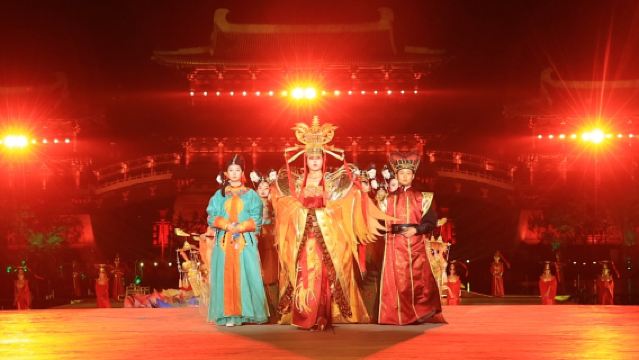
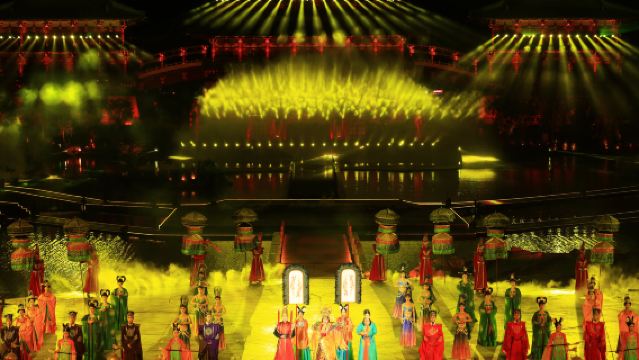
In Situ Town, enjoy free food, play games to earn silver coins, and use these coins to ride horses and boats. Watch the "Old Shanxi Again" performance to learn about Shanxi's history and culture, including the Jin merchant culture. Finally, witness the Situ Town's iron-smelting flower performance. This unique performance, unlike any other in China, encompasses a variety of acts including fire pot performances, fire tiger performances, fire-breathing (equipment and human intervention), flame trees, fire wheels, fire sticks, light shows, water shows, drone performances, kung fu performances, and dramatic storytelling – a comprehensive display of various forms of fire-smelting art.

Situ Town

user-avatar
还不曾去过倒悬山!15 October 2026
4.0
You really can't treat this as an ordinary mountain road. It's like a market, like a night market, where you can see many people coming up from different windows and chat with them.

Wangmangling Scenic Area

user-avatar
山在穷游13 June 2026
4.0
This was my second visit to Tiefo Temple, and this time I felt much better than before. This time, some time had passed since its peak popularity, and there weren't many people, so I could spend more time there and properly explore the place. The lighting was better in the morning, but when I arrived in the afternoon near closing time, the lighting inside the large store was noticeably dim.

Gaoping Tiefo Temple

user-avatar
冰糖Bingtang18 February 2026
5.0
Strolling through Xiangyu Ancient Castle feels like stepping back 600 years to the Ming Dynasty. The mottled walls, the scattered cave dwellings, and the deep, secluded alleys—every brick and tile carries the weight of history. The honeycomb-style hidden troop tunnels are ingenious and awe-inspiring. Climbing the Yilan Tower offers panoramic views; the ancient castle at the foot of the Taihang Mountains possesses both the grandeur of a military fortress and the warmth of ancient village life. Free from the hustle and bustle of excessive commercialization, only the tranquility accumulated over time remains, allowing one to understand the wisdom and perseverance of the ancients. This trip was incredibly rewarding, leaving us wanting more. The tour guides were warm and attentive! A big thumbs up to our guide, Xiao Li, for taking such beautiful photos of us! 👇Photos of the lovely young lady!

Xiangyu Ancient Castle

user-avatar
Anonymous user5 May 2025
5.0
Wangmang Ridge is a mountain located at the junction of Lingchuan County, Jincheng City, Shanxi Province, China and Huixian City, Henan Province. It belongs to the southern section of the Taihang Mountains and has an altitude of about 1,665 meters. It is famous for its magnificent natural scenery and unique geological landscape. It is known as the "Supreme of Taihang" and is a national geological park and a 4A-level tourist attraction. ### Main features: 1. **Strange peaks and rocks**: Wangmang Ridge has steep mountains and peculiar rock shapes. There are four natural wonders: "sea of ​​clouds, sunrise, strange peaks, and pine waves". 2. **Sea of ​​clouds and sunrise**: The sea of ​​clouds and sunrise in the early morning are particularly spectacular, attracting many photography enthusiasts. 3. **Hanging wall road**: The nearby Xiyagou hanging wall road is a steep road that was manually excavated by local villagers for 30 years. It can be called a miracle of human engineering. 4. **Historical legend**: According to legend, Wang Mang stationed troops here to pursue Liu Xiu in the late Western Han Dynasty, so it was named "Wangmang Ridge".

Taihang Xiyagou Tourist Resort

user-avatar
大 牛16 April 2026
4.0
The famous "Heimaogou Grand Canyon" wasn't that breathtaking in person, but the dark, towering mountains on either side created a powerful sense of awe. However, the crowds and cars were chaotic, everyone trying to stop and see the scenery, resulting in a traffic jam. There were even arguments and scrambles as people tried to avoid oncoming traffic. In the end, we barely saw any scenery and had to leave.

Heimaogou Grand Canyon

user-avatar
M37***4516 November 2026
4.0
Hidden within the ancient city of Guoyu in Jincheng, Shanxi Province, lies a 400-year-old fortress built by ordinary people! Located just a 10-minute walk south of the 5A-rated Huangcheng Xiangfu scenic area, it has been praised by renowned ancient architecture experts as a "gem of Chinese vernacular architecture" and is popularly known as "China's No. 1 Rural City." The Guo family settled here in the early Tang Dynasty, hence the name. During the Chongzhen era of the Ming Dynasty, to defend against war and bandits, the entire village spent 10 months building this defensive castle. The Jingyang Gate, the east gate, was built in the eighth year of Chongzhen's reign, symbolizing "auspicious purple clouds coming from the east, and the city's eternal peace." The city wall is 1400 meters long and 12 meters high, with three layers of cave dwellings carved into the inner side, totaling 627 holes, densely packed like a honeycomb—a unique feature in China.

Guoyu Ancient City

user-avatar
把剑长歌16 October 2026
5.0
The Jade Emperor Temple Painted Sculpture and Mural Museum refers to the Jade Emperor Temple itself, specifically the Jade Emperor Temple in Zezhou, Jincheng, which is a national protected site (third batch). I always like to compare it to the Yongle Palace; both are national protected sites (third batch), equally impressive, and truly amazing! 👍 I live nearby and went twice, but I still couldn't get enough!

Yuhuang Temple Painted Sculpture and Mural Museum

user-avatar
行走毛毛7 January 2026
5.0
If you ask me when Qinglian Temple is most beautiful in all four seasons, I would definitely say autumn. That is because the ginkgo leaves turn yellow in autumn, and the entire temple is also exceptionally cool in autumn. Even if you walk up, you won't feel too hot.

Qinglian Temple

Trip Moments in Jincheng

Popular cities near Jincheng

Frequently asked questions

When choosing a tour, start with how much time you have and the kind of experience you're looking for. Trending options right now include 1-day tour to Jincheng Museum, House of The Huangcheng Chancellor and Qinglian Temple with Chinese and English-speaking service, Shanxi Jincheng 1-day tour: Xixi Erxian Temple + Gaoping Tiefo Temple + Yangshantou Grottoes (Chinese and English services), and [8/15 person group · English-speaking guide · family-friendly tour] Longmen Grottoes + White Horse Temple + Han-Wei Museum. Check the real-time availability and itinerary before you book.

As of 22 November 2026, the reference price for day tours and activities in Jincheng is around NZD 116.47 – NZD 373.43. Rates vary by duration, group size, transport, tickets, meals, and any special admission requirements. Before you book, please confirm the billing currency and whether the price is quoted per person or per group.

Get help anytime, anywhere within 30 secondsContact customer support

Change and cancellation policies vary by attractions and tours. Please check the product details page for more information.

Ticket prices may vary between weekdays and weekends, as well as during peak and off-peak seasons. When booking with Trip.com, you can also use Trip Coins to get extra savings. For more tips on booking discounted tickets, please visit Trip.com for the latest information.