Houma

Things to do in Houma

Search attractions or local attractions & tours
Search

Explore top experiences

Top 10 attractions in Houma

View all Attractions
Zaixiang Village (Prime Ministers’ Village)

Zaixiang Village (Prime Ministers’ Village)

3.9
4.4/5
24 reviews

China's "Prime Minister Village" is Peibai Village, Liyuan Town, Wenxi County, 25 kilometers away from the county seat. It is the hometown of prime ministers. Wenxi Pei family is a well-known family in the history of Chinese feudal society. According to the "Pei Family Genealogy", the Pei family has produced 59 prime ministers and thousands of other officials in history. It can be said that "generals and ministers are connected, and dukes and marquises are from the same family." China's "Prime Minister Village" got its name from this. In Peibai Village today, there are many historical relics of the Pei family, such as buildings, steles, and tombs. The Pei Stele Gallery preserves dozens of ancient steles, which are of great value in terms of historical materials and calligraphy art. Among them, the Pei Hong Stele, a combination of Wei and Li, is inscribed in a steady style in the third year of Dahe (568) during the reign of Emperor Wu of the Northern Zhou Dynasty. The Pei Clan Ancestral Hall (also known as the Jin Gong Temple) was first built in the third year of Zhenguan (629 AD) during the Tang Dynasty. It is large in scale and magnificent in style. It has been rebuilt in all dynasties. The existing architectural relics include the front hall, the back hall, and the Zhuangyuan Square. The Pei Stele Gallery is almost an encyclopedia of Chinese calligraphy and stone carvings. There were originally dozens of ancient steles, which are of great value in terms of history and calligraphy art. The Pei family tomb is located in Fenghuangyuan, five kilometers east of Peibai Village. In the past, there were numerous tombs and steles. Although most of them are now flattened and destroyed, their general appearance can still be seen, and some cemeteries still have stone steles.

Wenxi · 14km from Houma
Jinguo Museum

Jinguo Museum

4.9
4.7/5
320 reviews

Located in Qucun Town, Quwo County, Jin State Museum is the first site museum in the province with Jin culture as its theme, built on the basis of the national key cultural relic protection unit "Qucun-Tianma Site". It was officially opened to the public on National Day in 2014. It is the first large-scale site museum in Shanxi Province that integrates cultural relic collection, protection, research and cultural relic display, and is a platform that fully displays the historical and cultural features of Jin State. The Jin State Museum takes Jin culture as its theme and has created three highlights: the history of Jin State, the history of excavation, and the site exhibition. The History and Culture Exhibition Hall uses the history of Jin State as a clue and, through a large number of precious cultural relics unearthed from the tombs of Jin Hou, shows a series of major events that have influenced the course of ancient Chinese history, including the enfeoffment of Tang by Shu Yu, the change of Tang to Jin by Xie Fu, the loyalty of Wen Hou to the king, the expansion of territory by Xiangong, the hegemony of Wen Gong, the dictatorship of the six nobles, and the division of Jin by the three families. The Site Excavation History Exhibition Hall shows the hardships, extensive reading of geography, and search for evidence by three generations of archaeologists from the School of Archaeology and Museum Studies of Peking University and the Shanxi Provincial Institute of Archaeology, as well as a series of major achievements in archaeological excavation; the Site Exhibition Hall adopts a method of one site and one display method, focusing on the four groups of tombs of Jin Hou and his wives and three chariot pits, presenting the audience with a panoramic picture of the tombs of kings and princes of the state during the Western Zhou period. The "Qucun-Tianma Site" where the Jin State Museum is located is large in scale, starting from Tianma Village in Yicheng County in the east, Qucun Town in Quwo County in the west, starting from the bank of Fu River in the south, and reaching Qiaoshan slope in the north. The site is 3,800 meters long from east to west, 2,800 meters wide from north to south, and covers an area of ​​nearly 11 square kilometers. After more than ten consecutive large-scale explorations and excavations by Peking University and the Shanxi Institute of Archaeology, a total area of ​​12,000 square meters was revealed, and more than 1,000 tombs were excavated, including more than 800 tombs from the Zhou Dynasty. Especially in the core area of ​​the site, nine groups of 19 tombs of early Jin monarchs and their wives, ten chariot pits, and more than 12,000 precious cultural relics of various types were discovered. The excavation results provided support for the solution of the chronicle of the Western Zhou kings in my country's "Xia, Shang and Zhou Chronology Project". It was listed as one of the top ten archaeological discoveries in China in 1992 and 1993, and was rated as one of the 100 major archaeological discoveries in China in the 20th century in 2001.

Quwo · 22km from Houma

Experiences you can't miss in Houma

Featured Day tours in Houma

View all Day tours
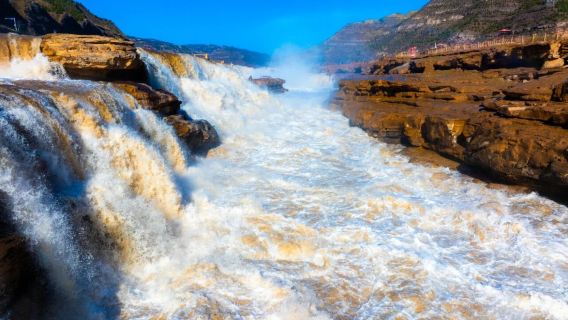
Hukou Waterfall tourist area of the Yellow River 1-day tour [door-to-door pickup│optional skip-the-line]
󱌍
5.0/5
· 3 reviews· 73 booked
Duration: 11 hrs
English
Free cancellation
Instant confirmation
From€38.66
1-day tour to Hukou waterfall tourist area of the Yellow River and Huangdi mausoleum Xuanyuan temple in Shaanxi + optional Chinese/English-speaking guide
󱌍
From€42.69
Luoyang, Henan: Longtan Grand Canyon & Red Rock Zhang Valley Geological Wonder Chinese Group Day Tour
󱌍
From€60.17
Shaanxi Hukou Waterfall One-Day Chinese Group Tour with Optional First-Class Bus and Fast Track Entry
󱌍
From€56.29
Hukou Waterfall tourist area of the Yellow River day tour
󱌍
4.0/5
· 1 review
Duration: 11.3 hrs
English
Free cancellation
Instant confirmation
From€40.00
1-day tour to Hukou Waterfall + The Mausoleum of Yellow Emperor in Shaanxi|Pure sightseeing, no shopping stops|Free pick-up/drop-off service
󱌍
5.0/5
· 2 reviews
Duration: 12 hrs
English
Free cancellation
Instant confirmation
Book now for tomorrow
9% off
Limited-time sale
From€72.25€80.27
Private One-Day Tour: Yongle Palace · Guan Emperor Temple · Yuncheng Salt Lake
󱌍
Duration: 9.5 hrs
English
Free cancellation
Instant confirmation
Book now for tomorrow
From€76.27
Shaanxi Hukou Waterfall Tourist Area One-Day Tour: Ticket Booking + Private Car Transfer
󱌍
Duration: 10.5 hrs
English
Free cancellation
Instant confirmation
Book now for tomorrow
From€45.76
Houma Today's weatherOvercast 0-15℃
Houma weather for the next 2 days11/12: 1-16℃, 11/13: 3-18℃

Free things to do in Houma

What travellers say about Houma

user-avatar
孤独的隐者11 February 2026
5.0
The Longxing Temple, a national key cultural relics protection unit, boasts a rich historical atmosphere. We even happened to be there during lunchtime at the pagoda. Climbing up using both hands and feet provided an excellent view and a fantastic experience. It's truly a treasure trove of a temple – highly recommended!

Longxing Temple

user-avatar
翱翔的大鲨鱼13 June 2026
4.0
Since I was there, I decided to take a look, but there really wasn't much to see. The buildings were too obviously constructed. Aside from the architecture, I couldn't see any of the original structures. The residential area behind it is worth exploring at a slower pace, but unfortunately, I was in a rush and didn't have time to appreciate it properly.

Jiangzhou Prefecture Scenic Area

user-avatar
清风若溪8 September 2023
4.0
Jin State Ancient Capital Museum: Located in Jinbo Park, Fuxi Road, Houma City, Shanxi Province, it is a thematic museum that focuses on displaying the Xintian Culture of the Jin State. The museum is divided into two parts, with four exhibition halls, and exhibits nearly 500 cultural relics of various types.

Houma Jinguo Gudu Museum

user-avatar
M51***3226 October 2026
5.0
The Most Beautiful Guanyin Crossing the Sea – The Past and Present of Fusheng Temple in Xinjiang County Said to be the inspiration for Wu Cheng'en's novel *Journey to the West*, Fusheng Temple boasts a history of over 1400 years. Originally built during the Northern Qi Dynasty, it was commissioned by Emperor Taizong of Tang (627-649 AD) to be a temple dedicated to the upright and honest Lin Xiangru, a high-ranking official in the village. This is also the origin of the temple's name, "Little Leiyin." The temple enshrines Confucianism, Buddhism, and Taoism. During the Jin Dynasty, it was officially named "Fushengyuan," later changed to Fusheng Temple. Imperial edicts and inscriptions record this within the temple grounds. The main hall of Fusheng Temple, the Amitabha Hall, enshrines the Three Western Saints—Amitabha Buddha as the main deity, flanked by Bodhisattvas Guanyin and Mahasthamaprapta, forming the Western Paradise. The statues are all original works from the Yuan Dynasty. The altar is surrounded by the Sixteen Arhats and the Four Heavenly Kings, which were added during the Ming and Qing Dynasties. Inside the Heavenly Kings Hall were the two generals Heng and Ha, namely Zheng Lun and Chen Qi, who were responsible for guarding the mountain gate and protecting the safety of the temple, but they are no longer there, and the temple is also... alas... The back of the Buddha statue is adorned with statues of Guanyin of the South Sea, Sudhana, and the Bright King, which are also original works from the Yuan Dynasty. Guanyin of the South Sea is especially praised as the most beautiful and is included in the "Complete Collection of Chinese Art". Below, there were originally statues of Tang Sanzang and his disciples, but now only the monkey-shaped fragments remain: with a pointed mouth and fiery eyes, wearing a rat-head hat, and a lively posture, very similar to Sun Wukong. The mount under Guanyin's feet is the Golden-haired Roar, the original form of Sai Tai Sui in "Journey to the West". The sculpture's details (antlers, eagle claws, fish scales) are exactly as described in the novel. The money-scattering boy at the feet is an image of Red Boy, and the Dragon King and Turtle Prime Minister below recreate the scene of the East Sea Dragon Palace. The three-headed, six-armed Ming Kings on either side, riding on wind-fire wheels, are artistic representations of the two generals Heng and Ha. The film *Black Myth: Wukong* directly uses these as character prototypes. Fuksheng Temple, also known as Little Leiyin Temple, has an inscription at its entrance, which is also attributed to the Yellow-haired Monster impersonating Leiyin Temple. The sculpture predates Wu Cheng'en's *Journey to the West* by 300 years. It is widely believed that Wu Cheng'en saw this sculpture during his travels in Shanxi, which inspired his creation of *Journey to the West*. Although there is no definitive record, it seems authentic to me; otherwise, how could it be such a coincidence? The scene also depicts Guanyin crossing the sea to deliver all beings, which aligns with Wu Cheng'en's depiction of Guanyin of the South Sea. It's incredibly beautiful!

Fusheng Temple

user-avatar
行走毛毛17 November 2025
5.0
Some attractions will never regain their former tranquility. For example, there is a group of ancient buildings that used to be so quiet and not open to the public. Now that it is open, there are always all kinds of crowds. Some people say that the gate has been blocked off and that an entrance fee may be charged in the future.

Fencheng Ancient Building Complex

user-avatar
Anonymous user5 February 2026
5.0
The hotel has a great location, the front desk service was excellent, and I recommend Liu Jie Dumplings nearby. It's also very convenient to get around, with its own parking lot. The breakfast was good, although the selection wasn't extensive, but it suited our tastes. I would definitely choose to stay here again next time.

Zaixiang Village (Prime Ministers’ Village)
user-avatar
E16***6025 May 2025
5.0
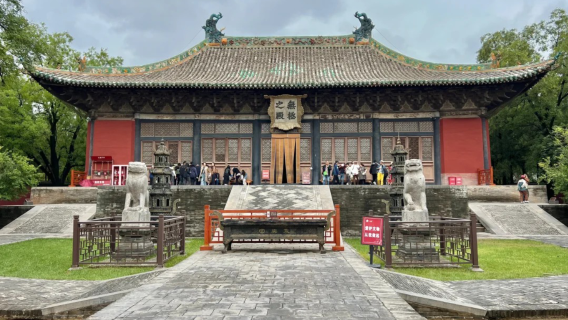
It looks inconspicuous from the outside, but the Dacheng Hall is magnificent inside. The construction date is unknown, but it was built in the Song Dynasty at the latest. It was renovated many times in the Yuan, Ming and Qing Dynasties. The existing buildings along the central axis are the screen wall, Pan Pond, Lingxing Gate, Dacheng Hall, and several rooms in the west wing. It is a very distinctive ancient building complex. There is a sculpture of a carp jumping over the dragon gate in front of the half-moon-shaped Pan Pond. Confucius, his four companions, and the twelve philosophers are enshrined in the Dacheng Hall.

Temple of Literature

user-avatar
许泱流18 October 2026
5.0
The Jin State Museum, which recently reopened after renovations for the Mid-Autumn Festival, is divided into three main sections: the first section displays the history and ancient artifacts of the Jin State and the pre-Qin period; the second section features a realistic display of Jin State tombs; and the third section showcases porcelain. The overall flow of the exhibits is well-organized, providing a comprehensive experience from understanding and reading about history to witnessing it firsthand.

Jinguo Museum

user-avatar
老虎abc14 September 2024
3.0
The door is usually closed. I asked a fellow villager passing by, and he said there should be an old man guarding the door inside. I knocked for a long time but there was no response, and no phone call. Maybe I went too early at 8:30. My fellow villager said that there might be someone there at noon, and if I couldn't wait, I would just pass by.

Pujing Temple

user-avatar
Sermwit13 March 2025
3.0
A small shrine with an old Buddha statue. If you like this kind of art, you will probably like it. It is not hard to find. You can see it from the main road. It is near Longxing Temple.

Sanguan Temple

Trip Moments in Houma

Popular cities near Houma

Frequently asked questions

What are the recommended tours and excursions in Houma?

When choosing a tour, start with how much time you have and the kind of experience you're looking for. Trending options right now include Hukou Waterfall tourist area of the Yellow River 1-day tour [door-to-door pickup│optional skip-the-line], 1-day tour to Hukou waterfall tourist area of the Yellow River and Huangdi mausoleum Xuanyuan temple in Shaanxi + optional Chinese/English-speaking guide, and Luoyang, Henan: Longtan Grand Canyon & Red Rock Zhang Valley Geological Wonder Chinese Group Day Tour. Check the real-time availability and itinerary before you book.

As of 12 November 2026, the reference price for day tours and activities in Houma is around EUR 38.66 – EUR 76.27. Rates vary by duration, group size, transport, tickets, meals, and any special admission requirements. Before you book, please confirm the billing currency and whether the price is quoted per person or per group.

Get help anytime, anywhere within 30 secondsContact customer support

Change and cancellation policies vary by attractions and tours. Please check the product details page for more information.

Ticket prices may vary between weekdays and weekends, as well as during peak and off-peak seasons. When booking with Trip.com, you can also use Trip Coins to get extra savings. For more tips on booking discounted tickets, please visit Trip.com for the latest information.