


The Nanjing Tulou Clusters boast of three parts – Tianluokeng Tulou Cluster, Yuchanglou and Taxia Village. Nanjing Tulou Cluster are about 160 km west of Xiamen, 2 hours' drive from Xiamen.
- Tianluokeng Tulou cluster
Tianluokeng Tulou is the major Tulou cluster in Nanjing County, about 160km west of Xiamen City. It takes about two hours' drive from Xiamen along the bumpy and zigzag narrow mountain road.
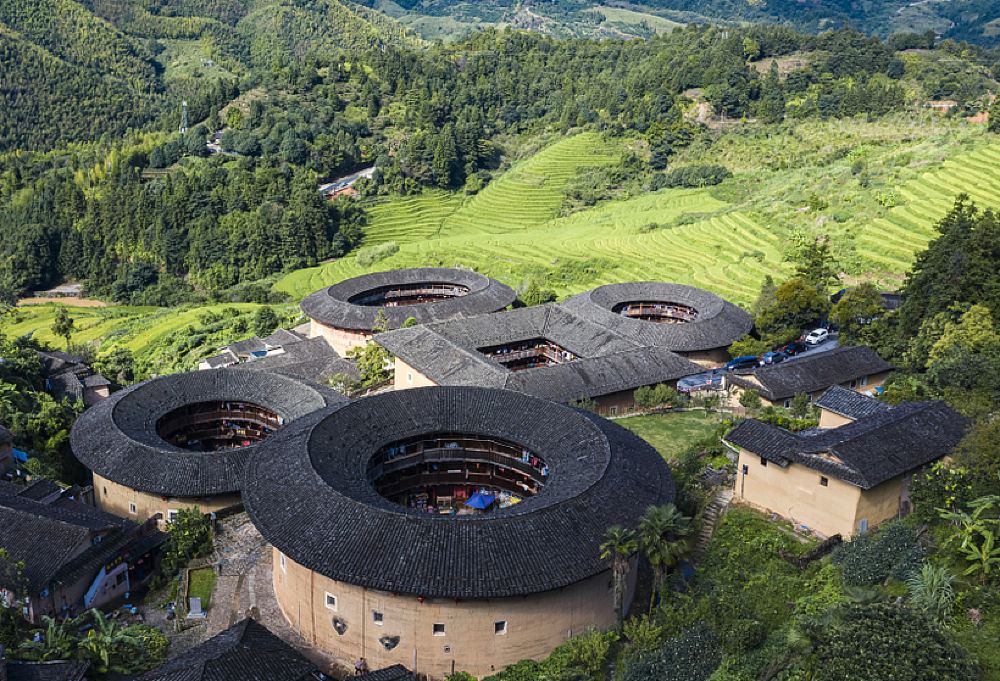
Tianluokeng Tulou Cluster are composed of 5 clay buildings, with a square Tulou at the center and circled by 4 circular Tulous, forming a pretty pattern of so called “four dishes with one soup”.
- Yuchanglou
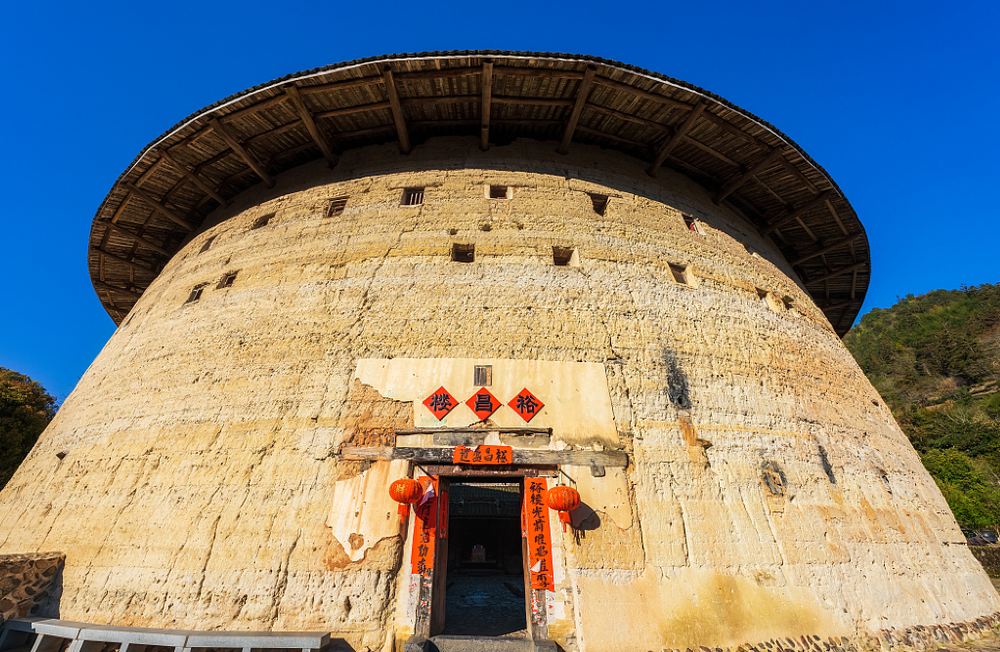
Yuchanglou belongs to the tulou cluster in Nanjing Tulou Cluster. It is located in Xiabanliao village in Nanjing. It is a five-storey clay built in 1308 Yuan dynasty by the Liu clan. It is one of the oldest and largest earthen building in China. Yuchanglou is also nicknamed as the “leaning building”, because the vertical wooden post structure is not straight, but leaning left and right. It was constructed like this mainly due to a mistake in measuring the building material. But in spite of this error, this tall tulou has survived for the past 700 hundred years. Yuchanglou is 36m in diameter and has five storeys, with 50 rooms on each floor.
- Taxia Village
After finishing the short visit to Yuchanglou, we drove along the mountain road and soon we entered the ancient Taxia Village. The ancient village is located in the west of Shuyang Town in Nanjing, a famous oversea Chinese town. Taxia Village is one of the first 15 scenic villages selected in China. The village has a long history dating back to 1426. Now there are over 300 households in the village. The clay buildings in Taxia Village are built evenly along the banks of the river passing through the village. The tulou buildings in the village have various kinds of shapes – circular, square and oval. In addition, this village also has a kind of wood and brick buildings similar to those in the countrysides in Zhejiang. The clay buildings in Taxia Village are built evenly along the banks of the river passing through the village.