Shanghai-Nanjing Private Guided Day Tour: Dr. Sun Yat-sen's Mausoleum, The Ming Tomb, Presidential Palace, Nanjing Confucius Temple
In the morning, you will depart on your own and take a convenient high-speed train from Shanghai railway station to Nanjing, arriving at around 9:00 a.m. Upon arrival at Nanjing station, a professional tour guide will warmly welcome you and begin an exciting exploration tour of Nanjing.
Itinerary:
Shanghai Railway Station (take the high-speed train on your own) — Nanjing Railway Station — Dr. Sun Yat-sen's Mausoleum — The Ming Tomb — Lunch (on your own) — Presidential Palace — Nanjing Confucius Temple Qinhuai Scenic Area — Nanjing Railway Station (take the high-speed train on your own) — Shanghai Railway Station
Attraction Introduction:
Dr. Sun Yat-sen's Mausoleum
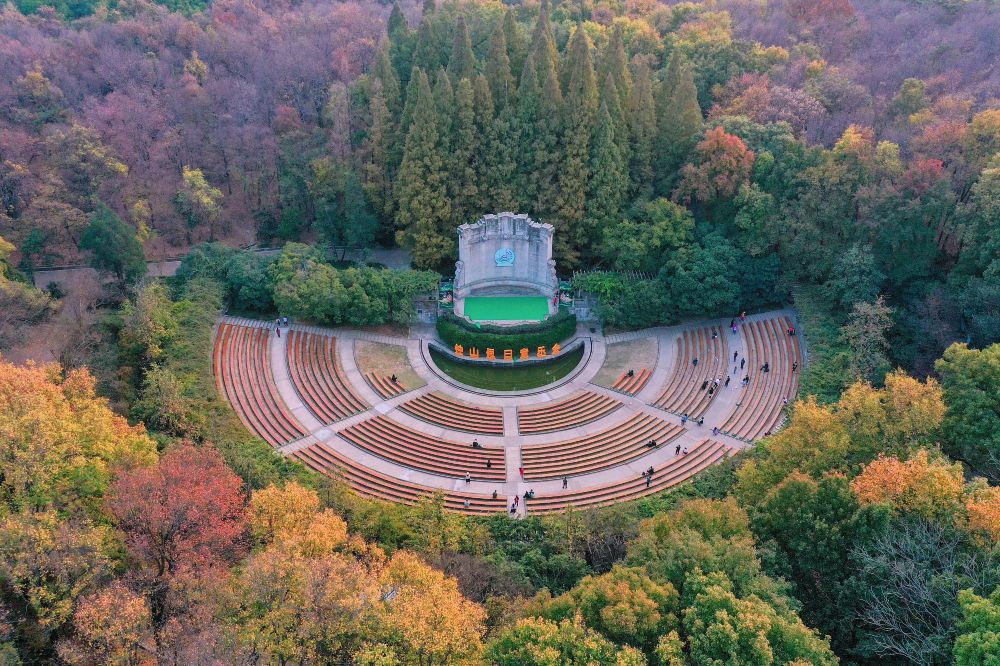
Pay homage at the mausoleum of Dr. Sun Yat-sen, the forerunner of China's modern democratic revolution. The 392 granite steps symbolize the 392 million compatriots of that era. Nestled at the southern foot of Purple Mountain, the mausoleum combines traditional Chinese tomb layout with modern architectural concepts. Starting from the Bo'ai Archway, through the Stele Pavilion and Sacrificial Hall to the Burial Chamber, the entire complex progresses along a central axis, with blue glazed tiles shimmering under sunlight, forming a solemn landscape alongside surrounding cedars and ginkgo trees. From the platform before the Sacrificial Hall, visitors can overlook the panoramic view of Nanjing, experiencing the grandeur of "The World Belongs to All."
The Ming Tomb
Visit the joint tomb of Zhu Yuanzhang, the founding emperor of the Ming Dynasty, and Empress Ma—one of China's largest and best-preserved ancient imperial mausoleums. The Sacred Way is lined with six types of stone animals: lions, xiezhi (mythical creatures), camels, elephants, qilin (Chinese unicorns), and horses, with four pairs of each—two standing and two crouching—showcasing the pinnacle of early Ming stone carving art. In autumn, the ginkgo trees along the Sacred Way turn brilliantly golden, complementing the red walls and yellow-glazed tiles of the mausoleum. The well-preserved Fangcheng Minglou (square citadel and soul tower) and the tree-shaded burial mound embody the imperial tomb design philosophy of "harmony between heaven and humanity."
Presidential Office
A living museum traversing China's modern political history, this 90,000-square-meter architectural complex masterfully blends Jiangnan gardens, Western-style buildings, and Republican-era aesthetics. From the Taihu rockeries of Xu Garden to the presidential office in Zichao Building, from the zigzag bridges of Taiping Lake to the conference halls of the Executive Yuan, every corner bears witness to historical transitions - from the Qing Dynasty's Liangjiang Viceroy's Office to the Heavenly King's Palace of the Taiping Heavenly Kingdom, and finally to the Presidential Palace of the Republic of China. The exhibition halls display precious historical documents and artifacts, vividly presenting a century of China's modern political evolution.
[Nanjing Confucius Temple Qinhuai River]
The "Ten-mile Qinhuai" section perfectly preserves the architectural layout and street texture from the Ming and Qing dynasties. As night falls, lanterns along both banks of the Qinhuai River gradually light up, while painted boats glide slowly across the water, recreating the historical scene of "oar sounds and light reflections stretching ten miles, with singing girls and flower boats playing on rippling waves." Ancient sites like the Jiangnan Examination Hall, Wuyi Alley, and Li Xiangjun's former residence are scattered throughout. The ceremonial music from Dacheng Hall blends harmoniously with the calls of vendors from time-honored shops. You may opt for a painted boat ride at your own expense (approx. 80 yuan/person), admiring the Jiangnan charm of white walls, black tiles, small bridges and flowing water to the melodious tune of "Qinhuai Scenery," experiencing the poetic realm described by Du Mu: "Mist veils the cold water, moonlight the sand, as we moor at night near Qinhuai's taverns." The riverside "Eight Delicacies of Qinhuai" snacks offer an unmissable culinary experience.