Things to do in Damxung
Explore top experiences
Top 10 attractions in Damxung

Namtso National Park
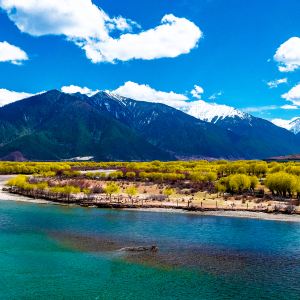
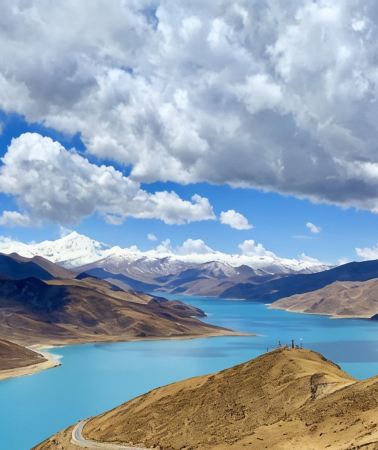
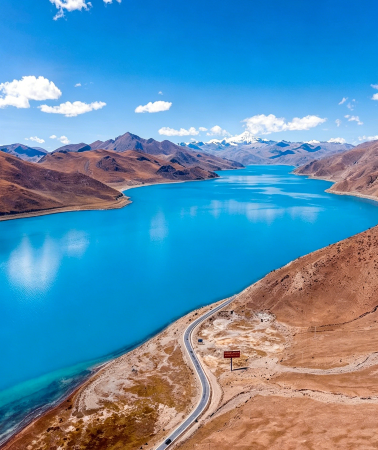
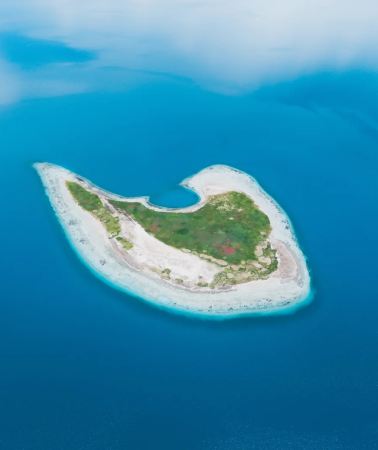
Namtso National Park is located between Damxung County of Lhasa and Baingoin County of Nagqu, situated on the Qinghai-Tibet Plateau known as the "roof of the world." The attraction includes Namtso, the main peak of Nyenchen Tanglha, bird islands on the lake, rock carvings, Yangbajing, and other attractions. The core attraction of the park, Namtso, is one of the three holy lakes and also one of the world's highest-altitude saltwater lakes. Under sunlight, Namtso's lake surface appears sapphire blue, resembling jade fallen from the sky, earning it the title "heavenly lake" and making it a renowned site in Tibetan Buddhism. The lake contains three larger islands, which are rarely disturbed by the outside world and host diverse bird populations, hence called bird islands. To the south of Namtso lies the perpetually snow-capped Nyenchen Tanglha Mountains, while its northern and western sides feature plateau hills and expansive lakeshores. In the folk songs and legends of local herders and hunters, Nyenchen Tanglha and Namtso are not only striking sacred mountains and lakes but also inseparable lovers and spouses. Nyenchen Tanglha appears more majestic against the backdrop of Namtso, while Namtso becomes even more enchanting with the reflection of Nyenchen Tanglha.Damxung · 37.6km from downtown


Namtso
Namtso is located on the northern Xizang plateau north of Lhasa. "Namtso" means "heavenly lake" in Tibetan and is called "Tengri Sea" in Mongolian, both sharing the same meaning. Along with Yamdrok Yumtso and Mapam Yumtso, it is known as one of the three holy lakes of Xizang. With a surface elevation of over 4700 m, it stretches more than 70 km from east to west and covers nearly 2000 km², making it the second largest saltwater lake in Xizang. Its southern shore is backed by the continuous Nyenchen Tanglha snow-capped mountains, whose peaks reflect clearly in the sapphire-blue lake water on calm sunny days. According to local legends, these mountains and Namtso have been companions for millennia, adding a touch of tenderness to the landscape. Lake tour Namtso means "Tengri Sea" in Mongolian and is said to be the sacred site of the Buddhist deity Chakrasamvara, making it a renowned pilgrimage destination in Tibetan Buddhism. During the Year of the Sheep, it is believed that buddhas, bodhisattvas, and protector deities gather at Namtso to hold grand religious ceremonies. If devotees circle the lake and chant scriptures once during this time, it is considered more meritorious than doing so 100,000 times in ordinary years, bringing immeasurable blessings. Thus, during the Year of the Sheep, monastic and lay devotees undertake long journeys to circumambulate the lake. Many pilgrims visit Namtso during the Saga Dawa festival on the 15th day of the fourth month in the Tibetan calendar. 1-day tour Many travel agencies in Lhasa offer 1-day tour packages to Namtso. The typical itinerary involves departing in the morning, arriving after 3-4 hours, spending 2-3 hours exploring, and then returning the same way. If you don't want a private charter, this is the only option available and also the conventional way to visit Namtso. For those who prefer to avoid the crowds, you can arrange a private charter or find a shared transfer in Lhasa city. While the route remains the same, the advantage is greater itinerary flexibility, along with the option to stay overnight by the lakeshore. Leaving Damxung County and crossing the Nagen La Pass at an elevation of 5190 m, one can glimpse the vast sapphire-blue waters in the distance. By the lakeside stand two towering boulders side by side, known as the welcoming stones of Namtso or the husband-and-wife stones. Legend has it they are the gatekeepers of Namtso. It is said they represent the goddess who governs the wealth of northern Xizang's grasslands. Merchants would pray here for her blessing before business trips to ensure prosperity, hence these stones are also called the wealth deity stones. A number of prefabricated houses have been built near Tashi Peninsula, including restaurants and inns. This is where Namtso offers food and stay by the lake. If you come to Namtso by private charter, you can spend a night here. You can enjoy the beautiful sunset at dusk, wake up early to greet the sunrise on Tashi Peninsula, or gaze at the sky by Namtso's lake at midnight, where you can even discern the outline of the Milky Way. The lake area features high altitude, strong winds, and intense UV radiation. Even in midsummer, temperatures can drop to around 10°C in the morning and evening, so packing a thick coat, sunglasses, and sunscreen is advisable. Slow down when moving through mountain passes or along the lakeshore to allow your body time to adjust. Please show respect when observing pilgrims circling the lake or photographing mani stones and prayer flags, and avoid stepping on the mani piles. Most travelers make a round-trip from Lhasa in a single day, but we recommend setting aside a full day and bringing your own snacks and hot water. From June to September, the lakeside grasslands are lush with vegetation and wildflowers, offering exceptionally rich scenery. In winter, the frozen lake and vast landscape create a unique atmosphere, but pay close attention to weather conditions and your physical state before traveling.Damxung · 37.6km from downtown

Laken La
Laken La is a must-pass point when traveling from Lhasa to Namtso. The altitude here is 5,190 m, and a stone tablet engraved with the altitude stands by the roadside. Standing here and looking north, the lake surface meets the distant mountains at the horizon. This is a rare high-altitude viewing point before reaching the lakeshore, and many people take their time to admire this plateau lake scenery. The terrain here is elevated, with undulating mountains all around, and the weather is changeable. When it is sunny, you can see the rolling snow-capped mountains in the distance and the vast plateau landscape; when the weather is poor, conditions such as clouds, fog, snow, and strong winds may occur.Damxung · 22.9km from downtown

Nyainqentanglha Mountain
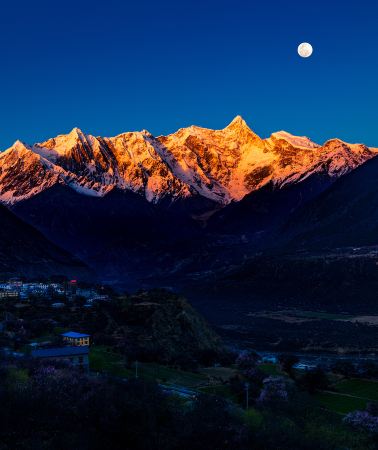
Nyainqentanglha Mountain is a major mountain range spanning the central Qinghai-Tibet Plateau, running in a near east-west direction, with its western section adjacent to the holy lake, Namtso, extending southeast into the hinterland of southeastern Tibet, with an average elevation of 5,000–6,000 m. It is geographically significant, serving as both the watershed between the Yarlung Zangbo River and the Qiangtang Plateau in northern Tibet, and as the boundary line for cold and warm climates on the plateau. The main peak has an elevation of 7,162 m, standing on the southern shore of Namtso, with its summit covered in snow year-round. Both the Qinghai-Tibet Highway and the Qinghai-Tibet Railway pass by the foot of the mountain. From clear mornings to afternoons, the mountain's silhouette is exceptionally distinct, while on rainy or cloudy days, the summit is mostly hidden in the clouds.Damxung · 46.7km from downtown

North Tibet Grassland
North Tibet Grassland has an average altitude of over 4,000m. The grassland stretches northward, reaching deep into the hinterland of northern Tibet. There are no gates or fences here. The Qinghai-Tibet Highway runs straight through the pasture, and you can step right into a scene featuring grassland, cattle, sheep, and snow-capped mountains all in one frame. In summer, the grass turns green, and herds of yaks and sheep are scattered across the gently rolling pastures, dotted with the black tents of herders. Sometimes you can even catch a glimpse of Tibetan gazelles darting across the grass tips. In the fall and winter, the grass turns yellow, presenting a different, vast, and boundless landscape.Damxung · 20.5km from downtown

Nyenchen Tanglha Viewing Platform
To reach Namtso, take National Highway 109, you need to pass through the observation deck of Nyainqentanglha Mountain (4640 meters above sea level), which is a good place to watch the main peak of Nyainqentanglha Mountain (7111 meters above sea level). In fact, the "observation deck" is a temporary stop on the side of the road, a row of ordinary houses with canteens, toilets, and a small parking lot. Along the road, prayer flags fluttered in the wind; in the distance, the mountains were majestic and snow-capped. The blue sky, white clouds, snow-capped mountains, black and white yaks, and prayer flags dancing in the wind, all of which constitute a colorful picture.Damxung · 8.4km from downtown

Nyainqentanglha Mountains
The Nyainqentanglha Mountains in Dangxiong are also known as Nyainqentanglha Peak, with an altitude of more than 7,000 meters. Many mountaineering teams have climbed this mountain. Nyainqentanglha Peak is adjacent to Namtso Lake and the scenery is beautiful.Damxung · 28.6km from downtown

Namtso Nature Reserve - Tashi Island Monastery
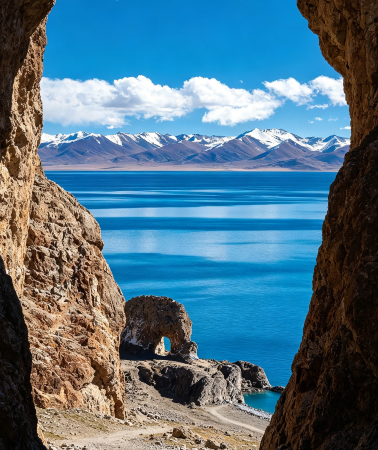
Founded in 1498 by Gongtoba Toshe, the monastery belongs to the Nyingma school. Historically, it served as a meditation center for many Living Buddhas, with a peak of eight monks residing there. The monastery was once damaged but was restored and reopened in 1990 with the approval of the county government. The main statue is of Padmasambhava, along with statues of Amitabha Buddha, Avalokiteshvara, and Vajrapani. The area surrounding Zaxi Island Monastery boasts unique scenery, including a Padmasambhava-shaped rock formation, a natural bridge, and cave paintings, among other natural and cultural landscapes. Legend has it that over 2,800 high-ranking monks practiced on Zaxi Island, adding to its mystique. During the Year of the Sheep, many devotees come to the monastery to circumambulate the lake, and it is also a popular destination for tourists and pilgrims who visit and pray for blessings.Damxung · 40.2km from downtown

Luodui Peak
Damxung · 46.7km from downtown

Parents Stone
Damxung · 37.6km from downtown
Experiences you can't miss in Damxung
Featured Travel photography in Damxung
View all Travel photography
FromSEK 334.00

FromSEK 334.00

FromSEK 1,999.00


FromSEK 167.00
More ways to travel from Damxung
Group Tours in Damxung
View More Group Tours in Damxung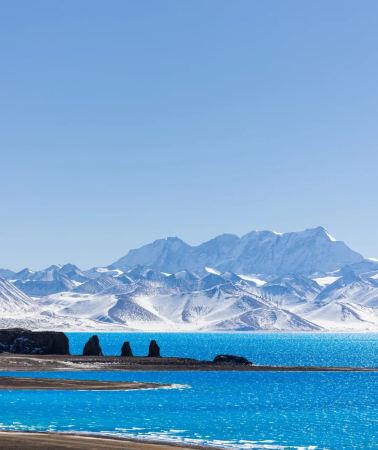


Free things to do in Damxung
Namtso National Park
Damxung · 37.6km from downtownNamtso
Damxung · 37.6km from downtownImmediate access, Book now for today, Cancel anytimeLaken La
Damxung · 22.9km from downtownNyainqentanglha Mountain
Damxung · 46.7km from downtownNorth Tibet Grassland
Damxung · 20.5km from downtownNyenchen Tanglha Viewing Platform
Damxung · 8.4km from downtownNyainqentanglha Mountains
Damxung · 28.6km from downtownNamtso Nature Reserve - Tashi Island Monastery
Damxung · 40.2km from downtownLuodui Peak
Damxung · 46.7km from downtownParents Stone
Damxung · 37.6km from downtown
What travellers say about Damxung

M22***0916 October 2025
5.0
You can't drive in, you can only take the scenic area's sightseeing bus. This is necessary to protect the ecological environment, so support it!
The lake is huge, with varying shades of blue from shallow to deep. There are many birds around the lake, and it's truly beautiful. A must-see when you're in Lhasa.
Namtso National Park

Anonymous user9 October 2026
5.0
Absolutely beautiful.
The shuttle bus ride takes over half an hour and is quite large.
There's so much trash on the mountain!!! It's not the scenic area's fault. People can bring oxygen cylinders up, so why can't they bring empty ones down?!
Namtso

whlyh29 June 2025
5.0
[Scenery] The Nara Mountain Pass Observation Deck is 5,190 meters above sea level. You can burn incense and pray. The blue sky and white clouds set off the majestic mountain scenery.
[Fun] A popular check-in spot
[Value for money] Free
Laken La

印象西南13 July 2025
5.0
念青唐古拉山,一生必去的圣地! 去西藏怎么能错过念青唐古拉山呢?这次我终于亲眼见到了这座神山,真的被震撼到了! 📍【位置与交通】念青唐古拉山在西藏自治区中东部,我们是先飞到拉萨贡嘎机场,之后包车前往的,很方便,一路还能随时停下来欣赏美景,强烈推荐这种方式! 🏞【绝美风景】站在观景台上,远处的念青唐古拉山主峰在蓝天白云的映衬下,白雪皑皑,高耸入云,仿佛是一座通往天际的冰雪宫殿,那种壮观真的无法用言语形容。周围是广袤的藏北草原,湿地中牦牛与羊群悠然自得,一幅和谐的自然画卷。风很大,五彩经幡随风烈烈飘动,为这片神圣的土地增添了更多神秘的色彩。 💡【贴心小提示】 1. 一定要带保暖衣物,山上风大,年均温度只有1.3℃,别为了风度不要温度。2. 可以提前在拉萨买好经幡、隆达、哈达,在那根拉山口祈福,特别有意义。3. 高海拔地区,有高血压、心脏病等疾病的宝子,一定要谨慎出行,提前咨询医生,备好缓解高原反应的药物,像感冒药、肠胃药这些也别落下。4. 湖边有牦牛骑行或骑马项目,玩之前一定要和藏民谈好价格,安全第一。 这次念青唐古拉山之旅真的太难忘啦!推荐指数五颗星🌟🌟🌟🌟🌟 宝子们放心冲!
Nyainqentanglha Mountain

格格巴6 July 2021
4.0
The northern Tibetan grassland is the largest natural grassland in Tibet, located between the Kunlun Mountains, the Tanggula Mountains and the Gangdise Mountains, with an average altitude of more than 4,500 meters. Yaks and herders' tents are scattered all over the place, forming a unique landscape. The biggest feature is its vastness and magnificence. It is not only a paradise for yaks and sheep, but also a fertile land of culture, where well-preserved nomadic culture can be seen.
North Tibet Grassland

橙色的荧光萍叶18 April 2023
5.0
It's free and there is a toilet, but the toilet is not in a very good condition. However, you can see the scenery of Nyainqentanglha Mountain and the blue sky of the grassland. The scenery is very pleasant. When taking pictures, use a high-contrast filter to get a better view.
Nyenchen Tanglha Viewing Platform

红海子牛牛2 August 2023
5.0
The Nyainqentanglha Mountains, which means "spiritual grassland god" in Tibetan, is the largest marine glacier in China. It is bordered by the Gangdise Mountains to the west and the Boshula Ridge of the Hengduan Mountains to the east. It is 1,400 kilometers long and 80 kilometers wide on average. With an average altitude of 5,000 to 6,000 meters, the Nyainqentanglha Mountains is the watershed between the Yarlung Zangbo River and the cold and dry Qiangtang Plateau and Nujiang River. It is also the dividing line between the cold climate zone and the warm (cool) climate zone on the Qinghai-Tibet Plateau. It is a sacred mountain of Tibetan Buddhism!
Nyainqentanglha Mountains

Elanie070216 March 2025
5.0
这次冬天进藏,特地来了一次纳木错,冬天虽然会冷一些,但是人少景美!还有冰推,下次是来了扎西半岛这边,有景区观光车环岛一圈,也可以徒步深入伸手纳木错的美,路边的公路拍照也非常出片
Namtso Nature Reserve - Tashi Island Monastery

enjoyzent27 August 2020
4.0
The Mani Stone on the shore of Lake Namtso, also known as the Parents Stone, is said to be the incarnation of the father Nyainqentanglha Mountain and the mother Namtso Goddess, symbolizing their unswerving love. This palm is the image of Guru Padmasambhava, the founder of the Nyingma School of Tibetan Buddhism, praying for the blessing of all things when he was practicing.
It is said that buying a Mani stone engraved with scriptures and placing it here by the Tianhu Lake can bless friends to drive safely, win all the cards, double their bonuses, be happy like a god, and be auspicious and happy every year.
Parents Stone